
Aberdeen Investments -

Finding Conviction In A World of Higher Geopolitical Risk

Global map with rising market lines representing higher geopolitical risk, inflation pressure, commodities, and global investment strategy.

While predicting individual geopolitical events remains difficult, we believe investors can build conviction around the structural market implications of persistently elevated global risk.

The outcome of recent conflicts like the fragile US-Iran ceasefire remains highly uncertain, making it difficult to feel confident about short-term market moves driven by fast-changing headlines.

However, beneath this tactical uncertainty lies deeper structural features of the global environment about which we can have much higher conviction. Rather than focusing on how any particular conflict evolves, investors should consider what these events reveal about the world and what that means for long-term portfolio positioning.

A structural shift toward higher geopolitical risk

Geopolitical risks have been a bigger focus for investors and a driver of returns in recent years, reflecting deep structural forces in the international order.

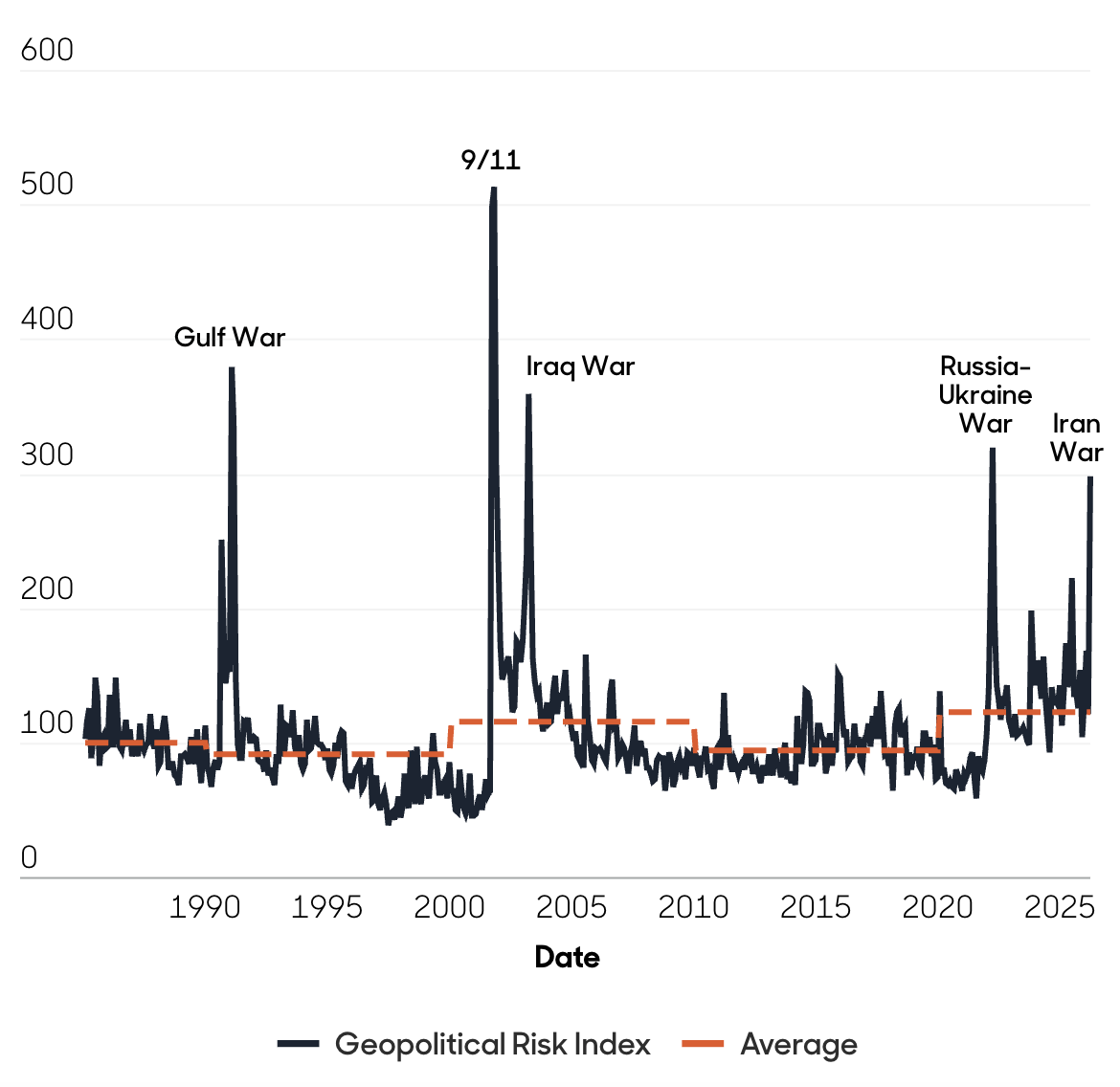
The period from the early 1990s to mid-2010s, when geopolitical risk was generally low (Chart 1), was historically unusual. That era was characterized by expanding globalization, acceptance of multilateral institutions, and major powers prioritizing economic integration over geopolitical rivalry.

Chart 1. News-based measures of geopolitical risk show a persistent move higher

Chart showing news-based measures of geopolitical risk moving higher over time

Source: Aberdeen, Haver, April 2026.


But this "end of history" moment was ultimately underwritten by US hegemony. As America's relative power has diminished, so has its willingness to act as guarantor of global public goods.

History suggests periods of hegemonic transition are inherently unstable. As deterrence structures become less clear and red lines lose credibility, the risk of boundary-testing and strategic miscalculation rises. Critically, economic interdependence – once viewed as dampening conflict – is now increasingly seen as a vulnerability that can be exploited.

"Keys that lock up the world"

The closure of the Strait of Hormuz during the Iran conflict exemplifies how geographic chokepoints can be weaponized in an era of greater geopolitical competition.

In 1904, Admiral Jacky Fisher described strategic waterways – Singapore, Suez, Gibraltar, Dover – as "keys that lock up the world." The Hormuz closure represents a paradigmatic gray swan: well-understood in security circles but low probability and hard to price.

Other vulnerable chokepoints include:

  • Bab el-Mandeb Strait: Potential Houthi disruption could compound energy market stress
  • Taiwan Strait: Critical for global trade and semiconductor supply chains
  • Panama Canal: Subject of Trump administration interest for geopolitical leverage
  • Arctic passages: Emerging strategic importance as climate opens new Northwest routes

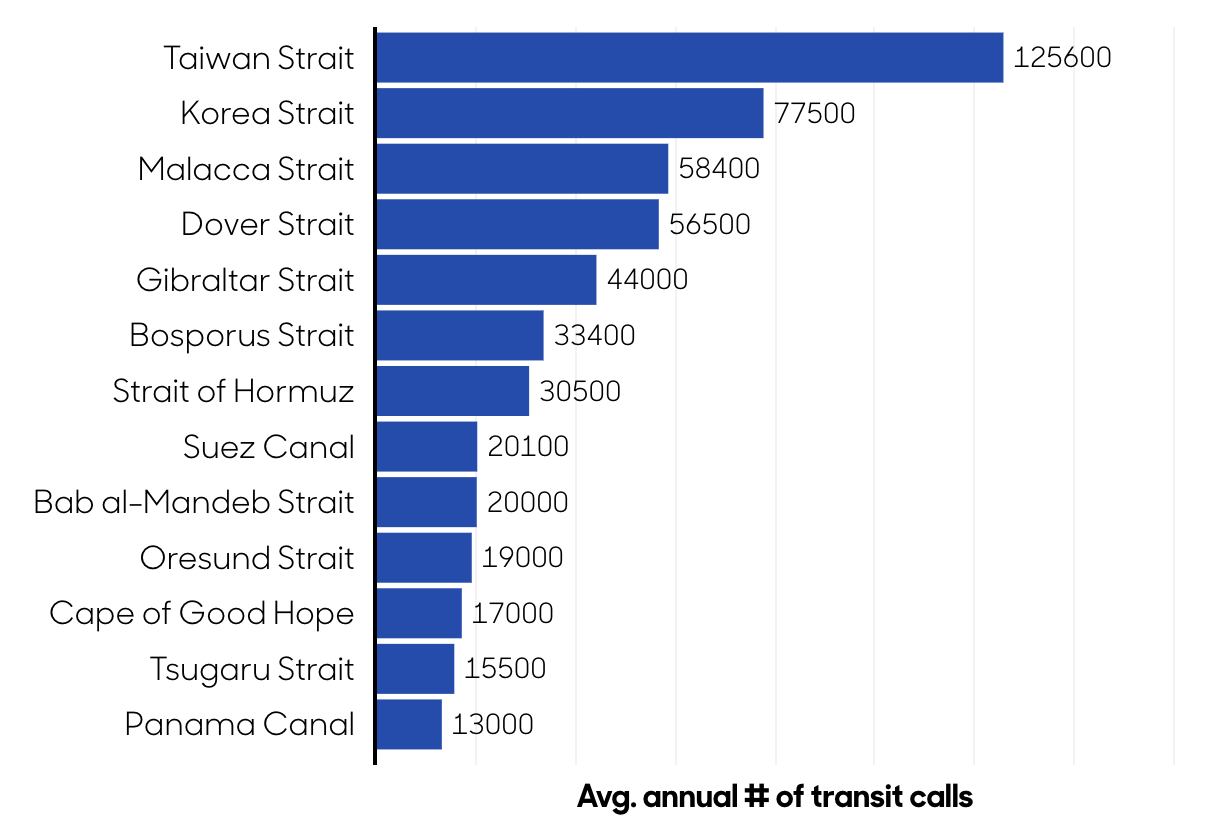
But given how many of the major geographic chokepoints are located in geopolitically fraught areas, it is worth reflecting on other similar gray swan risks (Chart 2).

Chart 2. Important maritime chokepoints are in geopolitically fraught locations

Map of important maritime chokepoints located in geopolitically sensitive regions

Source: Aberdeen, Refinitiv, April 2026.


This geographic metaphor extends to intangible chokepoints: the US uses dollar system control for sanctions, while China leveraged rare earth export dominance in recent trade negotiations.

More frequent negative supply shocks

Historically, a world of elevated geopolitical risk means the economy will face more negative supply shocks – events that simultaneously push inflation up and growth down. The large energy price increase from the Iran conflict is a clear example. Future chokepoint closures would create upward price pressure on affected commodities and trigger second-round effects rippling through supply chains.

Beyond geopolitics, supply chains face disruption from trade disputes, climate change impacts, and potential future pandemics. Even efforts to reshore supply chains constitute a negative supply shock: sacrificing efficiency for resilience implies lost productive potential and a worse growth-inflation trade-off.

Higher and more volatile inflation

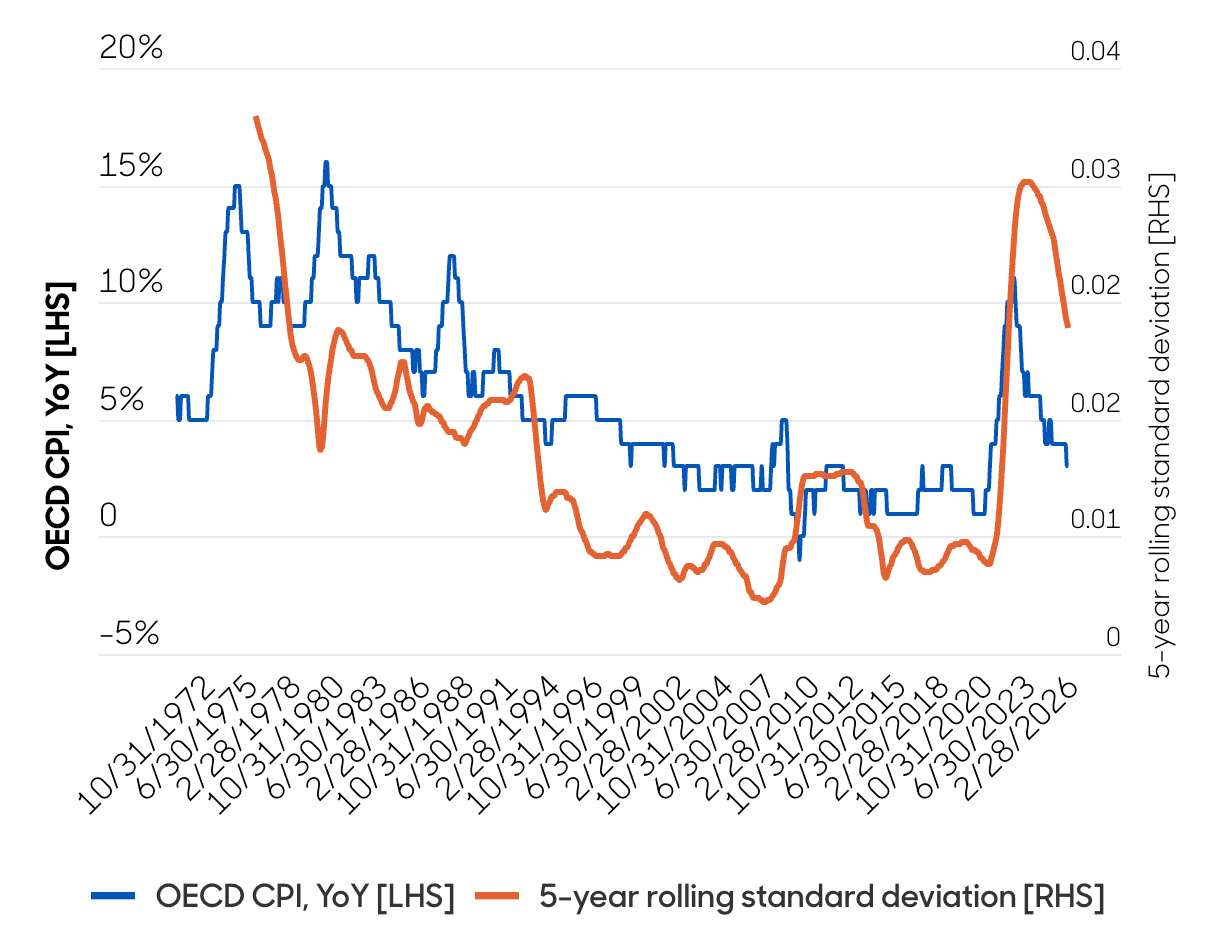
With more inflation-inducing shocks, average inflation will be higher and more volatile, converging toward central bank targets from above rather than below (Chart 3).

Chart 3. Inflation is returning to a regime of being higher and more volatile

Chart showing inflation returning to a higher and more volatile regime

Source: Haver, Aberdeen, April 2026.


As households and businesses adapt to this new reality, inflation expectations may drift higher. Wage and price-setting institutions will evolve to reflect distributional conflicts, potentially including increased indexing and greater union power.

These behavioral and institutional changes can make the economy even more prone to persistent inflation pressure, as initial price shocks are more likely to trigger second-round consequences.

Historically, this forces central banks to tighten policy more frequently rather than "looking through" supply shocks, exacerbating negative growth impacts. Interest rate volatility can increase as markets struggle to predict policymaker responses.

Potential investment implications include:

  • Greater demand for inflation protection products
  • Infrastructure assets with inflation-indexed cash flows become more attractive
  • Commodity exposure gains strategic importance
  • Bond term premia must increase to compensate for higher volatility

Bonds will provide less diversification1

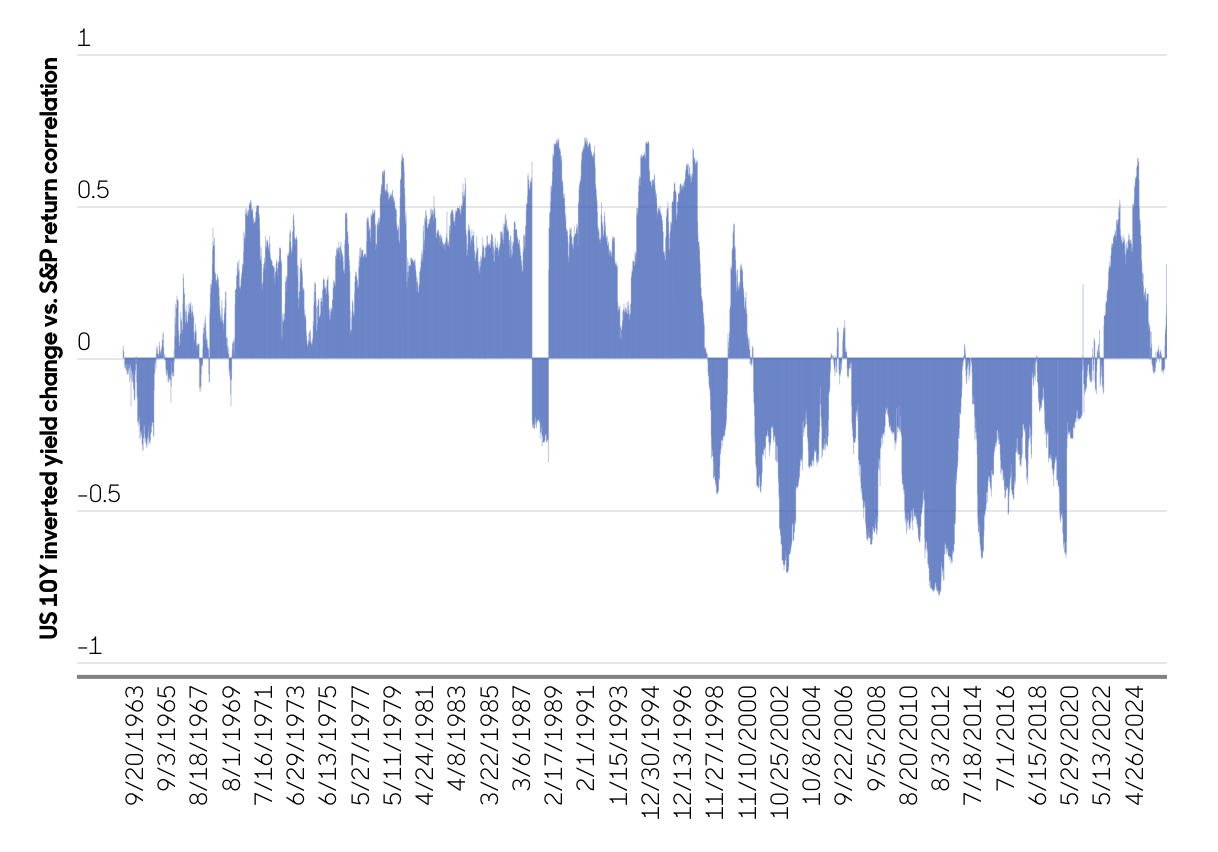
We believe fixed income assets are likely to be more frequently positively correlated with equities in a supply shock-dominated world.

Historically, in a demand-shock world, weak growth coincides with low inflation and strong bond performance – providing portfolio diversification.1 But with supply shocks, weak growth occurs alongside high inflation, causing both bonds and equities to struggle simultaneously.

The negative bond-equity correlation from the 1990s through early 2020s was a contingent feature of that period's geopolitical stability (Chart 4). As geopolitical risk has risen, the correlation has turned positive.

Chart 4. The correlation between bonds and equities is likely to be positive more frequently in the future

Chart showing bond and equity correlations becoming positive more often as geopolitical risk rises

Source: Haver, Aberdeen, April 2026.


This increased positive correlation makes bonds less reliable for diversification, rendering traditional 60/40 equity/bond portfolios less attractive. Investors must seek new diversification sources like infrastructure and private markets with different correlation structures.1

Strategic investment themes

Gold and precious metals

Despite recent weakness during the Iran conflict, gold remains a consistent inflation hedge and diversification source.

As the US continues using dollar system control for geopolitical influence, competing powers are shifting central bank reserves and sovereign wealth funds toward gold to minimize confiscation risk. While dollar hegemony won't disappear near-term due to powerful network effects, marginal sovereign reallocations toward gold can still benefit non-sovereign investors through price appreciation.

Defense and infrastructure spending

A world of greater geopolitical risk inevitably means increased defense budgets and infrastructure investment to boost national resilience.

Key developments:

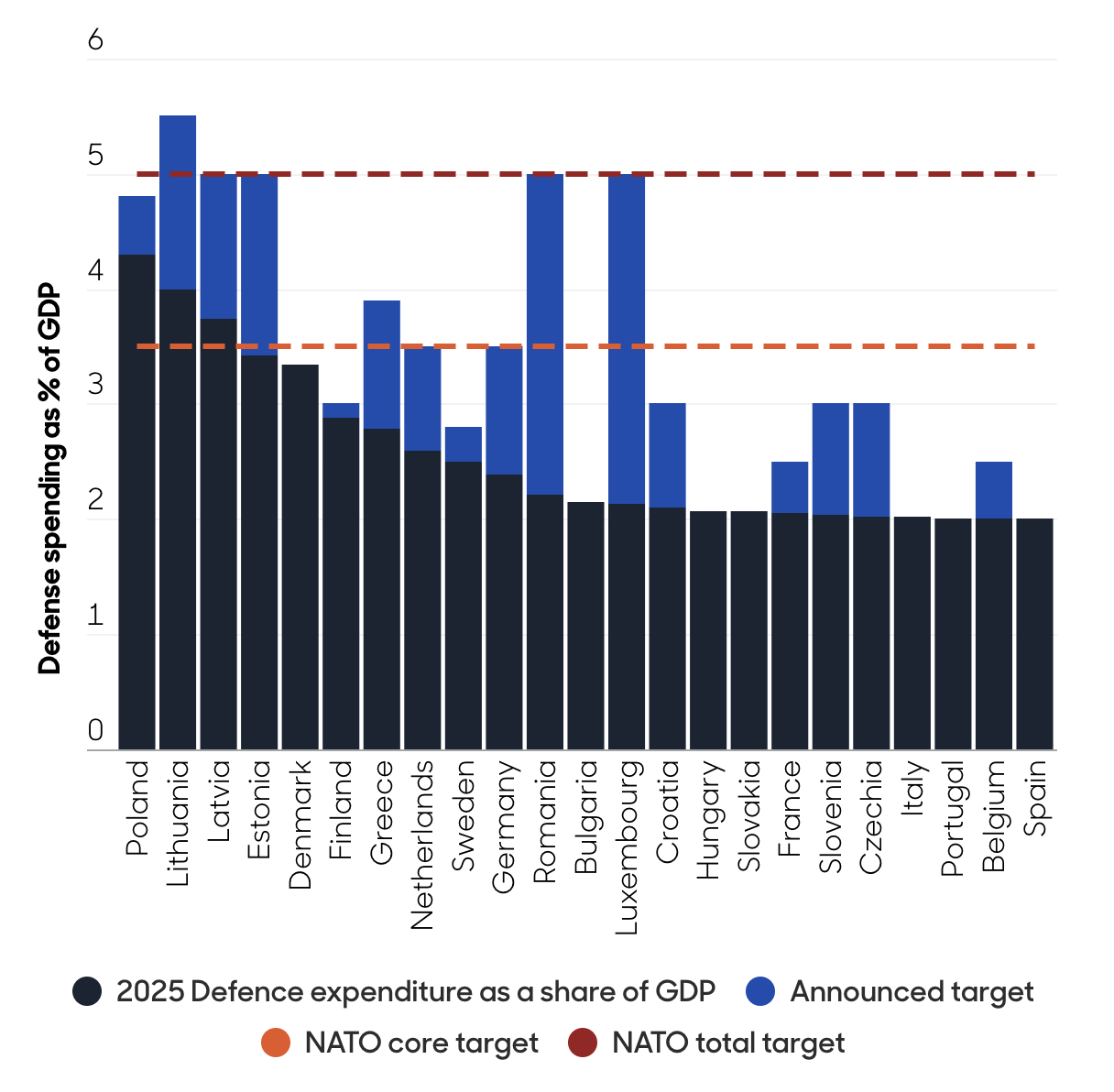
  • NATO defense spending targets have risen from 2.0% to 3.5–5.0% of GDP (Chart 5)
  • European nations are building sovereign defense capabilities given US reliability concerns
  • The US is considering a near-50% defense budget increase2
  • Infrastructure projects focus on supply chain resilience and critical minerals access

Chart 5. The NATO defense spending target has risen from 2.0% to 3.5–5.0%

Chart showing NATO defense spending targets rising from 2 percent to 3.5 to 5 percent of GDP

Source: Aberdeen, European Commission, April 2026.


Much of this spending will be deficit-financed, with implications for sovereign bond markets and upward pressure on interest rate structures.

Critical minerals and commodities

China's dominance over strategic resource reserves – including rare earth metals, lithium, cobalt, and copper – creates vulnerability for western economies. This drives investment in securing alternative sources, particularly in Latin America, and in domestic mining and processing capabilities.

Final thoughts

Geopolitical uncertainty is now a defining feature of the global landscape, demanding a shift in how investors approach risk and opportunity. While specific events remain unpredictable, the broader trends – persistent geopolitical tension, weaponized chokepoints, and declining globalization – are reshaping markets. Traditional diversification strategies, like the 60/40 portfolio, are less effective in a world where bonds and equities often move together.1 Instead, investors should seek resilience through infrastructure, commodities, critical minerals, and defense-related assets. Gold also remains a relevant hedge amid rising inflation and de-dollarization trends. True conviction today lies not in forecasting headlines but in recognizing these structural shifts. Aligning portfolios with long-term geopolitical and macroeconomic realities offers a path to navigate volatility and uncover durable investment opportunities.

READ MORE FROM ABERDEEN INVESTMENTS


Endnotes
1 Diversification does not ensure a profit or protect against a loss in a declining market.
2 White House Seeks $1.5 Trillion for Defense in New Budget Request." The New York Times, April 2026. https://www.nytimes.com/2026/04/03/us/politics/white-house-defense-budget.html.

Important information
Projections are offered as opinion and are not reflective of potential performance. Projections are not guaranteed and actual events or results may differ materially.

Foreign securities are more volatile, harder to price and less liquid than U.S. securities. They are subject to different accounting and regulatory standards, and political and economic risks. These risks are enhanced in emerging markets countries.

Share this post

Sign Up Now for Full Access to Articles and Podcasts!

Unlock full access to our vast content library by registering as an institutional investor

Register

Contacts


Aberdeen Investments

Over 150 insurers worldwide entrust Aberdeen to manage almost $280bn.* Our Strategic Insurance Group builds on our established insurance asset management skillset – bringing together our heritage, specialist capabilities and deep expertise. This coordinated approach uniquely positions us to design balance sheet aligned strategies that aims to support insurers’ goals and strong outcomes for their customers. 

 *As of December 31, 2025

Matthew Smith
Global Head Strategic Insurance Group
Matthew.smith@aberdeenplc.com
+44 20 3680 0334

Aberdeen Investments
1900 Market Street, Suite 200 
Philadelphia, PA 19103
 

View the contributor page

Image
abrdn_icon

Sign Up Now for Full Access to Articles and Podcasts!

Unlock full access to our vast content library by registering as an institutional investor .

Create an account

Already have an account ? Sign in

Ѐ Ё Ђ Ѓ Є Ѕ І Ї Ј Љ Њ Ћ Ќ Ѝ Ў Џ А Б В Г Д Е Ж З И Й К Л М Н О П Р С ΄ ΅ Ά · Έ Ή Ί Ό Ύ Ώ ΐ Α Β Γ Δ Ε Ζ Η Θ Ι Κ Λ Μ Ν Ξ Ο Π Ρ Ё Ђ Ѓ Є Ѕ І Ї Ј Љ Њ Ћ Ќ Ў Џ А Б В Г Д Е Ж З И Й К Л М Н О П Р С Т У Ф Х Ц Ч Ш Ā ā Ă ă Ą ą Ć ć Ĉ ĉ Ċ ċ Č č Ď ď Đ đ Ē ē Ĕ ĕ Ė fi fl œ æ ß