





General Atlantic-

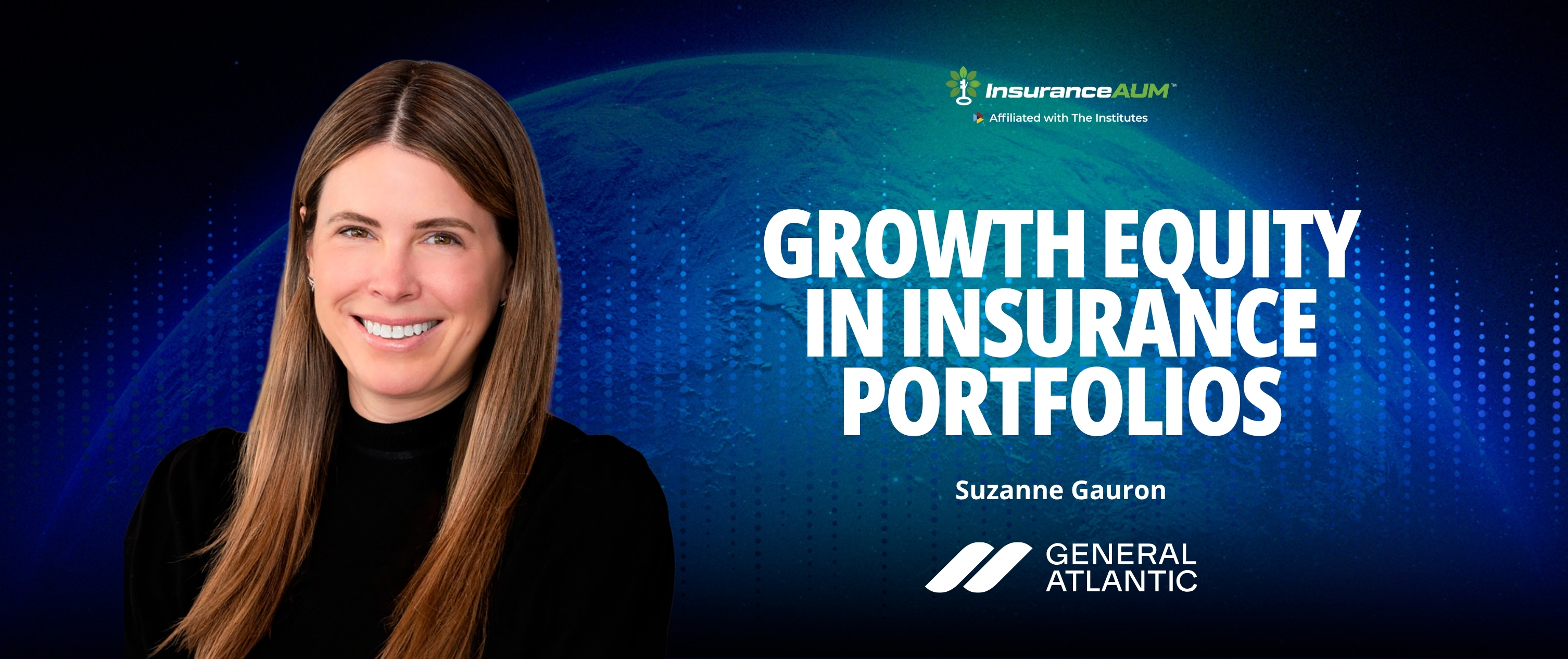
Growth Equity in Insurance Portfolios

Image
IAUM_Podcast_GA-9.14.26_Web_2026


Stewart: Hey, welcome back to The Home of the World's Smartest Money. This is Stewart Foley. I'll be your host, and I'm really, really glad that you're here with us today. Insurance investors spend an enormous amount of time thinking about diversification. Here's an interesting question. Are we diversifying the names in the portfolio or are we actually diversifying the sources of return? Which makes today's topic particularly interesting. Growth equity occupies a part of the private markets that doesn't fit neatly into traditional boxes, particularly for insurers. These are not early-stage venture companies hoping to someday become profitable, and they're not highly leveraged buyout situations where financial engineering can be an important component of the return. We're talking about established companies growing rapidly, generally with little leverage, where the investment thesis is pretty straightforward.

The company has to perform. For an insurance portfolio already dominated by interest rate risk and credit spread risk, that creates an interesting portfolio construction conversation. And today's episode is entitled, not surprisingly, Growth Equity in Insurance Portfolios. And today I'm joined by Suzanne Gauron, Managing Director and Head of Capital Solutions for Growth Equity at General Atlantic. Suzanne, welcome to the show.

Suzanne: Thank you for having me.

Stewart: We are thrilled to have you and have General Atlantic on. Just as background, Suzanne joined General Atlantic in 2025, following more than two decades at Goldman Sachs, where she most recently led private equity capital solutions within Goldman Sachs Asset Management. She now spends her time thinking about how institutional investors can assess and incorporate growth equity into their portfolios.

Suzanne, we always start it the same way, which is, where did you grow up? And what is something, we have new questions by the way. Surprise. What is something your colleagues would be surprised to know about you?

Suzanne: So, I grew up outside of Boston, Massachusetts, which is one of the sort of hotbeds of private equity and how I got into the industry. I think most of my colleagues in New York City would be surprised that when I am not working, I spend most of my time in the mountains of Montana out of cell service and looking for rare types of trout to fish for.

Stewart: Oh, wow. Really?

Suzanne: Yeah.

Stewart: So, you're a very accomplished trout fisher person.

Suzanne: Not accomplished, just won't stop.

Stewart: That's amazing. That's so cool.

Suzanne: Yeah. So, I've caught some very rare golden trout, for example.

Stewart: Oh, interesting. Interesting. Okay, good stuff. So, first of all, just for the sake of our audience's knowledge, give us a high-level overview of General Atlantic, just so in case folks aren't familiar, don't know what it's all about, I think that would be helpful.

Suzanne: For sure. So, I think General Atlantic actually has a very interesting backstory. We were founded 46 years ago, so we've been doing growth equity since 1980. That tells you just how long growth equity's been around. But our backstory was that we were founded by a billionaire called Chuck Feeney. Chuck was a military veteran. And when he was abroad with the U.S. military, he got the idea to start duty-free shops, which we now take for granted in airports around the world. But he saw the opportunity to sell high-value, largely American or international products to a global audience well before anyone else did. He ended up selling that business, and when he sold it, he became a billionaire in the late 1970s. And he asked himself, what was the purpose of his wealth? He actually took a moment and asked himself that. And he decided to do two things with his wealth.

The first was to form General Atlantic in order to both grow his wealth, but also to support founders like him in his entrepreneurial journey. And he knew how hard it was to be an entrepreneur and how important it was to have the right partners. And so if we did that well, we could make more money for Chuck. But then the other side of the equation was Chuck decided to give all of his money away, hopefully while he was living. And he was able to do that. He gave away over $9 billion during his lifetime. He passed away three years ago with just a few million dollars left to his name at the time.

Stewart: Wow, that's amazing. I can certainly relate to the challenges of being an entrepreneur and trying to get funded. I sold InsuranceAUM last year, and I am not a billionaire. However, it is a real problem, particularly when you're growing quickly. Banks tend to want to look at last year's tax returns, and I basically ran out of the ability to fund the business, fund the growth. But let's talk a little bit about defining the neighborhood that we're talking about, because I think people hear venture capital, growth equity, buyout, and sometimes those get blurred together under the heading of private equity, but there's more to it than that. And I think it's always helpful to just make sure, and I know in our business, a lot of people are using terms, and if you said, "Hey, what does that mean?" I think there's times when folks couldn't define it.

So, let's start there with the neighborhood we're really talking about.

Suzanne: Sure. The definition is really important. And as I mentioned, we've been doing this for 46 years, and so that tells you growth equity's actually been around for a long time. But I think one of the reasons that there's confusion is during the 2020 period, which was sort of the go-go days for our strategy, growth equity was conflated with a lot of other things that it is not. It was conflated with late-stage venture. It was conflated with crossover investing, pre-IPO investing. But we have what we believe is a very pure definition of growth equity, which is based on three things. One, this is a company that has high growth, and we define high growth as 30%-plus year-over-year revenue growth, which is very high. The second, and very importantly, is that it's profitable at the time that you're investing in it. So, this is not venture.

This is not burning a ton of money to generate that growth. This is a company that can grow on its own. And the third is that you're coming in with low, or in many cases, no leverage at all. And so, I think it sometimes got overlooked as the leverage buyout boom started in the '80s and has continued for 45 years because this is a very classic form of investing. Find a great company with a great idea. It's proving it has a great idea by growing very quickly and own that company and help that founder grow it and make a return.

Stewart: I can relate to many parts of that. So, talking about where returns actually come from, when we decompose returns in traditional buyout, leverage and multiple expansion can matter a great deal. And your numbers suggest something different in growth equity, that revenue growth and earnings growth drive the returns. That's fundamentally different. Can you walk us through that?

Suzanne: That's correct. I think, I was a limited partner in my prior life, and one of the knocks that was leveled on private equity as a whole is really a knock on buyouts, which is what do you have after you strip out the leverage and the multiple expansion that we saw over the last decade? That knock doesn't really apply to growth equity for exactly the reason that you said. Our numbers suggest that when you look at the returns that are generated in growth equity, the majority of the return is just simply through revenue growth. And this is intuitive if you've been an entrepreneur yourself, which is if you own a great business and you can grow that business consistently year over year, you will become wealthier. Now we do help our businesses become more profitable as well, and that's a natural life cycle as a business grows up.

It should become more profitable and maybe grow slightly slower five years in than it did at the start. And that's what we see in our numbers. You see almost no contribution from leverage and from multiple expansion. In fact, you see multiple contraction because the older, more mature, more profitable business is valued on an EBITDA multiple where you might've come in on a revenue multiple. So that's the virtue of growth equity. But I think that's also the challenge is that I'm alluding to a valuation paradigm that most limited partners are less familiar with because they are used to buyouts where everything's on an EBITDA multiple and you can compare different managers, different sectors, and different regions using consistent valuation metrics. The challenge with growth equity with high-growth businesses is sort of the moment of when do they grow up? Is it before you invested or during your investment period where the valuation paradigm changes?

Stewart: Yeah, that's interesting. I never made it that far. Let's talk a little bit about insurance company balance sheets. The typical general account already owns a lot of interest rate and spread risk. The way that I'm hearing you describe this, growth equity returns are primarily generated by operating performance rather than rate spreads and leverage. How does that fit into the diversification argument that a CIO might want to consider?

Suzanne: I think there's two ways that it fits into the diversification argument. The first is, because of that unlevered return, you're seeing a return stream that is fundamentally different than your exposures in both your buyout portfolio, but also your credit portfolio. It's possible that some of the credits you own in your fixed income book are the same credits that you own the equity of in your buyout portfolio. And also, the maturity of the businesses is more similar. So even if you don't own the exact same credit, you're owning the same sectors with the same fundamental risks. So, think about owning credits in industrial companies and industrials are a mature sector that you own the equity of in a buyout portfolio. In growth equity, you're getting unlevered returns in differentiated businesses that are exposed to macro innovation trends in the market. Those innovation trends haven't yet made it to credit markets or to mature equity markets, whether those markets are public or private.

So, we invest in growth equity behind four major trends that we call mega trends. A mega trend is something that's going to change everybody's lives regardless of what the S&P does for the next five years. And so, our mega trends around technological innovation, healthcare innovation, energy transition, and changes in consumption. The fact that consumption is moving to emerging economies to the South and the East from developed economies. Those things will be true in 10 years regardless of what happens over the next one, two, three years. And the only ways to get exposure to those innovations are to take high risk in venture capital or what we would view as more medium risk in growth equity as those businesses have started to mature and prove that the innovation is going to work.

Stewart: So as a CIO, I've still got to fund it. So where does growth equity live on my balance sheet? Am I taking money out of existing buyout allocations? Is it a substitute for public equity? Or is it like everything else in insurance, which is the answer is, it depends?

Suzanne: Well, I do joke as one of multiple children in my family that growth equity is like the middle child. So, the answer is it does depend. We see institutional limited partners fund growth equity from three different places. The first is taking it out of their buyout allocation because you made the right point earlier on, which is people value diversification within buyouts, but fundamentally at the end of the day, all of your buyout allocations have a relatively high correlation and you can lower that correlation by adding growth. That would be the first answer. The second answer is as a substitute to venture capital. So, some institutions, depending on their type or their risk appetite, are not willing to take the risk of venture. And so, they see growth equity as a near second, as close as they can come to getting the upside of venture without as much risk.

And then the third, which has been more of a trend over the last five years, is funding it out of your public equity allocation. Because we've seen the narrowing of the public markets, which has been very well covered, and the concentration in the Mag Seven. I don't know what we're going to call the Mag Seven now that we added SpaceX. But the answer is that there isn't a broad base of growth that you have been able to access in public markets over the last five to 10 years. To get that growth, you've had to go into private markets, most specifically into growth equity.

Stewart: Yeah, it's interesting. Maybe it's the Elite Eight. Who knows? One of the things that's really important to the insurance community is how, not only the asset class, but I think in some times it's not as important as the asset class, but it's really important, which is how do I own it? And the decision isn't just commingled fund or nothing. So, what are my options if I'm interested in having a look? What are the different ways of owning this thing?

Suzanne: So, there's the classic ways, which is be a limited partner in a commingled fund. There's also opportunities to invest in strategies where you can form a fund of one, which helps you control your timing around entry into the asset class. And then there's two exciting developments I would add that are more recent in growth equity than they are in some other parts of private markets. The first is secondaries. So, historically for the last 15 years, the vast majority of secondary private equity transactions have been in buyout, but we're seeing a developing market in growth equity, which makes sense. The secondary market always trails the formation and growth of the primary market in any asset class. So, there's an opportunity to actually look back and maybe build exposures to prior vintages of growth equity through a secondary strategy. And then lastly, there's co-investment or direct company investment.

One of the knocks on growth equity historically was there wasn't access to the scale and size of co-investment opportunities that you would see in buyouts, but that's changed as this market has grown in both size and sophistication. And so, I would say you have the same range of access points now in growth equity that you could expect in buyouts.

Stewart: Super helpful. It's been a great education here. And I want to talk a little bit about maybe a historical view, which is that the public, it's my understanding, and you got to correct me, listen, I'm not the expert here at all. You are. But it's my understanding that the private-to-public valuation discount is something like a 15-year wide, right? And at the same time, there's like $2 trillion of trapped NAV. The IPO market appears to be improving. So, talk to us, how do you, you know, I'm a fixed income geek and they used to say, is it cheap or cheap for a reason? So how would you characterize today's valuations?

Suzanne: So right now, it's cheap for a reason, which is that we have seen a historically long period of illiquidity in private markets generally. We see this covered in the press almost every week because before this period since 2022, the longest period of closed exit markets for private equity was in the 2000 period, which was the start of my career. And that was 18 months and everybody thought the sky was falling back then. Now it's been four years, four and a half years going on five years. And every January feels like Groundhog Day where we say this year's going to be different. This is the year the IPO market's reopened. Things are going to be great. And in 2025 and 2026, both years, we hit periods of volatility almost immediately going into the new year that delayed exit plans. And one of the underappreciated things about this is, everyone knows the dependence on IPO markets for private equity, but there's also been a period of depressed M&A for the last few years as well.

There's been regulatory uncertainty and administration change in the U.S. that has decreased M&A activity. Put those things together, and you have a historically large number of trapped assets in private markets that need an exit. When exit markets are functioning well, people will exit through change-of-control transactions. You go IPO, you sell fully to another sponsor, or you sell fully to a strategic acquirer. When those are not available and you're looking for change behind the couch cushions, you consider minority transactions or partial exits. And that really means that so many companies that under more well-functioning exit markets would not be in the target opportunity set for growth equity now are. And so, we see that in that valuation discount in private markets and the pressure, the need for DPI just builds every quarter and is a fantastic growth equity opportunity.

Stewart: Can you tell me what DPI is?

Suzanne: Oh, DPI means distributions out of your investment. So, it's the realizations and return of capital, which is what is the lifeblood of private equity. You have to return capital so that your LPs can reinvest it. People say DPI is the new multiple of money. It means that that's the metric on which GPs are currently being most evaluated, and it's the top priority for limited partners to get money back out of their programs.

Stewart: Yeah, that makes sense. That makes a lot of sense. All right, so great education on growth equity, and I appreciate that very much. You've had a very successful career and you've had a chance to see and work with a bunch of different people. This really is a qualitative question somewhat about General Atlantic and somewhat about your lived experience in this industry. What characteristics do you think make good teammates when you're adding to members of your team? What are you looking for?

Suzanne: I would say three things. And I'll start by, I think teams are the most important thing in our industry. People ask me why I got into finance after studying poetry in college. I love working on teams, and that's what keeps me going and gets me to work every day. So, the first thing is a sense of humor. We do serious things, but we also need to have a good sense of humor. And that makes people delightful teammates. But then also I look a lot for intellectual curiosity. If you just do the job, the team's not going to be successful. You need people who are asking, why are we doing this? Why aren't we doing this? And that's really exciting to me. And then the last thing is people who think like business owners. I get a lot of young people on my team coming into my office saying, "I'm wondering about this thing.

I'm sorry I'm asking. I know it's not my lane, but I'm just curious." And I always say, "That's the best thing you can do. I don't want somebody who stays in their lane. I want somebody who thinks, what would I be doing if I had Suzanne's job?"

Stewart: That's great. I will say intellectual curiosity is probably the most common denominator.

Suzanne: Yes.

Stewart: I think what a lot of folks don't appreciate when they're interviewing is you're going to spend an awful lot of time with these people. And they are somewhat assessing, do I want to sit next to this person for the next 15 years?

Suzanne: Yes.

Stewart: And it's like, how are they to, you know, I think the students in particular, and I was a prof for seven years, they're concerned about can they do the discounted cash flow calculation correctly? And I'm like, they will teach you. I mean, believe me when I tell you, the way I taught you is not the way they do it. I mean, it's fundamentally the same, but it's like that little model that we built; that thing's a lot different. So, I think it's a great point. All right, so we have a new final question, which is, and it rhymes with the old one, but nevertheless, describe your best real or fantasy dinner.

Suzanne: The food?

Stewart: Yeah. Who would be there? If you had an amazing dinner you want to describe, that's awesome. Or is there a fantasy dinner that you'd like to do?

Suzanne: Wow, that's an interesting one. I feel like I was with my seven-year-old goddaughter this weekend and I feel like she would thrive at this kind of question. That's the headspace she lives in.

Stewart: We are focused on the seven-year-old audience. I just want you to know.

Suzanne: No, but I feel like seven-year-olds are still tapped into unlimited possibility. I'll go with the simple answer, which is my family is my why. It's very rare to get my whole family together. There's a dozen of us all over the country and sometimes the world. Any night at my childhood home with my family cooking some things that my mother cooked for us many years ago in her memory would be a very special night for me.

Stewart: Oh, wow. Amazing. That's great. How many brothers and sisters do you have?

Suzanne: I'm one of four, and they have partners as well.

Stewart: Oh, got it. Okay.

Suzanne: We grew up with five cousins as well. So, another thing that's good for working on a team as an adult is having had to survive as basically one of 10 as a child.

Stewart: Yeah. It's funny, a good friend of mine from years ago used to talk about if you pass around a bowl of popcorn, you can tell who grew up with brothers and who was the only child.

Suzanne: 100%.

Stewart: I was an only child of an only, of an only, of an only. So, it's like I think there's something to what you're saying. I really do.

Suzanne: Oh, yeah. Eat or go hungry.

Stewart: That's right. He goes, "Well, the only child takes a couple pieces, and especially the youngest kid gets the biggest handful he can get because he knows he's not going to get a chance to go back." It's hilarious.

Suzanne: Yeah. Even this weekend, I was putting Post-it notes on everything in the fridge, otherwise there was going to be trouble.

Stewart: Yeah, no, I know. It's funny. So, it's great to have you on. Thanks so much. Great education today, and really appreciate you taking the time.

Suzanne: Thank you so much for having me. I really enjoyed it.

Stewart: My pleasure. We've been joined today by Suzanne Gauron, Managing Director and Head of Capital Solutions for Growth Equity at General Atlantic. If you like what we do, please rate us, review us on Apple Podcasts, Spotify, or wherever you listen to your favorite shows. If you want to watch us, you can catch us on our YouTube channel at InsuranceAUM Community. My name's Stewart Foley. This is the Home of the World's Smartest Money on the InsuranceAUM.com podcast.

Share this post

Sign Up Now for Full Access to Articles and Podcasts!

Unlock full access to our vast content library by registering as an institutional investor

Register

Contacts


Image
General Atlantic logo


General Atlantic is a leading global investor with more than four and a half decades of experience providing capital and strategic support for over 830 companies throughout its history. Established in 1980, General Atlantic continues to be a dedicated partner to visionary founders and investors seeking to build dynamic businesses and create long-term value. Guided by the conviction that entrepreneurs can be incredible agents of transformational change, the firm combines a collaborative global approach, sector-specific expertise, a long-term investment horizon, and a deep understanding of growth drivers to partner with and scale innovative businesses around the world. The firm leverages its patient capital, operational expertise, and global platform to support a diversified investment platform spanning Growth Equity, Credit, Climate, and Sustainable Infrastructure strategies. General Atlantic manages approximately $114 billion in assets under management, inclusive of all strategies, as of June 30, 2025, with more than 900 professionals in 20 countries across five regions. For more information on General Atlantic, please visit: www.generalatlantic.com 
 

Lara Devieux
Managing Director
ldevieux@generalatlantic.com
+1 (917) 328-8650
 

View the contributor page

Sign Up Now for Full Access to Articles and Podcasts!

Unlock full access to our vast content library by registering as an institutional investor .

Create an account

Already have an account ? Sign in

Ѐ Ё Ђ Ѓ Є Ѕ І Ї Ј Љ Њ Ћ Ќ Ѝ Ў Џ А Б В Г Д Е Ж З И Й К Л М Н О П Р С ΄ ΅ Ά · Έ Ή Ί Ό Ύ Ώ ΐ Α Β Γ Δ Ε Ζ Η Θ Ι Κ Λ Μ Ν Ξ Ο Π Ρ Ё Ђ Ѓ Є Ѕ І Ї Ј Љ Њ Ћ Ќ Ў Џ А Б В Г Д Е Ж З И Й К Л М Н О П Р С Т У Ф Х Ц Ч Ш Ā ā Ă ă Ą ą Ć ć Ĉ ĉ Ċ ċ Č č Ď ď Đ đ Ē ē Ĕ ĕ Ė fi fl œ æ ß