





Deerpath Capital-

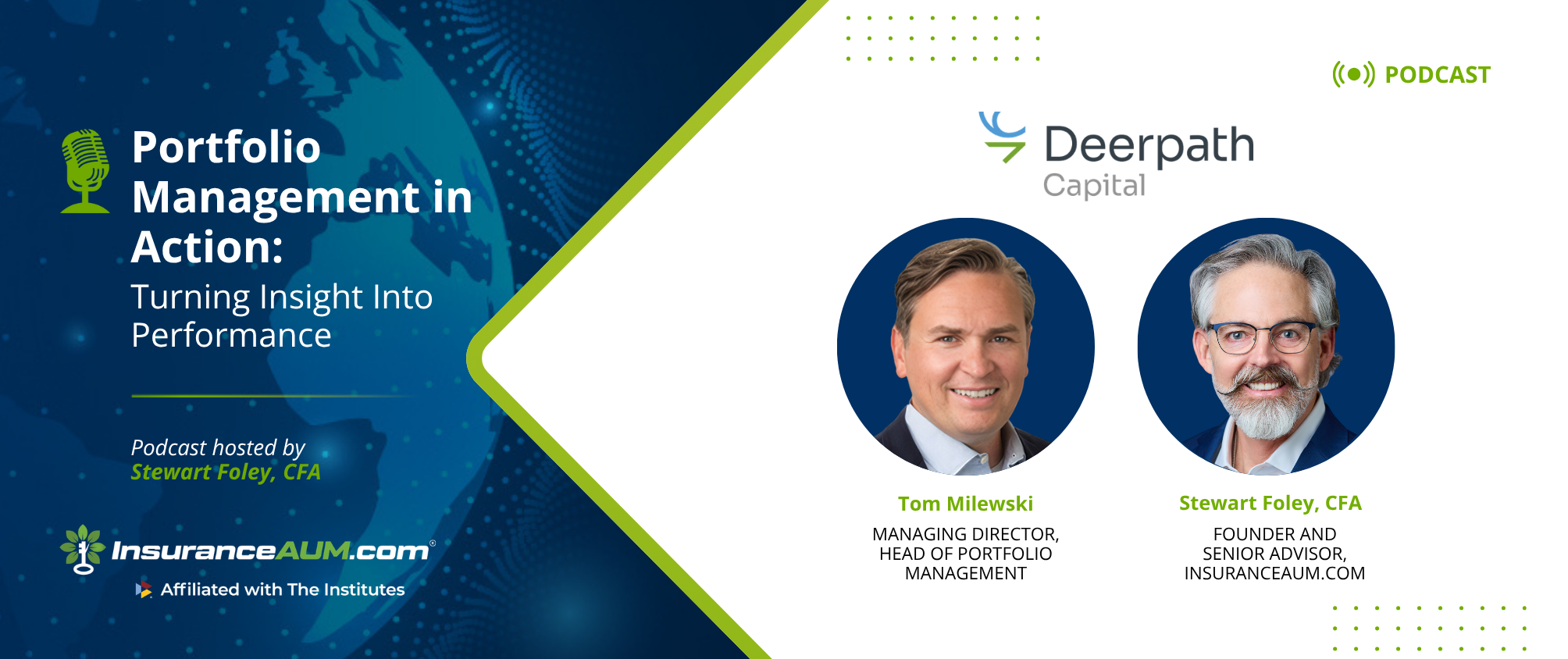
Portfolio Management in Action: Turning Insight Into Performance

Image
IAUM_Podcast_E382_Deerpath_Web


Stewart: Hey, welcome back. It's great to have you. You're at the home of the world's smartest money, and my name is Stewart Foley, CFA, and I'm your host and thrilled to be with you today. And one of the things that's interesting, and we're going to talk about this today, is that private credit managers often spend a lot of time talking about underwriting. And as we all know, underwriting matters, but two managers can look at the same borrower, negotiate similar structures, and end up with very different outcomes. And the reason is portfolio management. Portfolio management determines what happens next. And so we have cleverly titled today's episode Portfolio Management in Action: Turning Insight Into Performance.

I'm joined today by Tom Milewski, managing director and head of portfolio management at Deerpath Capital. Tom brings more than two decades of experience across leveraged finance, loan syndication, debt restructuring, and direct lending.

Prior to Deerpath, he worked at BMO Capital Markets’ leveraged finance and loan sales and syndication groups. And earlier in his career, he worked at Bank of America's commercial banking debt restructuring division. Tom, thanks for taking the time. We certainly appreciate you being on.

Tom: Great. Thanks for the time, Stewart.

Stewart: Personal note. Here's a crazy question. And I'm not a huge sports guy at all, and I've taken a fair amount of heat over that. I'm a racing guy. I'm not a sports guy, but I got a trivia question for you. Who is the only woman, the only woman in NCAA history that has scored a hundred goals in both hockey and soccer?

Tom: I think I'm the only one that, or maybe other than you, that knows that outside of her parents and her closest friends, but it is Michelle Greenway. Lucky enough to have her within the Deerpath squad. And she is just as much of an all-star today as she was in her athletic endeavors in college.

Stewart: Yeah, it's fun. Got to know her family. You also have Charlotte Austin Kasan. Her husband, Jimmy, they have actually brought into the world one of my first grandstudents. So all good in the neighborhood over there at Deerpath Capital. I'm Switzerland at the end of the day, but I love my students. So it's great. Appreciate you letting me take a little bit of time there.

Tom: You taught a couple good ones.

Stewart: Yeah. Well, I'll tell you, I was super fortunate. We had an extraordinary, and it's still the case today. The finance program at Lake Forest College is very good. And there's a good number of folks who have done really well in the finance area, asset management, sales and trading, insurance all over the place. One of the guys is an analyst at a public pension system. And so we're super proud of everything that those folks have done, and it's a privilege to be a small part of their success. I was honored to be it. So let's talk about you. Where did you grow up? And this is our new icebreaker, Tom. If you weren't doing this job today, what job would you most like to have instead?

Tom: So grew up in Chicago, Jefferson Park, northwest side of the city. Been here for most of my life, spent about five years in California surfing my way through it, but also within the finance markets. In regards to your question of what would I be doing? I think I would take a significantly different approach. I'm in a desk job today, and I get to see a lot of operating companies. Some type of woodcrafting, craftsmanship would be great. I thoroughly enjoy the precision, but then also the idea of really honing in on a skill set that actually sometimes truly physically builds something. And I think that that's just awesome. We don't give credit to people who actually still work with their hands and create something on a day-to-day basis like that.

Stewart: Yeah, and it's so true. I will tell you a funny story. I've spent some time in a motorcycle community that shows these motorcycles. And at the end of the day, Tom, you and I and everybody we know has the same job title, and that job title is desk jockey, and we're all in that category. So when somebody says to me, "Hey, man, what do you do?" And I go, "Desk jockey." And that just helps. That helps with the explanation. So I can totally appreciate where you're coming from there. Active portfolio management has always mattered. And as a guy that taught a lot of finance, the less commoditized the asset class or the asset, the more it matters, the more rolling up your sleeves matters. And so when you talk a little bit about portfolio management becoming a larger source of differentiation, how is that playing out right now?

Tom: Great question. And I think it's playing out where you're seeing it in just the news and the story of all these BDCs and the losses and how this industry is going to shake itself out. If you never learn from your mistakes, you're going to repeat them, and those losses have the tendency of very much so rolling up on each other, and there's a snowball effect. If you're not listening to what your portfolio's telling you, if you're not reallocating resources, if you're not paying attention to hotspots within the portfolio, you're letting things fester and create issues that you could have cut off earlier on. So the quicker you are with making observations, quicker you are with making active oversight, active decisions, both from either saying no to a new credit relationship because you're not seeing that vertical or sub-vertical, or you're seeing headwinds elsewhere, there would be a correlation.

That's how you create a good, diversified portfolio, but also you learn from what you're hearing in the true lifeblood of your portfolio to make better decisions as on your next investment.

Stewart: That's super helpful. I appreciate the foundation there. Not all of these lenders and deals and structures are created equally. Managers are often looking at the same deals. Where do the outcomes begin to diverge? Is it at origination, or does the real differentiation happen throughout the life of the investment?

Tom: I'd say it's actually both. Part of it could depend on what your underwriting standards are. If you are willing to take on a little bit of risk, additional risk for yield, those could create the initial footsteps or footfalls that will snowball into effect of a problem at a later date because you just overlevered a transaction right from the get-go and know in regards to getting that extra yield. Here at Deerpath, we look at it as we'd rather chase a great structure and worry about the pricing later, as opposed to taking on additional risk because there's no price that ever might be able to offset that additional risk that you might be putting on. So it does start in the beginning and just making sure that you have a credit box or you have your thesis that you stick to over the course of time, but also that you adapt it over the course of time of what your portfolio's telling you.

So now, moving to the portfolio side, if you don't see what the portfolio's telling you, where are the hotspots? Where are issues from a margin perspective? If you're not thinking about what the correlation might be with interest rates, with mortgage rates to maybe a mortgage servicer, all of that trickles down. And you can do that in several different kind of industries where you think about correlations, you think about risks, you think about tariffs, you think about fuel costs, how are those going to impact some businesses? You think about even just the cost of shipping right now and how is that going to impact some businesses? You think about what the consumer or even the commercial clients are telling you from interactions with CFOs and what they're hearing from their client bases. And then lastly, it's the results. How quickly and how often are you looking at financial results from these borrowers?

And again, pulling and extracting that data and making sure that the full organization knows what's going on, both at the individual borrower level perspective and making sure that the conversations are being had early but also thorough, but then also taking more of a bird's eye approach and, from an overall portfolio level perspective, what are you seeing, and should you be making changes to some of your assumptions?

Stewart: One of the things I heard you mention was listening to the portfolio. Can you talk to us a little bit about Deerpath's philosophy on portfolio management? And if you can, I don't know if I'm going someplace I shouldn't be, but are there KPIs that you use to listen?

Tom: Yeah, it's something I can definitely talk about because it is something that we create. We create dashboards, triggers, monitoring tools for each of our borrowers. We think about really what are — you know, I don't want to be talking about only what's reported revenues. If you think about that, it tells you what's gone on, but it doesn't tell you what's going to happen. And that's where I think you can be a lot more insightful and be more attuned and do more actions because of what the next things or what's the dashboards telling you that might be coming down the pike. So it first starts with monitoring. We get monthly financials. I know that there's been, most recently, public companies only would be reporting on a semi-annual basis. Look, we're in illiquid assets, and so we're looking to make sure that we can spot what the monthly financials are telling us to observe trends and to start asking questions when we don't like the trends.

Second part is all of our borrowers, we create triggers, and these are our early warning signs that we think of, are not necessarily always just a revenue or a leverage or anything that might be on a reported basis. But again, it goes back to those correlations that we try to figure out of what leads to either stress or success for a company. So what's their backlog telling you? What's their WIP telling you? What kind of volume are they seeing in several different fronts? What's the revenue per widget, or what's the efficiency of their workforce? What are they doing? So those are all the kind of — again, you have to really be mindful of what kind of data sets you're asking your borrowers to do, but the positive side here is our whole portfolio is private equity backed. And so what we've seen with that ownership community is they truly try to create dashboards and KPIs as well.

And so it's not uncommon for when we ask for this information because they get it as well. I think sometimes we're one of the fewer ones that do ask for that, to think about just not what's historically gone on, but what's more likely to occur the next six months.

Stewart: And in some ways, I mean both of you are concerned about the same things. I mean, you're senior in your capital stack, but at the end of the day, they need an early warning system too to try and address issues that may be developing that you unearth through these monitoring activities. Is that fair?

Tom: Very much so. Again, even though we do have a professional ownership behind us, a lot of times our portfolio is maybe first-time generational professional ownership; they're establishing those things as well. So they use our guidance because there's some verticals that we just know very well, and we know these are the really things that make or break a company. And then they ask for our guidance on that perspective to really think about how should the KPIs and those dashboards be established, like what's the recurring revenue streams, what kind of logo churn retention stats that they should be looking at that really create a good A+ borrower within this vertical. We can give them the stats for them, saying a good business services company has margins of X within this vertical. And we can tell them that, and we can tell them some of the metrics that you should be working towards in order to attain that.

So yes, it's kind of a two-way street. They're looking for it. And you brought up a very good point on the last part is we're top of the cap stack. And so private equity, they have more equity or more money at risk than we do, and they're behind us. And so they want to work in our favor. Their success is really reliant on our success — of our investment in the first lien because we are within that first lien position, we have the rights to protect our investment more so over theirs because at some point they become a fiduciary for our exposure.

Stewart: It stands to reason that if you're a PE firm and you're getting financing and you don't take care of the borrower, everybody gets alligator arms pretty quickly, I would think. And so it's interesting the time and the headlines we're in right now. Some folks think it's a buying opportunity, some folks think it's concerning. There's a lot of headlines and, like all headlines, you got to dig in there. You've spent a good amount of time in restructuring, leveraged finance, direct lending, and in senior positions, you've seen good credits, stressed credits, and workouts. Are there patterns today that you see that someone who's earlier in their career may not fully appreciate?

Tom: Yes. I think when you think about it, it's really more so of that a lot of times we're experiencing a little bit of this workforce where, because they haven't seen the Great Financial Crisis, that was many moons ago now. And so this run that we've been on is getting long in the tooth. And so a lot of people haven't seen or experienced what a downturn might look like, haven't really seen or had to deal with how do you fix something that's broken or being able to realize something that it is broken. It's not going to turn around, and you have to take more harder lessons or harder actions in order to maximize the outcome for yourself. Where I try to guide a lot of team members and portfolio managers is really thinking about don't take anything small for granted because a lot of these things — and it goes back to what I said earlier — there's a lot of early warning signs that should, if you do proper portfolio management, should tell you that this is on the negative trajectory.

And again, it goes back to the KPIs and the dashboards that we try to create. One of these great triggers that I really enjoy is a 5% reduction. If you don't track it on a quarterly basis and you don't actually have a mechanism in place that actually tracks that, 5% quarter over quarter might not seem anything, but now if you added that up for two or three quarters, you've just lost 15% of revenues year over year. That's bad. There's something that, when there's smoke, there's fire. And so again, just making sure that people realize to raise their hand and say, it's not your fault that there's a fire, it's just, now let's deal with it.

Stewart: That's an interesting rule. You called it the down 5% rule. Is that right? I want to make sure it's super simple, but it makes all the sense in the world because as you said, 5% over three quarters is 15%. It's a big number. It tells you that there's water draining out of the bathtub, right?

Tom: Yeah, correct. Again, given the fact that we have a good amount of data that comes our way, let's make the most of it. Let's not sit on our hands, and let's make sure that we're using those data sets to, again, go to that active portfolio management that could create better outcomes for us. Again, all of this is predicated on the sooner you react to something or be proactive versus reactive is the name of the game right now.

Stewart: It's the same thing with your health, right? You catch cancer early enough at your survival rate, you wait till it's way deep. It's different. It makes all the sense in the world. A lot of times we hear terms like covenant light, covenant loose. Talk to us about the — I don't know how else to say this. What's the current events on covenants right now? Are you seeing weakening covenants? Are you seeing, do you have the ability to put up stronger covenants given that maybe there's some less capacity in lending? Talk to us about where things stand in this topic.

Tom: Yeah. So let's start with covenant light. That is basically a bond. So as an investor, a loan investor, you are basically going in and saying, the only time that I ever have the ability to take action is when you don't make a payment. So that's a default. You have no other kind of metrics to measure performance and saying like, "Hey, let me come back and let's negotiate because this isn't what I signed up for." So again, bond-like type structure where payments are the only thing that you can hang your teeth on or sink your teeth into to force something. Covenant loose. The best example I could say for this company would be you have a leverage covenant debt over EBITDA. A company is usually bought on a multiple of EBITDA. Let's just say it's bought at 10 times multiple. Well, a covenant loose would be, well, the covenant is set at, it's a static covenant set at nine times.

Well, when you break that covenant at nine times and the company was bought at 10 times, leverage is breached at nine. You're out of the money already. It's covenant loose. It's a covenant on paper, but it doesn't have any teeth to it.

Stewart: Once you trip it, you're too close to the edge.

Tom: Well, I think you're already over the edge because again, think of it, that company was bought at 10 times when it was doing well, presumably at nine times it's not doing well because leverage wasn't set at and it was presumably lower than that. So it's crept up, underperformed, leverage has crept up. And so you got to think, I always think of it as if you have a 30% decline in EBITDA, there's probably a 30% decline in EV enterprise multiple as well. So again, now you're outside of enterprise value. And so I view that as covenant loose where it's covenant on paper, it's a paper tiger. It doesn't really help you whatsoever.

Now meaningful covenants. Meaningful covenants are set to a real plan that you as a lender believe in and that there is a deleveraging effect where those covenants step down over the course of time. So you set it at a cushion that you think is appropriate because again, not all plans, not all business models are worked to perfection. Again, capital structures are meant to both work towards ability that you as a first lien lender always have a first and second way out. So you have to give wiggle room to the cushion to those covenants, but you also don't want the leverage to stay stagnant and high forever. So you set step-downs on those covenants over the course of time. Again, most sponsors want that as well because they want to make sure that they're deleveraging, they're de-risking that company as well. And so that's the sweet spot that I think we've been focusing in on where it's always been our bread and butter is we create leverage covenants, we create fixed charge covenants that are meaningful, that allow us to be at the seat of the table where most importantly, there is a trip, there's a financial covenant default where there's still value to the equity.

So that makes them want to play ball with us to fix this thing as opposed to just say, I'm throwing up my hands, and now it's your problem. I also want to make sure that these covenants are set at levels where we have a covenant trip, but we don't have a liquidity issue still. So again, those are all the things that good covenants are supposed to do. They allow the investor, i.e. for us would be the first lien debt holder, to be able to come back and say, look, something's wrong, we need to fix something here. And sometimes that's an incremental yield, it's incremental support from the sponsor, let's fix this balance sheet, and let's make sure that we're in a both better spot to allow this company to succeed in the long run.

Stewart: The next question I've got, sometimes we leave this one in and sometimes it comes out, and I ask it from the standpoint of somebody who's really close to these markets talking to people who aren't as close to these markets. Are there common misperceptions or things that maybe were historically true that aren't true right now that you could kind of explain or set, give us the accurate information about whatever that may be? Do you feel like that's an issue, or do you feel like people understand it, everybody gets it?

Tom: One thing is there is leverage, and not all leverage is the same. I think if you talk to, there's been an over the course of maybe 50-60 years, if you talk to my dad, he never wanted any debt, but there is a thing such as good debt, right? 100%. And good debt helps companies succeed and grow and then let them innovate, let them create jobs and again, be successful for themselves, for their investors. There's also such thing as bad leverage. You leverage a transaction to perfection, knowing the fact that there's still bumps in the road, that not every single plan is 100% successful. So I think over the course of time, people have realized that there is leverage that is meaningful, that helps a company succeed. I think again, when you think about first lien, I think that's why you've seen this private debt really kind of grow over the last several years, partly due to regulations.

I think banks have gotten out of this lending business. Their cost of capital and their regulatory like RWA requirements prohibited them. But the other part too is I think we're able to be a little bit more efficient with how to underwrite these transactions, and the market has accepted the fact that leverage is good. Again, as long as you're understanding and your underwriting standards and the risk parameters that you're taking on are truly reflected, and you're being honest with your investors of what type of risks you're taking.

Stewart: Yeah. I've taught corporate finance a number of times, and standard test question is like you can add debt and lower your weighted average cost of capital. When you have a lower weighted average cost of capital, the value of the firm goes up. It's just that simple, but there is an inflection point where the debt load becomes burdensome, and it's not only practically correct, it's theoretically correct as well. So kind of to wrap, what do you want insurance investors to understand about portfolio management of private credit that is sometimes overlooked when they're evaluating making an allocation?

Tom: I think when you take a step back, it's just a matter of what's the data that your potential investor is getting or for us like us, and what are you doing with that data? Again, thinking about that portfolio side, how does your organization know what's going on with your portfolio, and how do you shift allocations over the course of time? Our loans are five-year loans, but what I could tell you is that not every single loan is built the same way. Over the course of time, we've made corrections and with how we structure some things. We've also made corrections of how we exit certain loans or some verticals. And so really thinking about asking when you're thinking about allocating dollars to within this vertical is really thinking about like, what have you learned, how have you changed over the course of time? What are your principles, and how are they being applied at onset, but also on over the life of that loan?

Stewart: I really appreciate you being on. It's been a great education. I got a couple of fun ones for you on the way out the door. Sure. I've always got folks who are earlier in their career in my mind, and particularly first-generation students that sometimes don't know things that when your parents go to college, you kind of learn along the way. And so it goes to this, what do you think is the best piece of professional advice you've gotten over the course of your career? I'm sure you've had some great mentors along the way. Anything come to mind as far as, or a piece of advice that you'd give your 21-year-old self?

Tom: This is one where I'm a credit guy at the end of the day, and this is something that's stuck with me over the course of time, is don't be afraid to ask that question or the tough question because I think everyone sometimes is sitting in the room and everyone knows the obvious question that needs to be asked, but sometimes it's not being asked. They're waiting for someone else to do it. Be that first person because everyone else, there's still a little bit of this herd mentality of sometimes we're dealing with sponsors that want to think that we know everything, but sometimes you don't. And so I think being able to ask that question or being able to ask that follow-on question can create much more valuable insight, as well as follow-on questions that help you with your diligence and make you be smarter when you're making that investment decision.

So don't be afraid, don't be shy. Again, there are no dumb questions, but again, just make sure you're asking that meaningful question because I think probably seven other people in the room want to ask it, but they're just too shy to do it.

Stewart: Yeah, I think it's great advice. I've been in rooms where somebody asks a question and three other people go, "I was going to ask that." It's like, "Yeah, but you didn't." And that's really good advice. All right, last one. You can have dinner. Dinner's on us up to four people. You can have one, two, or three guests. Who would you most like to have dinner with, alive or dead?

Tom: I'm going to take three because if you're going to give me three and it's a free dinner, I want to make this a—

Stewart: You want to maximize your value. I love that.

Tom: Exactly.

Stewart: That's a fixed income mentality. You want to maximize value. I think that's the right thing to do.

Tom: Exactly. So I would take, earlier on in my career, Bank One, Jamie Dimon was CEO, and I still think he's one of the most in-tune people in the marketplace, and he's so knowledgeable about anything that he walks into. I would love to poke his brain on several different things on that side and just get his take, both from finance but politics to just world issues, macro and micro. So I think that would be awesome. I would take Hank Paulson. He was living 09-11, I was doing corporate restructurings, and I thought that was really drinking out of a fire hose. I think what he did during that time period was even, it wasn't drinking, it was just basically getting an IV of fire. So I think that would've been interesting to have those tough conversations — again, when you're thinking about the questions and the tough conversations, I think during that TARP period would've been very interesting and very insightful of how to be that.

And then the last one, I'm a history buff. And as I get older and older, I think old men love history more and more, but I think Abraham Lincoln would be awesome. Given the politically charged environment that we have right now, I think what he lived is probably even 100% more so be a lot of lessons learned that might be applicable to what we can apply today.

Stewart: So there's an Illinois focus there. Because I think Hank Paulson lives in Illinois.

Tom: He does.

Stewart: And Abe Lincoln's from Illinois. I can't speak to your first one.

Tom: Jamie Dimon.

Stewart: Yeah, Jamie used to live in Chicago, but not anymore. So yeah. Hey, that'd be a good table. That'd be a good table. I always say it's on us. I never know. I haven't cleared that with the new owner, but I'm just going with it. All right. Listen, thanks so much. I really appreciate you being on today. It's been a very good education and really an enjoyable talk. So thank you so much, Tom.

Tom: Thank you, Stewart. Great talking with you.

Stewart: We've been joined today by Tom Milewski, who's the managing director and head of portfolio management at Deerpath Capital. If you like what we're doing, please rate us, review us on Apple Podcast, Spotify, or you can watch us on our YouTube channel at InsuranceAUM Community. Hello, video watcher people. Hello, we're thrilled to have you. That audience is growing, and it's great, and we appreciate it. So we are the home of the world's smartest money. This is the InsuranceAUM.com podcast. We'll see you again next time.

Share this post

Sign Up Now for Full Access to Articles and Podcasts!

Unlock full access to our vast content library by registering as an institutional investor

Register

Contacts


Image
Deerpath Capital Logo


Deerpath Capital is an established private credit manager providing customized, cash flow-based senior debt financing to sponsor-backed U.S. lower middle market companies. With a singular focus on this segment for nearly two decades, the firm has invested over $15.8 billion across more than 1,200 transactions and manages approximately $9.2 billion in AUM as of March 31, 2026. The firm operates through regional origination and underwriting teams in the U.S. which are supported by global investor coverage across major U.S. markets and Australia, Europe, Japan, Korea, and the Middle East. The firm’s focused strategy, deep lower middle market expertise, long-standing sponsor relationships, disciplined credit philosophy, and comprehensive direct lending platform define the Deerpath Difference.
 

Antonella Napolitano   
Managing Director, Head of Investor Relations   
ANapolitano@deerpathcapital.com
646-786-1019

Nelson Pereira 
Director, Insurance Investor Partnerships 
NPereira@deerpathcapital.com
203-517-6082
 

View the contributor page

Sign Up Now for Full Access to Articles and Podcasts!

Unlock full access to our vast content library by registering as an institutional investor .

Create an account

Already have an account ? Sign in

Ѐ Ё Ђ Ѓ Є Ѕ І Ї Ј Љ Њ Ћ Ќ Ѝ Ў Џ А Б В Г Д Е Ж З И Й К Л М Н О П Р С ΄ ΅ Ά · Έ Ή Ί Ό Ύ Ώ ΐ Α Β Γ Δ Ε Ζ Η Θ Ι Κ Λ Μ Ν Ξ Ο Π Ρ Ё Ђ Ѓ Є Ѕ І Ї Ј Љ Њ Ћ Ќ Ў Џ А Б В Г Д Е Ж З И Й К Л М Н О П Р С Т У Ф Х Ц Ч Ш Ā ā Ă ă Ą ą Ć ć Ĉ ĉ Ċ ċ Č č Ď ď Đ đ Ē ē Ĕ ĕ Ė fi fl œ æ ß