

Insight Investment -

The UK Fiscal Position: An International Comparison

IAUM Article (86)

By Gareth Colesmith - Head of Global Macro Research


Executive summary

  • UK tax and spending levels are not excessive when compared with other major developed economies
  • Welfare spending, while higher in recent years, is expected to stay broadly stable as a share of GDP going forward.
  • Labor taxation is the lowest in the G7 for low-to-average wages, though top rates are relatively high
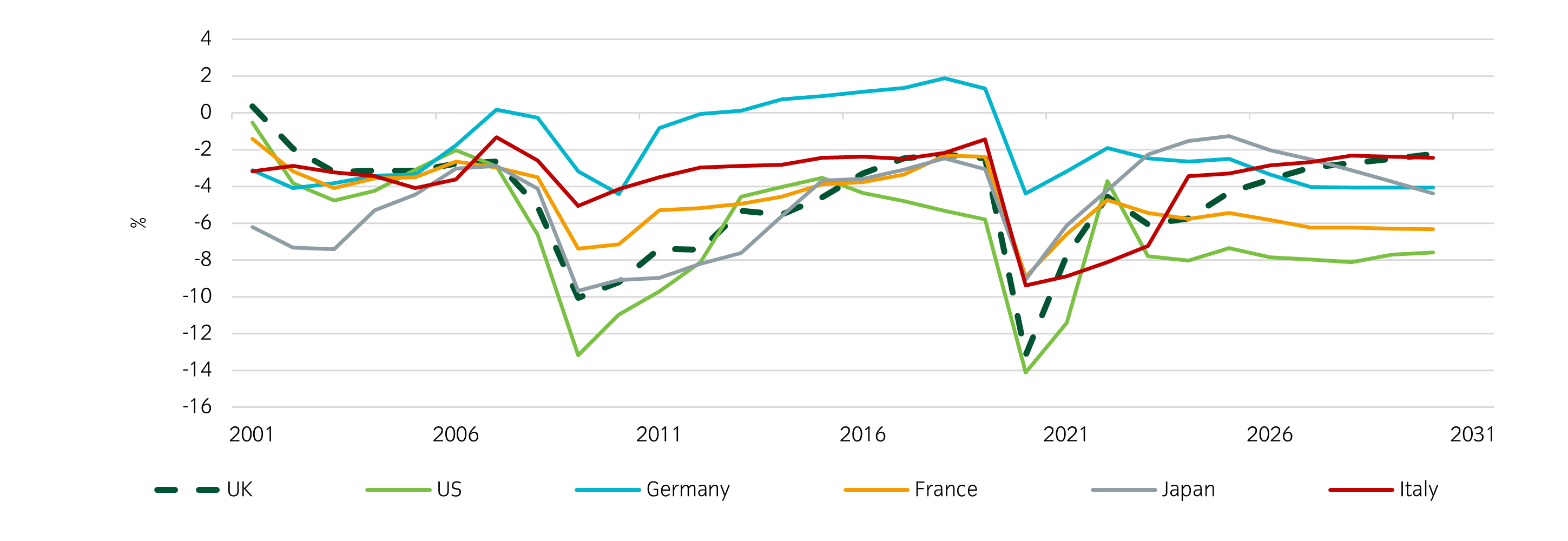
  • The UK budget deficit is set to improve, helping to stabilize the debt-to-GDP ratio
  • Current market pessimism – reflected in a steeper gilt yield curve and weaker sterling – could reverse if growth surprises to the upside

Concerns over UK fiscal sustainability appear overdone
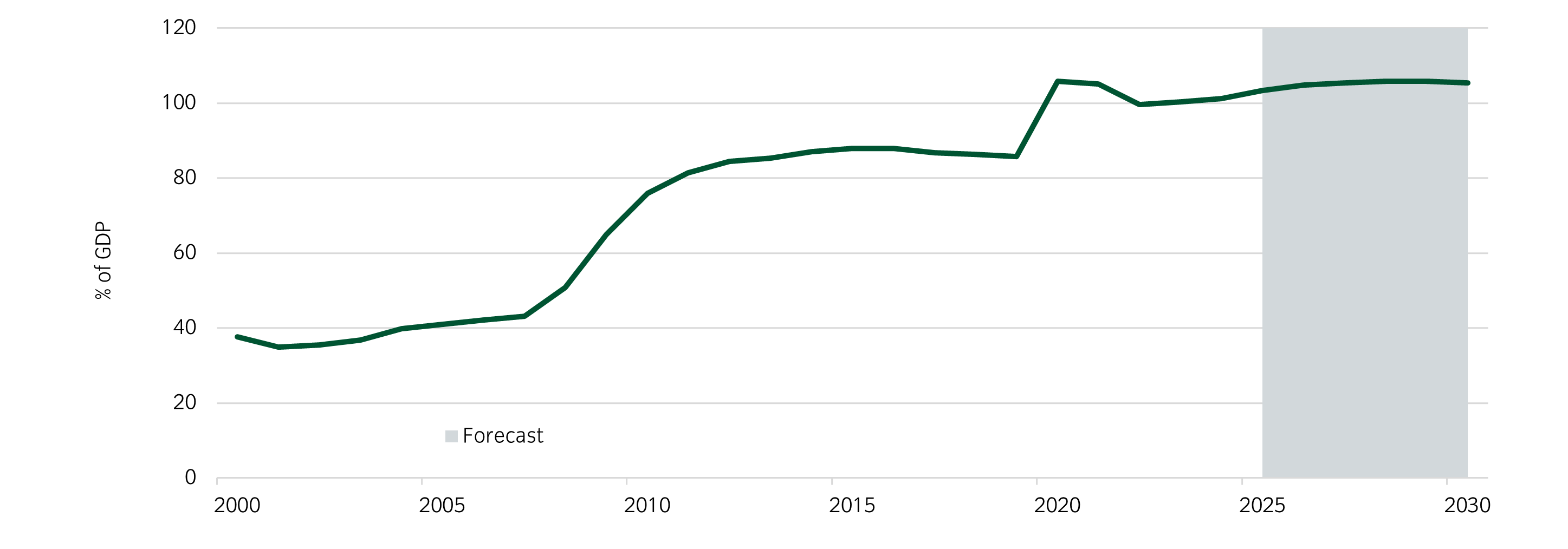
As highlighted in our paper Fiscal fault lines: a global review of sovereign fiscal health, the UK's public finances appear risky, though far from the most concerning globally. Countries such as the US, France and Belgium face significantly less sustainable fiscal dynamics. While the UK carries a relatively high debt-to-GDP ratio, it is expected to reduce its budget deficit over the next five years, in contrast to some other countries. This adjustment should stabilize debt levels, setting the UK apart from many international peers.

Figure 1: UK debt/GDP has grown significantly1

Image
fig-uk-debt

Figure 2: The UK budget balance is projected to improve1

Image
budget2

The UK sits roughly in the middle of the G7 when it comes to tax revenues and government spending. Typically, it raises and spends less than most European countries, but more than non-European peers and the OECD average.

There is nothing inherently problematic about this position. The overall scale of taxation and government spending is ultimately a political choice. The UK occupies a middle ground between more social-democratic European nations and smaller-government advanced economies outside Europe, reflecting its own social contract.

Spending is stabilising, but pandemic spending still not unwound
According to the Office for Budget Responsibility (OBR), the 2025 Budget will keep spending at a similar share of GDP over the next five years, while revenues are expected to rise by a couple of percentage points of GDP – leaving the UK in a midway position internationally.

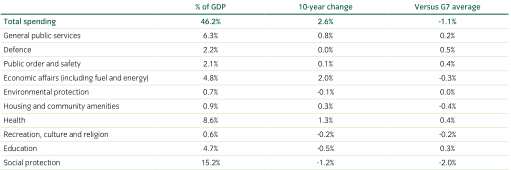
Looking more closely at how spending and revenues break down, the OECD provides an international comparison of government spending by category, and we outline the major categories from the latest 2023 data in Table 1.

Table 1: Spending vs G7 average2

Image
tab1

Like most countries, the UK saw a sharp rise in government spending during the pandemic, which has only partially unwound. Key areas of increased expenditure include:

  • General public services – covering the cost of running government, parliament, and embassies. There should be scope for efficiency improvements in these areas to return spending levels closer to pre-pandemic levels.
  • Fuel and energy – in line with most of Europe, fuel and energy costs, which form part of the economic affairs line, have risen by 1.2% of GDP. This reflects higher energy costs and the need for targeted policies to strengthen supply.
  • Health – driven by rising NHS spending, largely due to demographic ageing.

Interestingly, spending on social protection has fallen as a share of GDP between 2013 and 2023. This includes reductions in old-age benefits and a notable drop in family and child-related spending (from 1.6% to 1.1% of GDP). Some of this has been offset by higher costs linked to social exclusion, which likely includes spending on asylum seekers.

Overall, UK social protection spending is around two percentage points below the G7 average, though the range is wide – from 7.9% of GDP in the US to 23.3% in France.

UK revenues are lagging behind
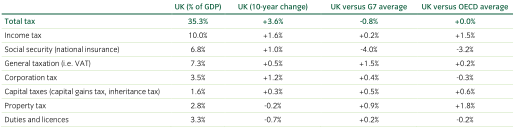
As outlined in Table 2, although the UK’s tax take has risen noticeably over the past decade, it has only reached the weighted OECD average and still sits slightly below the simple G7 average.

What stands out is the UK’s relatively low collection of social security contributions (National Insurance contributions, or NICs) compared with other countries. By contrast:

  • income tax and property taxes are somewhat higher than the OECD average; and
  • VAT revenue is above the G7 average, skewed by the very low sales tax in the US.

The now-abandoned proposal to raise income tax by 2% and cut NICs by 2% would not have affected employee take-home pay but would have shifted the burden further away from international norms – raising more from property and pension income while reducing reliance on social security contributions.

Even with the increase in employer NICs from April, the UK still collects less from this source than most peers. The OBR report accompanying the budget highlights this, along with other expected revenue increases over time, such as higher income tax receipts due to frozen thresholds.

While taxes and total revenues as a share of GDP are projected to rise to historically high levels for the UK, this would only bring the UK in line with Canada today – still well below major European economies.

Table 2: UK revenues versus G7 average3

Image
tabl2

Digging deeper into labor taxation, we can examine two measures.

  • Personal taxation – income tax plus employee National Insurance contributions.
  • Tax wedge – personal taxation plus employer National Insurance contributions.

The OECD provides useful data on average tax rates and tax wedges at different income levels, expressed as a percentage of average wages. This approach allows for meaningful comparisons across countries.

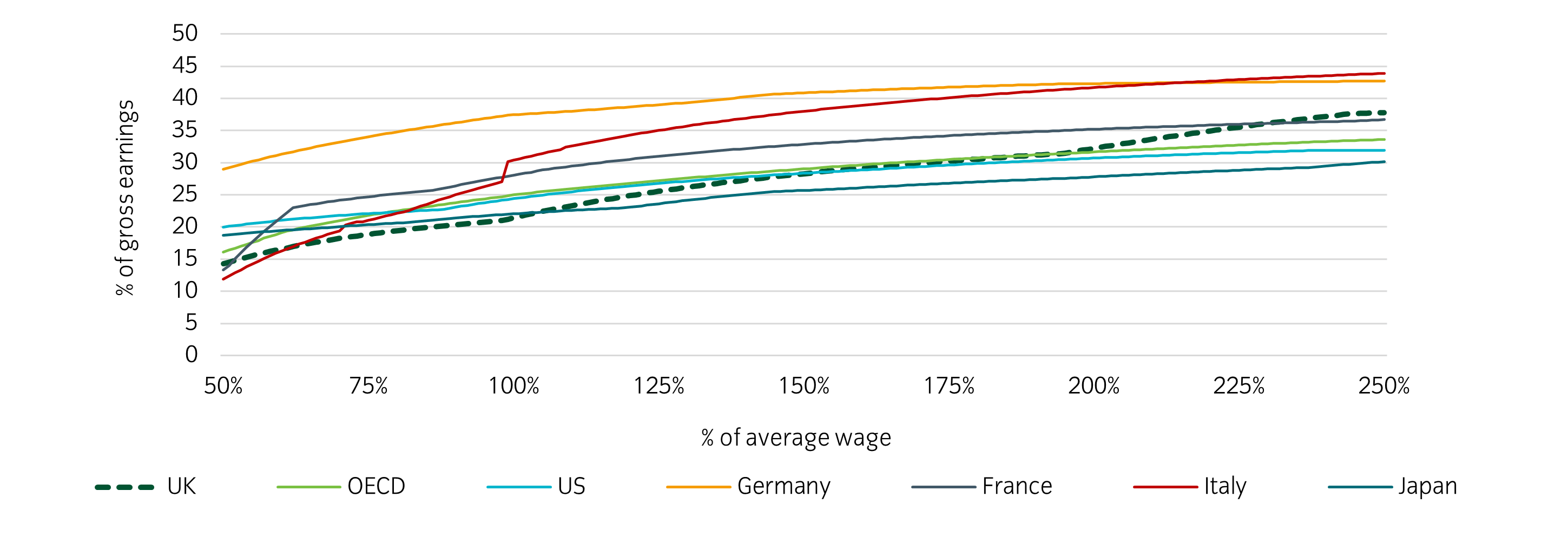
Figure 3: Net personal average tax rate (% of gross earnings versus % of average wage)4

Image
net-per-avg-tax

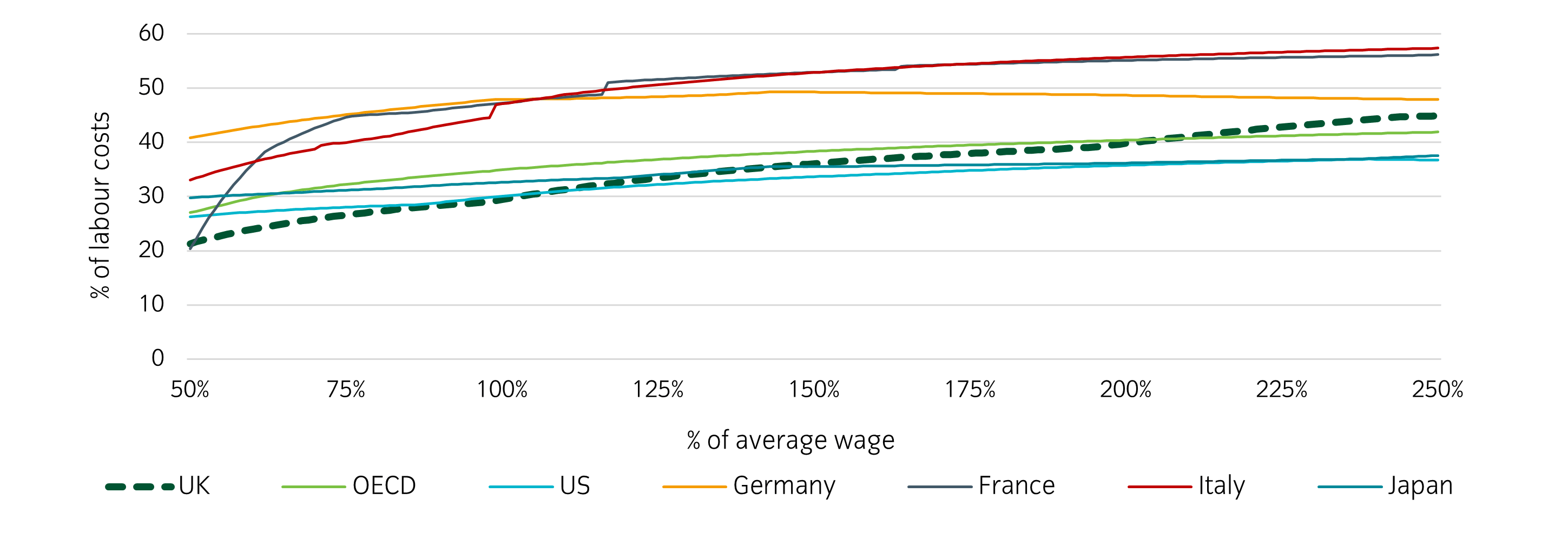
Figure 4: Net average tax wedge (% of labour costs versus % of average wage)4

Image
net-avg-tax

Contrary to common assumptions, the UK has the lowest average personal tax rate in the G7 for incomes between 62% and 104% of average wages – roughly £31,800 to £53,400. When employer NICs are included, the UK also has the lowest tax wedge in the G7 for incomes between 51% and 107% of average wages (£26,200 to £54,900).

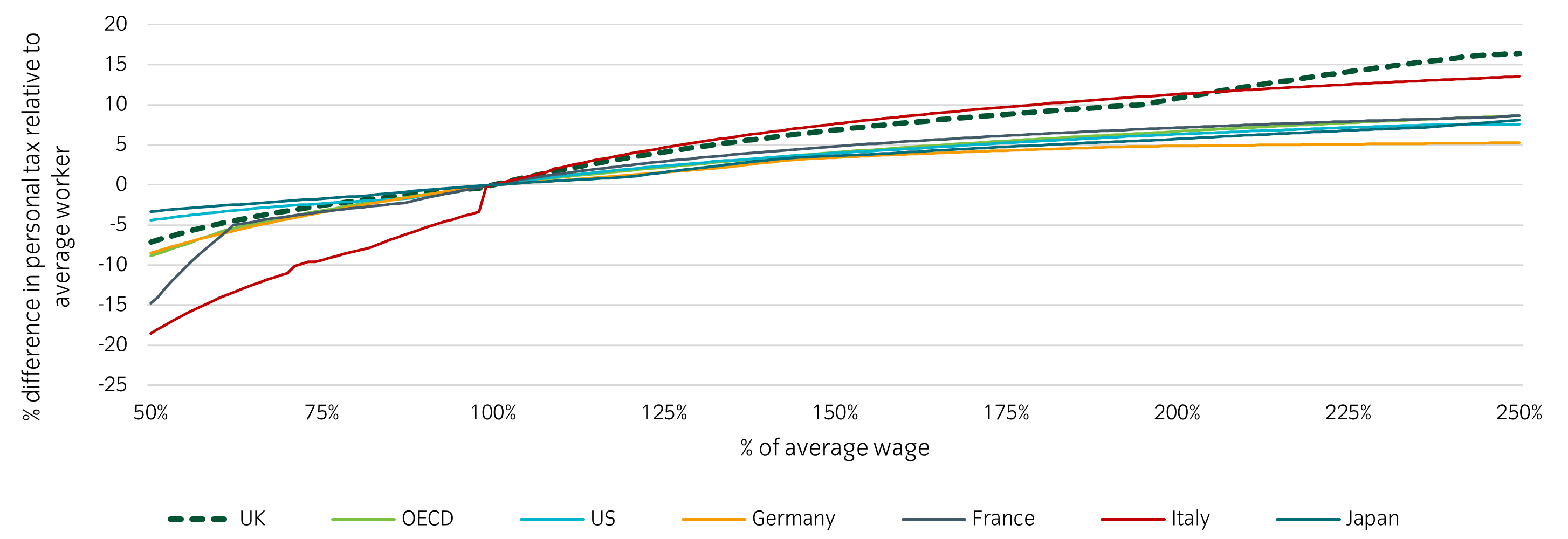
In other words, the UK’s tax system is less progressive than many European countries at lower-to-average income levels but becomes the most progressive in the G7 for earnings above the average wage.

Figure 5: Percentage difference in personal tax rate relative to average worker versus % of average wage4

Image
perc9

There are solid economic arguments for taxing labor less, as it encourages employment – and the UK appears to follow this approach for average and slightly below-average wage levels.

If the government wanted (or needed) to raise more income tax revenue by international standards, it would likely need to go beyond freezing thresholds and actively lower the higher-rate threshold or, preferably, make an equivalent adjustment to National Insurance.

Finally, given concerns about wealthy individuals relocating to avoid UK taxes, it’s worth noting the UK’s position on top income tax rates. Unsurprisingly, given the previous chart, the UK ranks near the top for taxing high incomes – although France and Italy surpass the UK once social security contributions are included. For context, Hungary and Estonia apply single, very low, income tax rates, while Luxembourg has an astonishing 23 income tax bands.

A steadier position than many of its peers
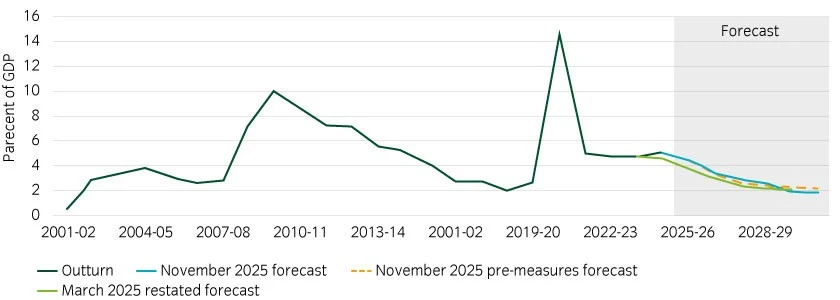
Although the UK still faces fiscal challenges, alongside weak productivity and lingering Brexit effects, its position is stronger than that of many peers. Importantly, while the Budget slowed or backloaded fiscal consolidation, the process is still underway – something that cannot be said for most other countries.

Markets may remain wary of a rapid upward move in gilt yields, as we saw following the Truss-Kwarteng mini-Budget, but politicians appear equally concerned and seem more cautious of market sentiment than in the past.

Figure 6: Public sector net borrowing3

Image
public-sec

Several factors, including shifts in pension fund demand, help explain the relative steepness of the UK gilt yield curve. However, if fiscal concerns are part of the story, they appear somewhat overstated. An upside surprise in growth would significantly improve the UK’s fiscal outlook and, given current market pessimism, could lead to relative outperformance of gilt yield-curve flatteners. A similar dynamic could also play out in currency markets, benefiting sterling.


READ MORE FROM INSIGHT INVESTMENT


1Source: Insight, Bloomberg and the IMF. Data as at 30 November 2025. Data from 2025 to 2030 is IMF forecast.

2Source: ONS, OBR: OBR November 2025 economic and fiscal outlook. Figures don’t sum to 100% as only major items shown.

3Source: ONS, OBR: OBR November 2025 economic and fiscal outlook

4Source: Insight, Macrobond, OECD. Data as at 30 November 2025.


Important information

Material in this publication is for general information only. This material is not intended to be relied upon as a forecast, research or investment advice, and is not a recommendation, offer or solicitation to buy or sell any securities or to adopt any investment strategy. This document must not be used for the purpose of an offer or solicitation in any jurisdiction or in any circumstances in which such offer or solicitation is unlawful or otherwise not permitted. This document should not be duplicated, amended or forwarded to a third party without consent from Insight Investment.

This material may contain ’forward looking’ information that is not purely historical in nature. Such information may include, among other things, projections and forecasts. Forecasts are not guarantees.

The information and opinions are derived from proprietary and non-proprietary sources deemed by Insight Investment to be reliable, are not necessarily all-inclusive and are not guaranteed as to accuracy. As such, no warranty of accuracy or reliability is given and no responsibility arising in any other way for errors and omissions (including responsibility to any person by reason of negligence) is accepted by Insight Investment, its officers, employees or agents. Reliance upon information in this material is at the sole discretion of the reader.

 © 2026 Insight Investment. All rights reserved.

Share this post

Sign Up Now for Full Access to Articles and Podcasts!

Unlock full access to our vast content library by registering as an institutional investor

Register

Contacts


Insight Investment

Insight is a global asset manager specializing in fixed income and risk management strategies with $836.1bn in AUM1. We have been working with insurers since 1934 and manage $32bn for over 80 insurers globally. Our investment philosophy offers clients innovative yet practical investment solutions. We manage custom fixed income strategies to help meet clients evolving needs, such as liquidity, principal preservation, earnings stability, tax minimization and total return.

Insight is subsidiary of BNY, which offers insurance clients additional services and access to boutique investment management teams. These services offer the potential for deeper collaboration across your portfolio.

As of March 31, 2026. Assets under management (AUM) are represented by the value of the client’s assets and liabilities Insight is asked to manage. These will primarily be the mark-to-market value of securities managed on behalf of clients, including collateral if applicable. Where a client mandate requires Insight to manage some or all of a client’s liabilities (e.g. LDI strategies), AUM will be equal to the value of the client specific liability benchmark and/or the notional value of other risk exposure through the use of derivatives. Where the methodology defines it, some asset reporting focuses on cash securities only. Insight North America (INA) is part of ‘Insight’ or ‘Insight Investment’, the corporate brand for certain asset management companies operated by Insight Investment Management Limited including, among others, Insight Investment Management (Global) Limited (IIMG), Insight Investment International Limited (IIIL) and Insight Investment Management (Europe) Limited (IIMEL). Advisory services referenced herein are available in the US only through INA. Legal entity Insight North America LLC’s AUM is $164.5bn as of March 31, 2026. Figures shown in USD. FX rates as per WM Reuters 4pm spot rates. 

1 Includes $32.1bn following the completed transition of BNY Wealth’s municipal bond and taxable fixed income team to Insight on October 1, 2025, assets stated as of December 31, 2025 and includes $3.8bn  attributable to certain accounts managed by Insight’s affiliate, BNY Mellon, National Association, for which certain Insight investment personnel act as dual officers. Such accounts pursue the same or similar investment strategies to those pursued by Insight clients. 2 Includes employees of Insight North America LLC and its affiliates, which provide asset management services as part of Insight, the corporate brand for certain companies operated by Insight Investment Management Limited (IIML).


Jeffrey Berman

Head of North America Distribution 
Jeffrey.Berman@insightinvestment.com
+1 212 365 3341

Ryan McMurdie 

Director, Insurance Solutions
Ryan.McMurdie@InsightInvestment.com 
+1 917 208 0115
 
200 Park Avenue, New York, NY 10166 
www.insightinvestment.com


View the contributor page

Sign Up Now for Full Access to Articles and Podcasts!

Unlock full access to our vast content library by registering as an institutional investor .

Create an account

Already have an account ? Sign in

Ѐ Ё Ђ Ѓ Є Ѕ І Ї Ј Љ Њ Ћ Ќ Ѝ Ў Џ А Б В Г Д Е Ж З И Й К Л М Н О П Р С ΄ ΅ Ά · Έ Ή Ί Ό Ύ Ώ ΐ Α Β Γ Δ Ε Ζ Η Θ Ι Κ Λ Μ Ν Ξ Ο Π Ρ Ё Ђ Ѓ Є Ѕ І Ї Ј Љ Њ Ћ Ќ Ў Џ А Б В Г Д Е Ж З И Й К Л М Н О П Р С Т У Ф Х Ц Ч Ш Ā ā Ă ă Ą ą Ć ć Ĉ ĉ Ċ ċ Č č Ď ď Đ đ Ē ē Ĕ ĕ Ė fi fl œ æ ß