

Income Research & Management -

2026 Fixed Income Cup: Part I

IR+M 2026 Fixed Income Cup graphic showing a soccer field and ball representing first-half fixed income market matchups and group-stage themes.

Entering 2026, investors expected a relatively clear path to victory – policy easing, slowing growth, and continued AI-driven investment. Instead, the first half played out more like a congested group stage, with plenty of headlines but few decisive outcomes. While many pre-tournament assumptions remained intact, a handful emerged as surprising contenders. As markets enter the second half, investors not only face unresolved matchups from the opening rounds, but also the potential for new challengers to step onto the pitch.

In IR+M’s two-part Fixed Income World Cup series, we will recap the key first-half matchups and preview the risks that could dominate in the knockout rounds.

Part I: Plenty of Headlines – Not Outcomes – in a Tightly Contested Group Stage.

The group stage is not where the tournament is won. It is where pre-tournament assumptions are tested, early surprises capture headlines, and the standings may remain crowded until the final matchday. The first half of 2026 followed a similar script. The field of possibilities narrowed, but few results were decisive. Several competing market forces are still too close to call.

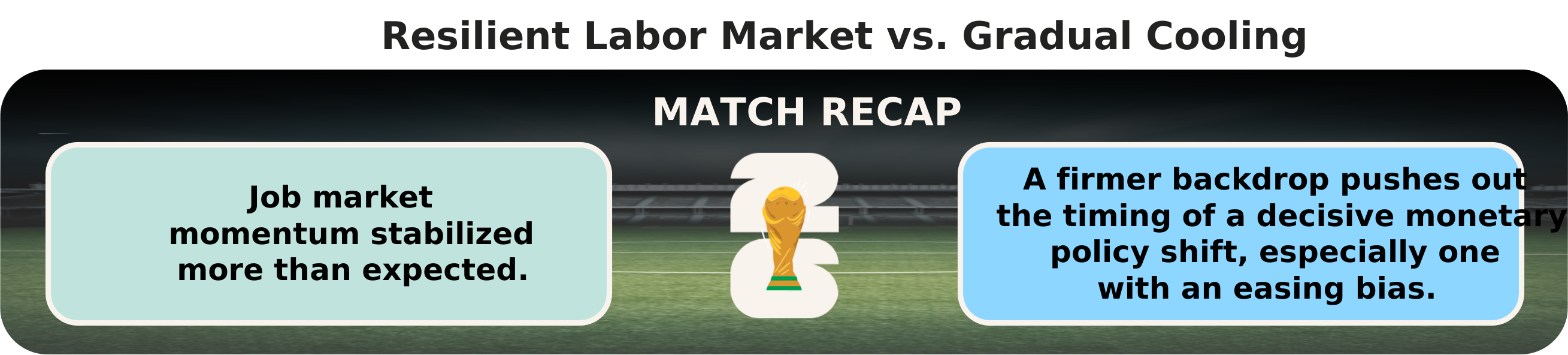
IR+M Fixed Income Cup graphic showing labor versus cooling as a first-half market matchup.

  • The labor market was expected to cool gradually in 2026, with slower hiring, less immigration, and weaker worker mobility pointing to a softer backdrop.
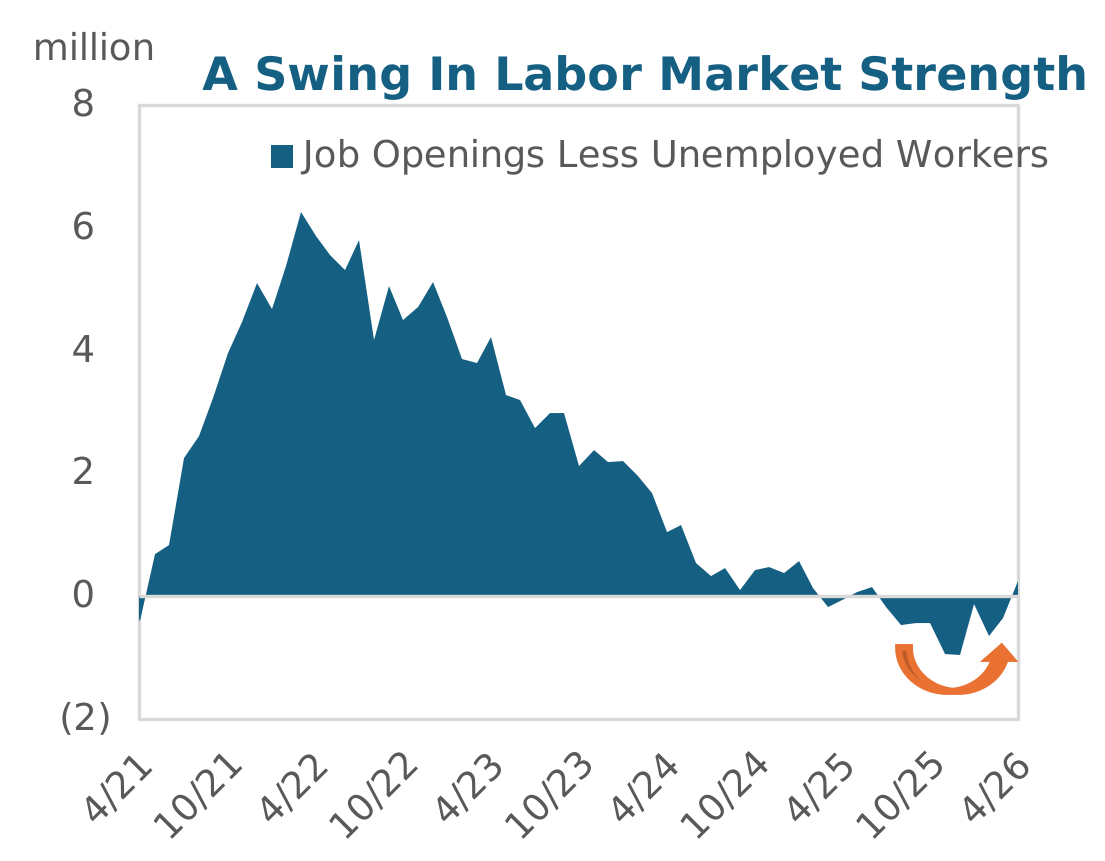
  • Recently, hiring demand improved more than anticipated. Payroll growth held up, job openings rebounded, and layoffs remained contained.
  • The current state was best described as stable rather than hot: demand has firmed, churn remains subdued, and the data no longer points clearly toward deterioration.
  • The Result: A steady employment backdrop continues to support consumption and broader activity, while keeping the Federal Reserve patient and data dependent.

IR+M chart showing labor market data for the 2026 Fixed Income Cup.


IR+M Fixed Income Cup graphic showing U.S. exceptionalism as a first-half market matchup.


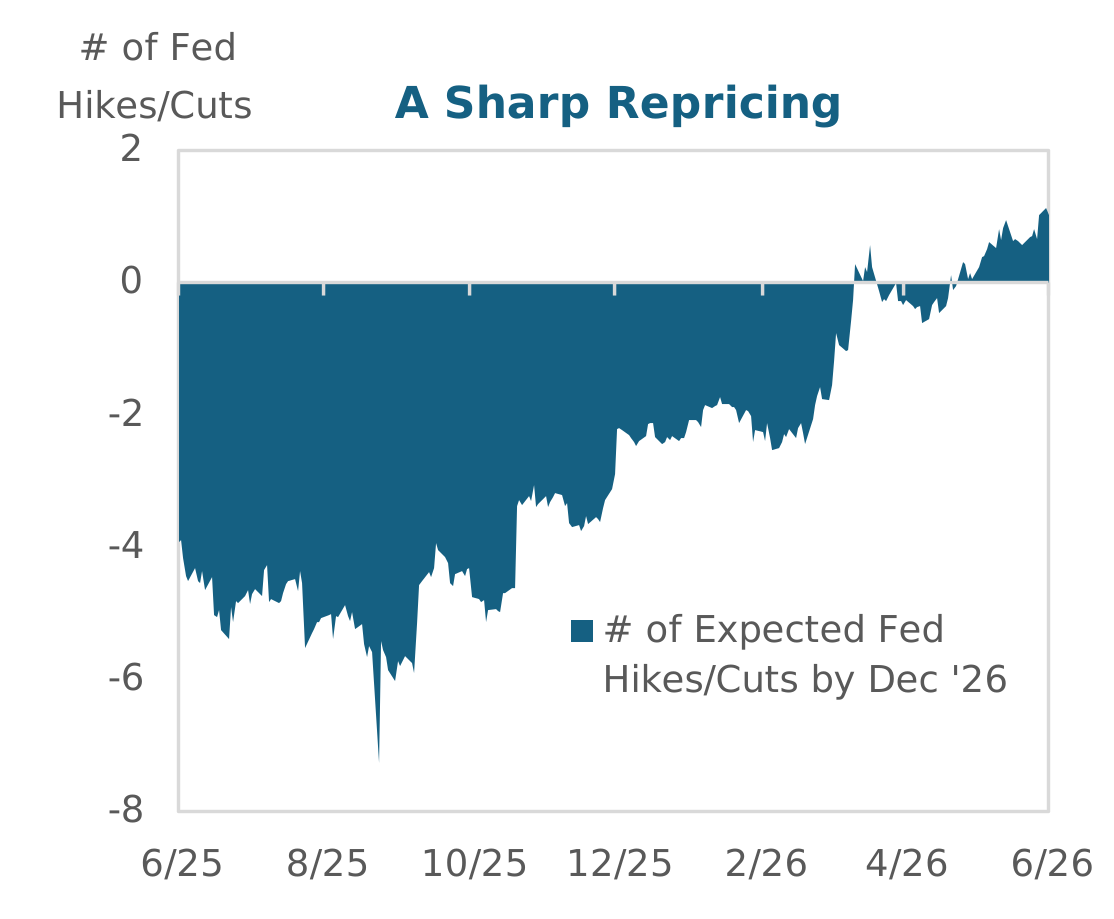
IR+M chart showing U.S. economic and market data related to fixed income expectations.

  • The US economy outperformed expectations, supported by consumer spending, strong corporate earnings, and AI-related investment.
  • The US-Iran conflict disrupted energy markets, contributing to a sharp rise in oil and gasoline prices.
  • Better-than-expected economic activity reduced the urgency for rate cuts, while higher energy costs complicated the path back to price stability.
  • The Result: Investors no longer believe current economic conditions justify the easing path that markets had anticipated entering 2026.

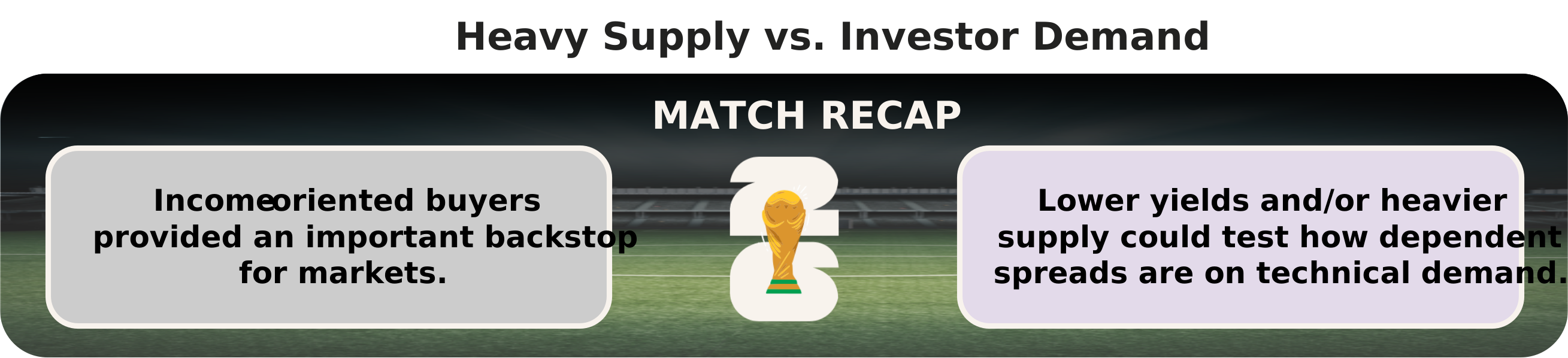
IR+M Fixed Income Cup graphic showing supply versus demand as a first-half fixed income matchup.

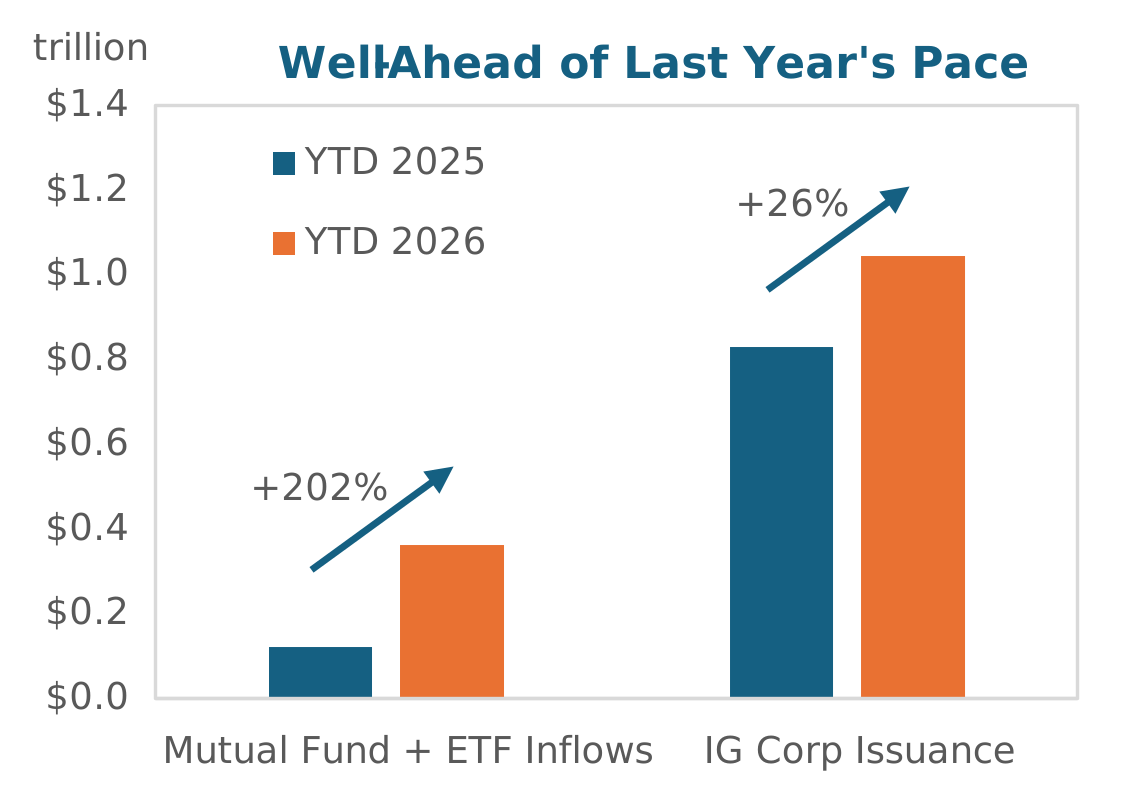
  • Elevated yields have attracted demand across investor bases. Retail inflows were solid, while annuity sales accelerated.
  • That demand helped absorb a steady increase in issuance driven by fiscal needs, tight spreads, and the ongoing AI investment cycle.
  • Market stability, however, appeared increasingly tied to current yield levels. Demand looks more yield-dependent than conviction-driven.
  • The Result: Technical support remains strong, but conditional. If yields fall or supply continues to rise, spreads may become more vulnerable.

IR+M chart showing fixed income supply and demand data.


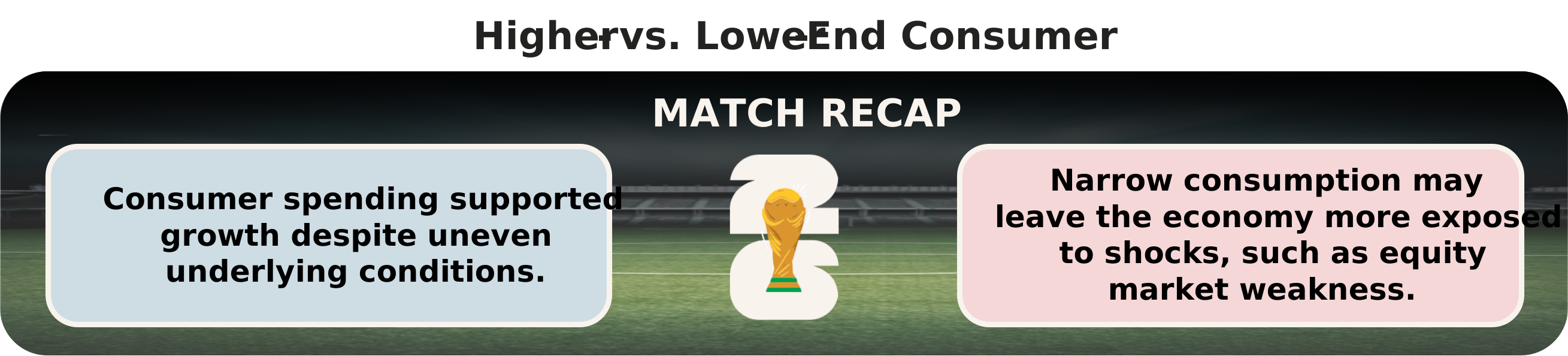
IR+M Fixed Income Cup graphic showing high-income versus low-income consumer dynamics.


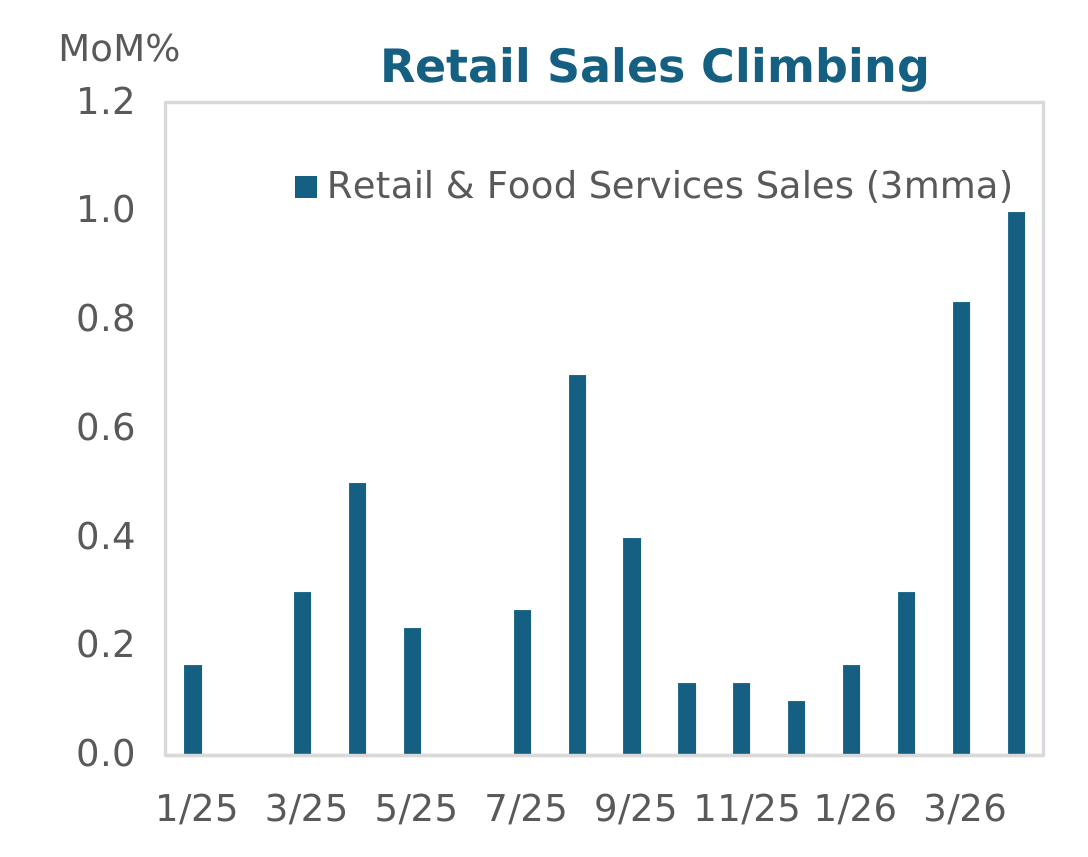
IR+M chart showing consumer data and divergence between higher- and lower-income households.

  • The consumer remained steady despite inflation pressures, higher borrowing costs, and rising energy prices.
  • Higher-income households benefited from asset appreciation, stable employment, and stronger balance sheets, sustaining much of the discretionary spending environment.
  • Lower-income households faced mounting pressure from high borrowing costs and reduced savings flexibility.
  • The Result: Consumer strength remained intact, but increasingly concentrated. That supports growth today while creating greater vulnerability beneath the surface.

The story of this cycle is still being written. While much of the market’s attention has centered on a handful of well-known themes, some of the most important first-half developments came from places investors least expected. As attention shifts toward the knockout rounds, the question is no longer whether the original favorites can deliver decisive victories. It is whether these challengers continue climbing the table and reshape the remainder of the tournament.

READ MORE FROM IR+M


Source: Bloomberg as of 6/9/26. Inflows measured based on the ICI long-term mutual fund and exchange-traded fund flows. Issuance based on US dollar-denominated investment-grade corporate supply.

The views contained in this report are those of Income Research + Management (“IR+M”) and are based on information obtained by IR+M from sources that are believed to be reliable but IR+M makes no guarantee as to the accuracy or completeness of the underlying third-party data used to form IR+M’s views and opinions. This report is for informational purposes only and is not intended to provide specific advice, recommendations, or projected returns for any particular IR+M product. Investing in securities involves risk of loss that clients should be prepared to bear. More specifically, investing in the bond market is subject to certain risks including but not limited to market, interest rate, credit, call or prepayment, extension, issuer, and inflation risk. This material may not be reproduced in any form or referred to in any other publication without express written permission from IR+M.

“Bloomberg®” and Bloomberg Indices are service marks of Bloomberg Finance L.P. and its affiliates, including Bloomberg Index Services Limited (“BISL”), the administrator of the index (collectively, “Bloomberg”) and have been licensed for use for certain purposes by IR+M. Bloomberg is not affiliated with IR+M, and Bloomberg does not approve, endorse, review, or recommend the products described herein. Bloomberg does not guarantee the timeliness, accurateness, or completeness of any data or information relating to any IR+M product.

Share this post

Sign Up Now for Full Access to Articles and Podcasts!

Unlock full access to our vast content library by registering as an institutional investor

Register

Contacts


Income Research

IR+M is a privately-owned, independent, fixed income investment management firm that serves institutional and private clients. Our investment philosophy and process are based on our belief that careful security selection and active risk management provide superior results over the long-term. By combining the capacity and technology of a larger firm with the culture and nimbleness of a boutique firm, we strive to provide exceptional service for our clients and a rewarding experience for our employees.

Rob Lund, CFA
SVP, Senior Client Portfolio Manager
rlund@incomeresearch.com
617-330-9333

www.incomeresearch.com
115 Federal Street,
22nd Floor,
Boston, MA 02110


View the contributor page

Image
IRM_icon

Sign Up Now for Full Access to Articles and Podcasts!

Unlock full access to our vast content library by registering as an institutional investor .

Create an account

Already have an account ? Sign in

Ѐ Ё Ђ Ѓ Є Ѕ І Ї Ј Љ Њ Ћ Ќ Ѝ Ў Џ А Б В Г Д Е Ж З И Й К Л М Н О П Р С ΄ ΅ Ά · Έ Ή Ί Ό Ύ Ώ ΐ Α Β Γ Δ Ε Ζ Η Θ Ι Κ Λ Μ Ν Ξ Ο Π Ρ Ё Ђ Ѓ Є Ѕ І Ї Ј Љ Њ Ћ Ќ Ў Џ А Б В Г Д Е Ж З И Й К Л М Н О П Р С Т У Ф Х Ц Ч Ш Ā ā Ă ă Ą ą Ć ć Ĉ ĉ Ċ ċ Č č Ď ď Đ đ Ē ē Ĕ ĕ Ė fi fl œ æ ß