

We're currently experiencing email delivery delays. For urgent matters, please contact us directly at lindsay@insuranceaum.com.

Blue Owl -

Clarifying the Risks in Private Credit

BlueOwlFeatured

Risk vs Reality: Our Perspective on Private Credit

The striking growth of private credit over the last decade has attracted significant attention, with much of the focus on the perceived potential risks arising from its rapid adoption.

In particular, analysts and policymakers have raised questions about whether private credit could become a source of systemic risk, due to the credit expansion that private markets have facilitated and the lack of public transparency in private credit portfolios given the nature of private investments.

Amid economic uncertainty and market volatility, questions about “the next systemic risk” are drawing attention from investors and the media alike, as well as prompting calls for enhanced regulation of private credit markets.

As a pioneer in private credit and one of the largest managers in the market, we firmly support stronger regulation and standardization, and believe it’s important to shed light on and address some of the dynamics fueling these concerns.

The Growth–and Transformation–of Private Credit

Over the last 10 years, private credit has undergone a major transformation. Market observers often focus on the sector’s rapid growth over that period. We think it is equally important to recognize that this growth has been accompanied by structural improvement in credit quality.

Historically, private credit focused on direct lending to smaller, middle-market companies. Smaller businesses were able to access capital that they lacked in the public markets and investors could earn higher interest rates by lending to them. However, given the relatively small size of the borrowers, credit risk could be a significant factor.

Over the last decade, private equity firms have increasingly adopted private credit as a solution for financing their largest companies. Historically, sponsors would have relied on the public markets to access credit for companies of this size. This is a meaningful shift. At the same time, institutional and private wealth investors with long-term investment horizons have increasingly looked to private credit as a potential source of downside-protected income.
 

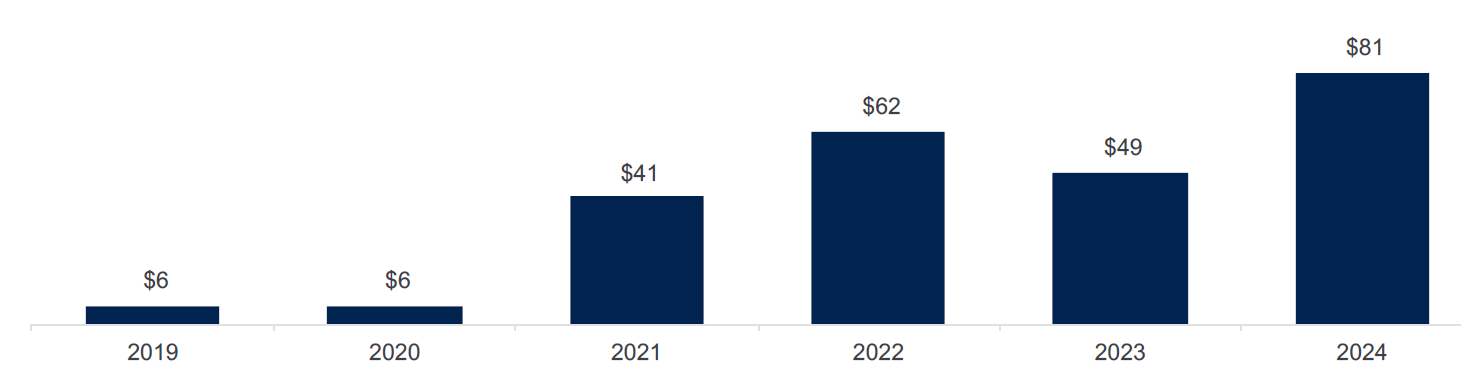
Figure 1 The $1B Direct Lending Deal Has Become Increasingly Common2
Image
Graph showing increasing quantity of $1B direct lending deals, up to 81 in 2024

That pairing has generally proven effective. The private credit investor base seeks exposure to stable and predictable income-generating assets to meet funding ratios and long-term pension obligations. Additionally, investors in private credit generally aren’t seeking capital gains and often place less emphasis on secondary market liquidity. Instead, they are investing on long time horizons and typically prefer to minimize the impact of mark-to-market volatility, which can occur in public credit markets during shorter-term dislocations. Private credit allows these investors to lend, long-term, to a diversified set of large, stable companies that are sponsored by large private equity investors with significant skin in the game.

This virtuous cycle—whereby a growing investor base allows managers to lend to larger and stronger companies, driving a structural improvement in credit quality that attracts more investors—has not just driven growth in private credit, it has transformed the asset class.
 

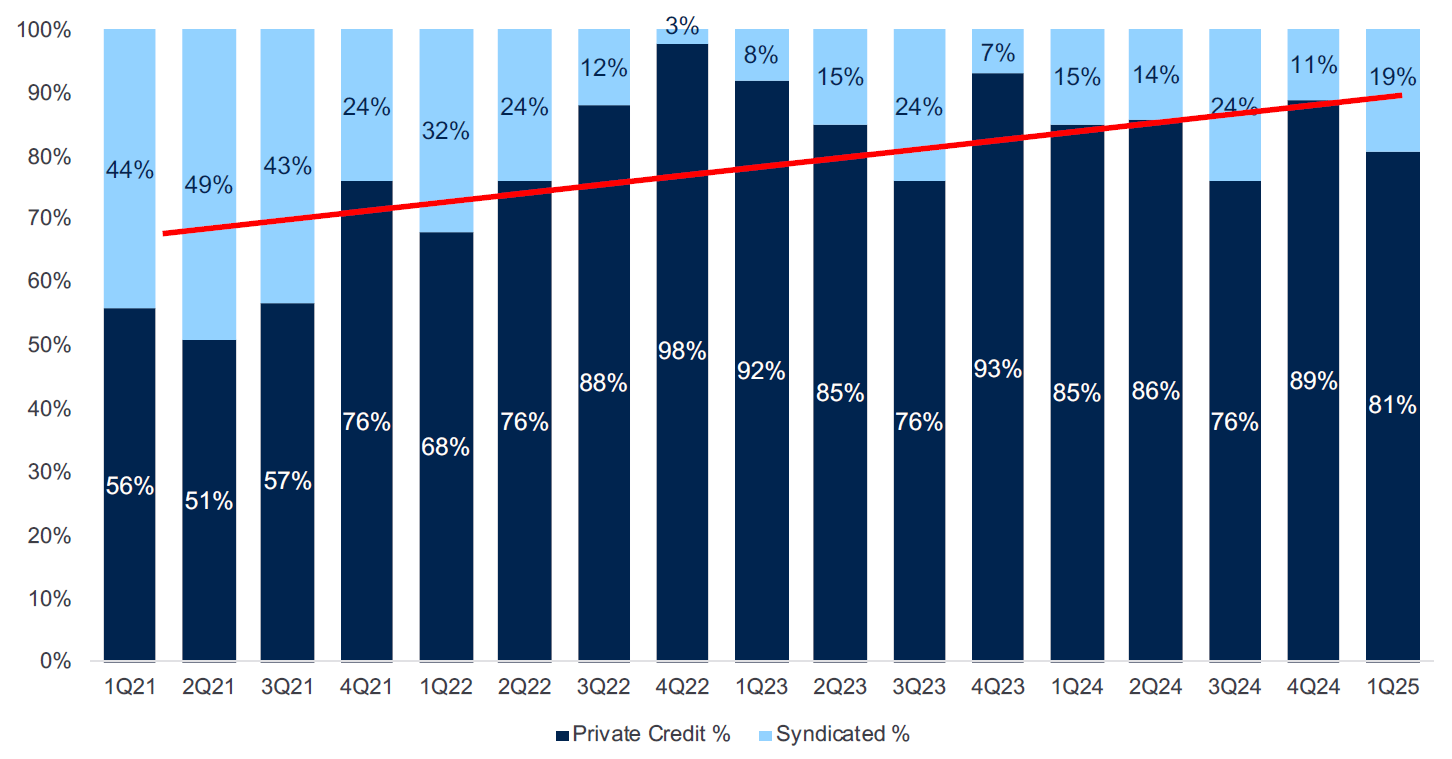
Figure 2 Percent of Leveraged Buyouts Financed by Private Credit3
Image
Graph showing upward trend of leveraged buyouts financed private credit vs syndicated

What if Everything Goes South?

As private credit has grown and become more integrated into the broader financial system, market observers have reasoned that this combination could amplify economic and market volatility in a crisis.

Assessing “systemic” risks in private credit is complicated by a lack of suitable historical market events for comparison. COVID was a serious economic and market crisis. The US economy almost ground to a halt. While the COVID shock was severe, policymakers took extraordinary measures and were able to restore order in the financial system relatively quickly. As a result, COVID may be considered inadequate as a stress test due to the brevity of its impact on capital markets. Still, private credit performed well throughout a period of financial shock, illustrating the limited effect of short-term volatility on the long-term performance of the asset class.

The 2008 financial crisis provides an example of how systemic risks can arise from excessive credit creation within an interconnected financial system. But the housing crisis is not comparable to the growth and transformation in private credit. In 2008, banks were directly exposed to over-levered individuals. Mortgage credit risk was securitized, transformed and transferred to investors seeking AAA-rated assets that were ultimately backed by highly leveraged, poorly underwritten loans.

In contrast, private credit generally lends to large companies at loan-to-value ratios of 30-40%; implying sponsors have more skin in the game than lenders do and provide very significant equity cushion. Furthermore, private credit does not have the asset liability mismatches or risk transfers typical of traditional banking. At Blue Owl, we underwrite our loans with the intention to hold them to maturity, matching the longterm and/or permanent nature of our investors’ capital. Because private credit investments are not publicly traded, they are generally insulated from short-term market volatility, ratings downgrades, or forced sales by investors seeking liquidity. This matching of long-term capital with less liquid private credit assets substantially reduces the potential for liquidity-driven dislocations, which has been prevalent in previous market crises.

In today’s environment, we believe concerns about systemic risk stem from fears around a potential recession. The US economy has performed well post-COVID, providing an attractive backdrop for companies and for fundraising by private credit managers. Should the economy fall into a recession, it’s reasonable to expect that there may be challenges to credit after what has been a period of credit expansion.

However, we think a recession scenario is far more likely to result in the dispersion in the performance of private credit managers rather than a broad-based deterioration in the asset class. Leverage in private credit funds is relatively modest, at about one turn of leverage, compared to banks that can be 10-20 times levered. But in the world of investing, not all managers are created equal, and some may underperform in an economic slowdown.

In our portfolios, we aim to finance stable companies in non-cyclical, recession-resilient sectors, but we acknowledge that a prolonged economic downturn could eventually impact companies across all sectors. We believe that our portfolios – and most wellperforming ones – are positioned to absorb modest losses with the potential for returns to outweigh the impact overtime, limiting the effect on investors.

Conclusion

Today, the companies we are financing represent some of the highest quality opportunities we have seen in private credit.

They are generally larger, more diversified and have more sophisticated management teams. We aim to underwrite loans to stable, defensive companies and hold them to maturity. If credit issues arise, we can work directly with companies on a long-term time horizon to maximize value for our investors. Many of our investors are focused on the predictable, diversifying income generated by the asset class and are not seeking capital gains. Many investors prefer the stability of holding less-liquid assets that are generally insulated from short-term mark-to-market volatility, ratings fluctuations, or forced selling.

In sum, we believe private credit is a well-constructed asset class that aligns the needs of its investor base with the needs of large companies sponsored by highly sophisticated private equity investors in sensibly leveraged, long term investment vehicles. We support the goal of making it easier for policymakers to assess risks in private credit markets and believe that valuation processes are an area that would benefit from increased standardization. However, we believe private credit is very unlikely to be the nexus of the “next crisis”. If problems arise due to recession, we think dispersion in manager performance and loan valuations is the most likely result. We believe this process would underscore the strength of larger players in the market.


Read More from Blue Owl


1 References to “downside protection” or similar language are not guarantees against loss of investment capital or value.
2 Source: KBRA DLD Scorecard.
3 Source: Pitchbook, LCD Data. Represents percentage of number of leveraged buyouts financed via private credit and broadly syndicated loan markets.


Important information

Unless otherwise noted the Report Date referenced herein is as of June 30, 2025.
Past performance is not a guarantee of future results.
Assets Under Management (“AUM”) refers to the assets that we manage, and is generally equal to the sum of (i) net asset value (“NAV”); (ii) drawn and undrawn debt; (iii) uncalled capital commitments; (iv) total managed assets for certain Credit and Real Assets products; and (v) par value of collateral for collateralized loan obligations (“CLOs”) and other securitizations.
The material presented is proprietary information regarding Blue Owl Capital Inc. (“Blue Owl”), its affiliates and investment program, funds sponsored by Blue Owl, including the Blue Owl Credit, GP Strategic Capital Funds and the Real Assets Funds (collectively the “Blue Owl Funds”) as well as investment held by the Blue Owl Funds.
The views expressed and, except as otherwise indicated, the information provided are as of the report date and are subject to change, update, revision, verification, and amendment, materially or otherwise, without notice, as market or other conditions change. Since these conditions can change frequently, there can be no assurance that the trends described herein will continue or that any forecasts are accurate. In addition, certain of the statements contained in this material may be statements of future expectations and other forward-looking statements that are based on the current views and assumptions of Blue Owl and involve known and unknown risks and uncertainties (including those discussed below) that could cause actual results, performance, or events to differ materially from those expressed or implied in such statements. These statements may be forward-looking by reason of context or identified by words such as “may, will, should, expects, plans, intends, anticipates, believes, estimates, predicts, potential or continue” and other similar expressions.
Neither Blue Owl, its affiliates, nor any of Blue Owl’s or its affiliates’ respective advisers, members, directors, officers, partners, agents, representatives or employees or any other person (collectively the “Blue Owl Entities”) is under any obligation to update or keep current the information contained in this document.
This material contains information from third party sources which Blue Owl has not verified. No representation or warranty, express or implied, is given by or on behalf of the Blue Owl Entities as to the accuracy, fairness, correctness or completeness of the information or opinions contained in this material and no liability whatsoever (in negligence or otherwise) is accepted by the Blue Owl Entities for any loss howsoever arising, directly or indirectly, from any use of this material or its contents, or otherwise arising in connection therewith.
All investments are subject to risk, including the loss of the principal amount invested. These risks may include limited operating history, uncertain distributions, inconsistent valuation of the portfolio, changing interest rates, leveraging of assets, reliance on the investment advisor, potential conflicts of interest, payment of substantial fees to the investment advisor and the dealer manager, potential illiquidity, and liquidation at more or less than the original amount invested. Diversification will not guarantee profitability or protection against loss.
Performance may be volatile, and the NAV may fluctuate.
Performance Information:
Where performance returns have been included in this material, Blue Owl has included herein important information relating to the calculation of these returns as well as other pertinent performance related definitions.
This material is for informational purposes only and is not an offer or a solicitation to sell or subscribe for any fund and does not constitute investment, legal, regulatory, business, tax, financial, accounting, or other advice or a recommendation regarding any securities of Blue Owl, of any fund or vehicle managed by Blue Owl, or of any other issuer of securities. Only a definitive offering document (i.e.: Prospectus or Private Placement Memorandum) can make such an offer.
Copyright© Blue Owl Capital Inc. 2025. All rights reserved. This material is proprietary and may not be reproduced, transferred, or distributed in any form without prior written permission from Blue Owl. It is delivered on an “as is” basis without warranty or liability by accepting the information, you agree to abide by all applicable copyright and other laws, as well as any additional copyright notices or restrictions contained in the information.

Share this post

Sign Up Now for Full Access to Articles and Podcasts!

Unlock full access to our vast content library by registering as an institutional investor

Register

Contacts


Blue Owl

Blue Owl (NYSE: OWL) is a leading asset manager that is redefining alternatives. With over $251 billion in assets under management, we focus on providing businesses with private capital solutions to drive long-term growth and can offer institutional investors, individual investors, and insurance companies differentiated alternative investment opportunities that aim to deliver strong performance, risk-adjusted returns, and capital preservation. Together with over 1,100 experienced professionals globally as of January 31, 2025, Blue Owl brings the vision and discipline to create the exceptional.

Rich Goetze 
Principal 
rich.goetze@blueowl.com
908-501-6098

View the contributor page


Image
Blue_Owl_v_rgb_Blue_Owl_Blue

Sign Up Now for Full Access to Articles and Podcasts!

Unlock full access to our vast content library by registering as an institutional investor .

Create an account

Already have an account ? Sign in

Ѐ Ё Ђ Ѓ Є Ѕ І Ї Ј Љ Њ Ћ Ќ Ѝ Ў Џ А Б В Г Д Е Ж З И Й К Л М Н О П Р С ΄ ΅ Ά · Έ Ή Ί Ό Ύ Ώ ΐ Α Β Γ Δ Ε Ζ Η Θ Ι Κ Λ Μ Ν Ξ Ο Π Ρ Ё Ђ Ѓ Є Ѕ І Ї Ј Љ Њ Ћ Ќ Ў Џ А Б В Г Д Е Ж З И Й К Л М Н О П Р С Т У Ф Х Ц Ч Ш Ā ā Ă ă Ą ą Ć ć Ĉ ĉ Ċ ċ Č č Ď ď Đ đ Ē ē Ĕ ĕ Ė fi fl œ æ ß