
Ninety One -
Emerging Market Investment Grade Corporate Debt

A large and diverse investment universe
As emerging markets have grown substantially over the past two decades, emerging market-based corporations have turned to international capital markets to help fund and grow their businesses. As a result, JP Morgan launched a suite of emerging market corporate debt indices in 2008. From a market cap of less than US$500 billion in 2010, the investment-grade portion of the entire asset class has grown to c.US$1.6 trillion1 today across 29 countries. While asset class net issuance has turned negative in 2022, this is likely a shorter-term phenomenon and the actual path of growth is likely to continue. The investment universe is diversified globally across regions, countries, and sectors, with lower leverage than comparably rated developed market peers. We believe this fast-growing and increasingly diverse asset class – which has higher yields, lower duration and less leverage than US investment-grade debt for comparable credit quality – could provide a high-grade complementary solution for institutional investors.Fig 1. Growth in EM IG corporate bonds (US dollar, billion)
Image
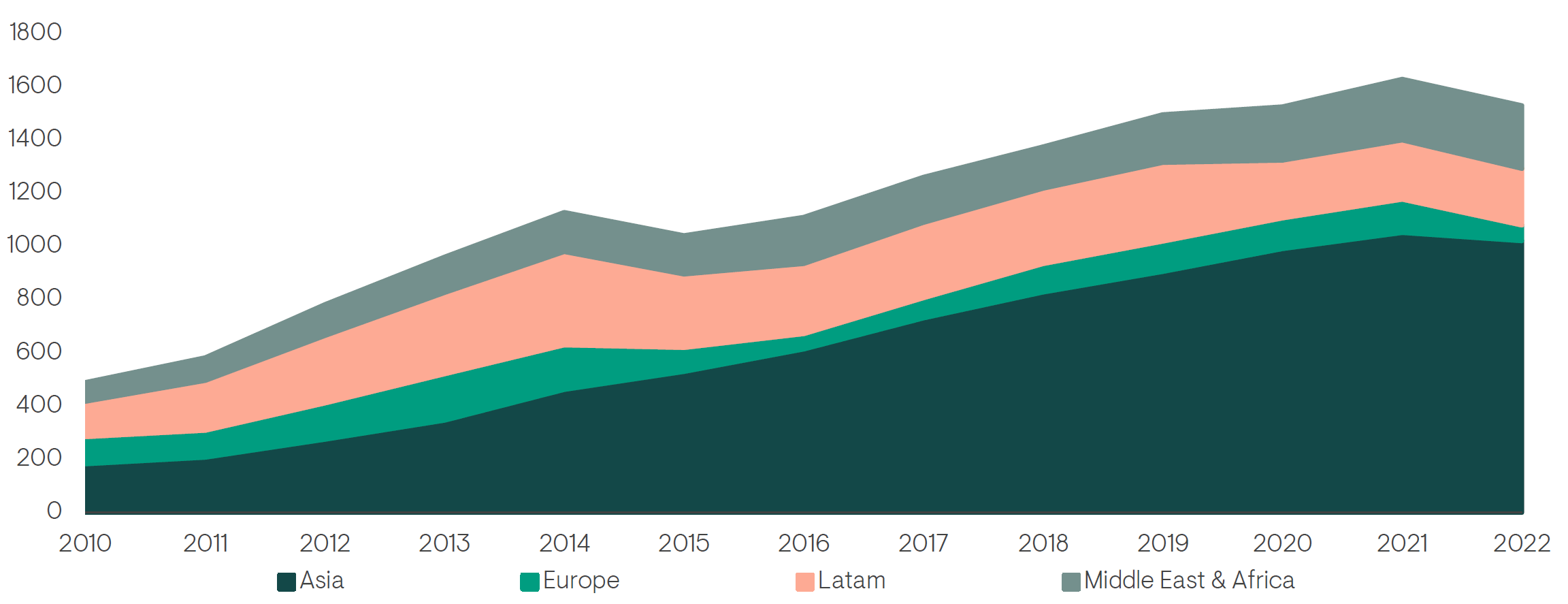
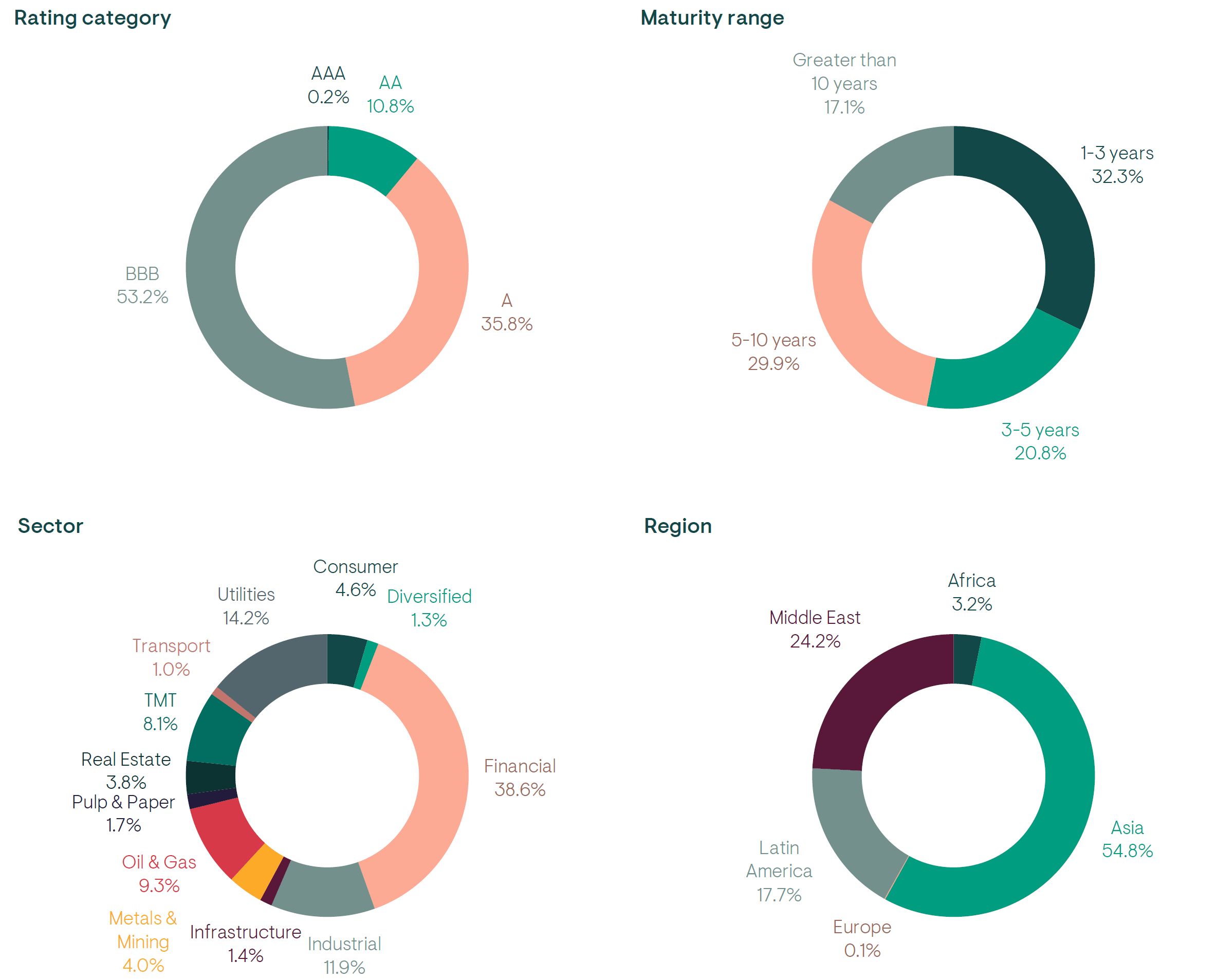
Fig 2. JPMorgan CEMBI IG rating, maturity, sector and regional breakdown
Image
Fundamentally strong companies
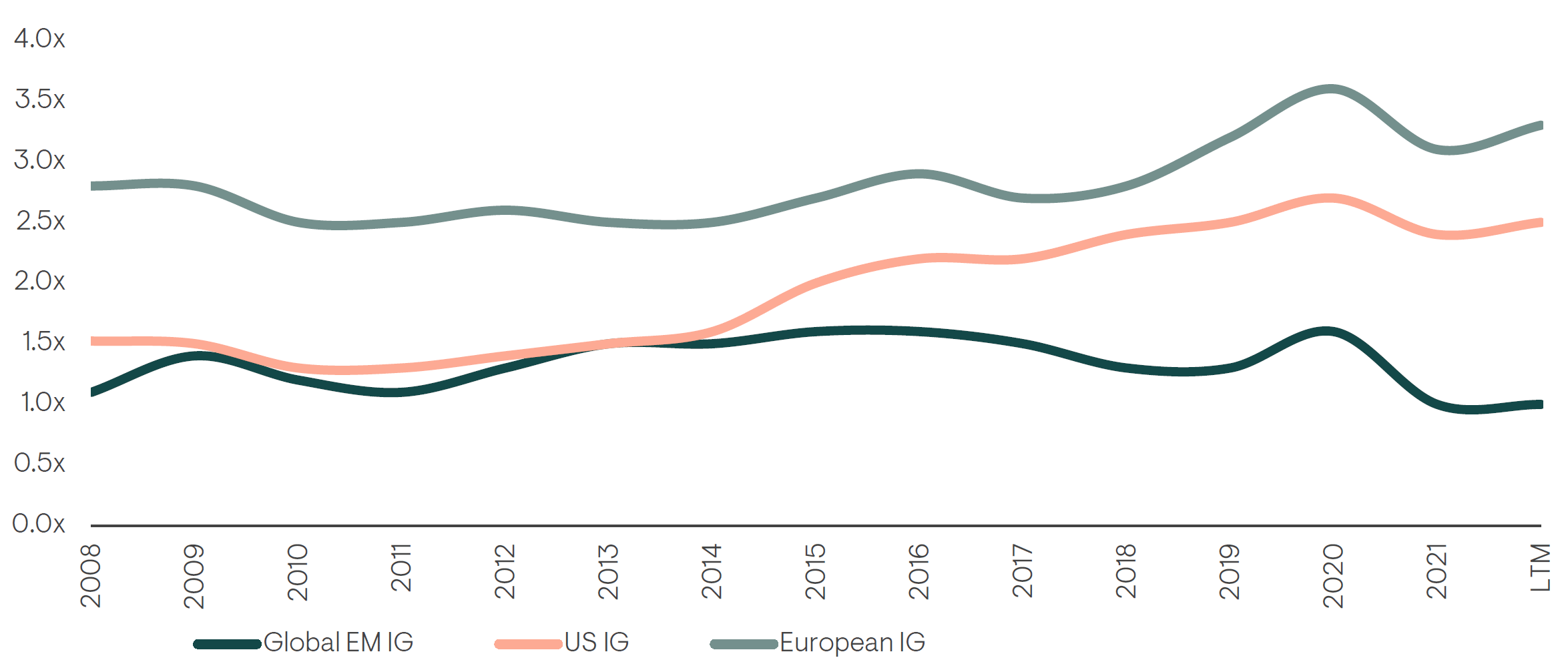
Through time, emerging market companies have on average maintained better credit fundamentals than their similarly rated developed market peers, as they have needed to maintain resilience during times of challenging macroeconomic backdrops. Head-quartered and operating in emerging markets, these companies are familiar with volatility and have historically experienced periods when they struggled to finance themselves with longer-term debt. Thus, their short-term debt is higher as a percentage than it is in developed markets, and their refinancing risks have historically been higher. This has led to a culture of retaining cash while containing leverage. This has been particularly evident since the COVID-19 crisis, as many companies have pared back their expansion and capital expenditure, leaving them with healthy cash balances and strong buffers. While higher refinancing risks would typically be a fundamental challenge in a rising rate environment – as there is a need to refinance at higher costs – such pressure on EM corporates is meaningfully lower in this cycle relative to prior cycles as most issuers have been able to pre-finance in the ultra-low interest rate regime of the past three years. This has left them well-placed from a financing perspective over the short and medium term.Fig 3. EM vs. US and European IG net leverage comparison
Image
The EM ‘zip-code’ premium
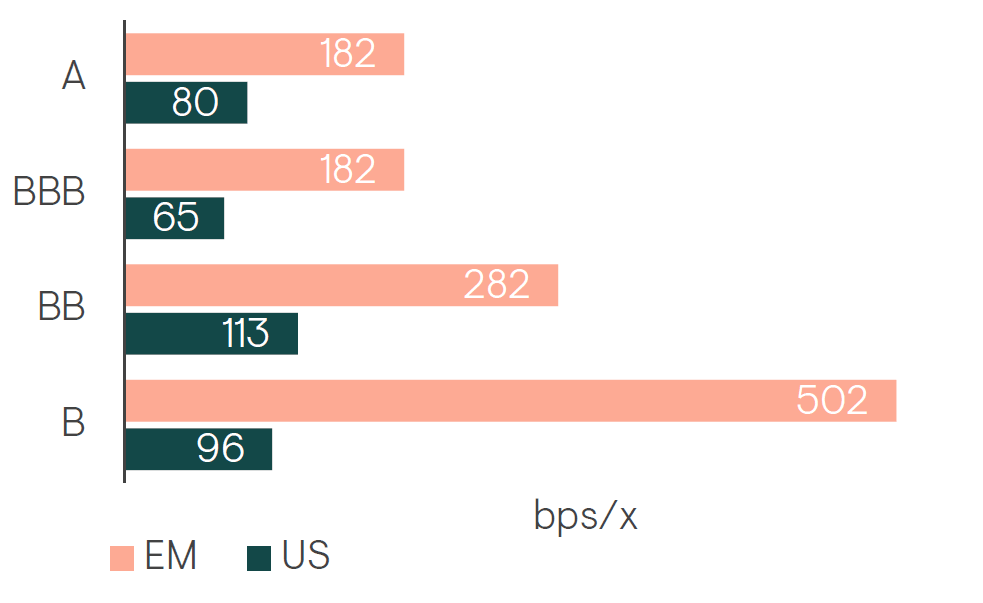
Investors often perceive emerging market companies to be riskier because of their domestic operating environments. Although rating agencies account for this, premiums still exist for EM companies with better credit metrics than developed market peers; in effect, a ‘zip-code premium’. Figure 5 shows this by comparing the spread-per-turn of leverage offered by emerging and developed market companies. EM company financial strength has led to many improving credit stories, but sovereign credit deterioration/policy shifts have stymied some positive ratings actions and led to downgrades of corporates in some instances. EM companies retain access to multiple financing sources such as equity, local currency bonds and loans, yet many are capped by the rating of their governments; despite the superior fundamentals, their geography effectively drags down the rating. This creates compelling valuation opportunities for investors. The temporary spike in leverage seen by EM companies in 2020 has reversed. Net leverage remains lower than it is in the US across rating buckets, and deleveraging through 2021 and beyond has resulted in many EM companies’ leverage metrics reaching multi-year lows.Fig 4. EM Corporates exhibit lower level of leverage than US across most rating buckets
 Source: Spreads as at 30 September 2022, BoA Merrill Lynch. Net Leverage as at Q4 2021.
Fig 5. Spread per turn of net leverage
Image
Author
Image

Sign Up Now for Full Access to Articles and Podcasts!
Unlock full access to our vast content library by registering as an institutional investor .
Create an accountAlready have an account ? Sign in