
Executive Spotlight: Siddharth Chakravarty – Director of Investments at Coaction Specialty
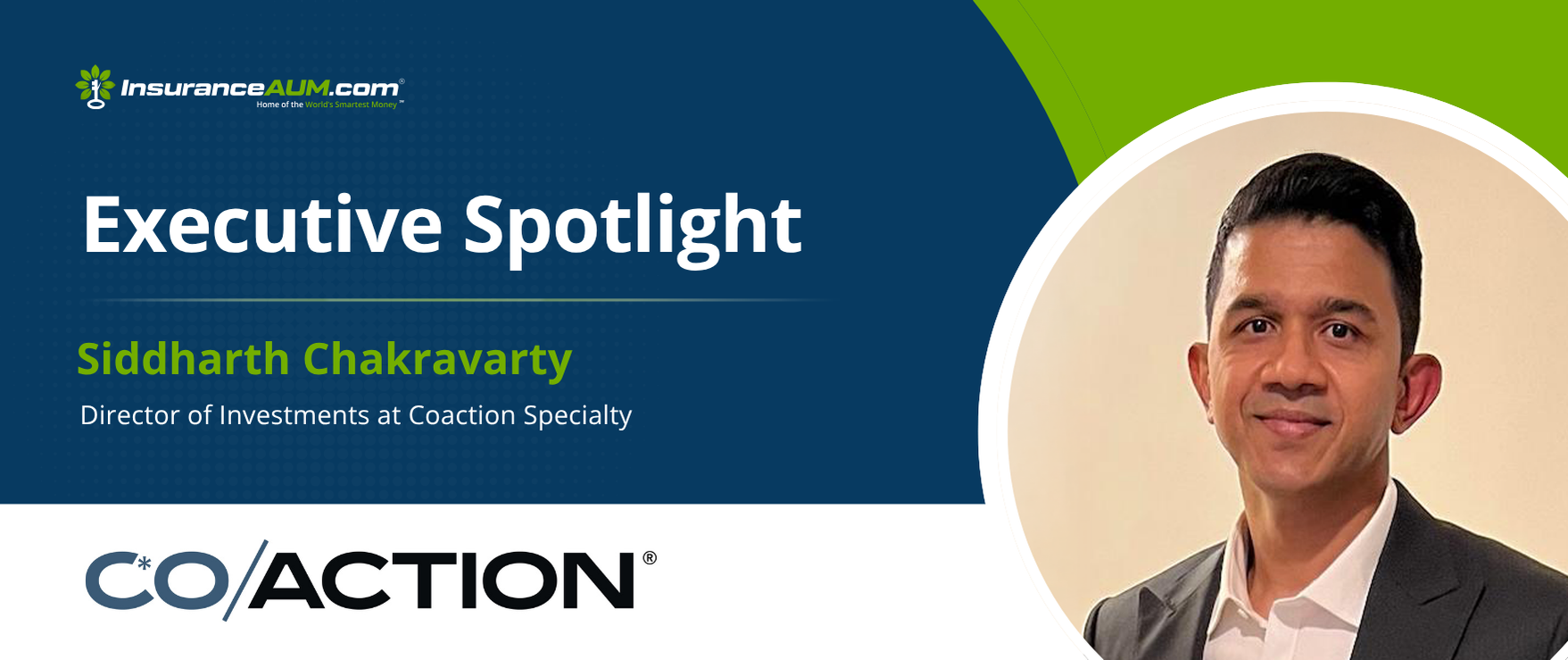
Stewart: Hey, welcome back. It's great to have you. We've got a great podcast. We are now north of 300 episodes. I learned the other day that less than 1% of all podcasts get to 300, so we're very happy to have that. We've got an executive spotlight for you today. Siddharth Chakravarty is our guest today. He is the Director of Investments at Coaction. Sid, welcome. It's great to have you. Great to have you on. I want to talk a little bit about your background, but first of all, welcome.
Sid: Stewart, pleasure to be here. Thanks for the invite. Looking forward to this conversation.
Stewart: You have an interesting background. You came to Coaction from Enstar Group. You worked with our good friend Nazar there. They have a very good reputation in a wide spectrum of asset classes. But before we go there, how about telling us where you grew up, what was your first job, not the fancy one, and tell us about your path to your current position at Coaction.
Sid: Happy to talk about it, Stewart. So I grew up in India. My dad was in the Indian Army, so we kind of moved around quite a bit, as you can imagine. I came to the US to study mechanical engineering at the University of Utah in Salt Lake City. Worked there for some time, graduated, and started working for a research lab in Salt Lake City. And back in the day, I was working on, I think it was the world's first Neuroprosthetic brain implant. So we were designing these brain implants to help people suffering from paralysis and Alzheimer's to restore motor function. You can imagine this was some very, very cool people joining in. You had engineers like me, you had brain surgeons, you had neuroscientists, all in one room just talking about this idea of how to do it. So for me, I was like a kid in a candy store.
I really enjoyed it. They were amazing people to work with. And working with a global team, truly multifaceted. I mean that sort of helped me to prepare for something that came in the future, and that was my mentor. And my mentor was super supportive of everything, and he said, “Hey, Sid, how do you like to travel the world?” I'm like, “Sure, why not?” He said, “I know this professor up in Taiwan and he's starting this company. Do you want to go and work there?” And I said yes. And guess what? A few months later packed my bags, moved to Taiwan, and then to Singapore, and that led me to investment. So when I was in Singapore, I started working with Mubadala Investments, and that was the sole investment arm of Abu Dhabi which sort of gave me a glimpse into the world of asset allocation.
How do you allocate across multiple asset classes? That's the idea of long-term thinking. The concept of picking up on secular tailwinds, which will test the time horizon of any investment principle. And that's all got me into saying that, Hey, you know what? This is something I really enjoy doing. So I came back to New York City, got my master's in finance, got me a CFA charter, and then started my journey into finance starting with BNP Paribas. I went to work for AIG, worked with Nazar at Enstar, and now I'm at Coaction, where I oversee a multi-billion dollar portfolio and champion the entire investment idea going through multiple ideologies. So for me, it's not been a linear path, it's been extremely non-linear coming in from becoming a researcher and now into our investment seat.
Stewart: It's interesting because another of our executive spotlights recently, Eric Partland, who's the CIO at MassMutual, he started out, if memory serves, as an aerospace engineer, you have that in common. Just to get into it a little bit, a key theme that we're hearing across the industry is a shift toward alternatives. Where do you see the most compelling opportunities within alternatives today?
Sid: That's a great point, Stewart. So if you think about it, take a step back. You look at the entire private credit space, right? Five years ago, this was a very, very homogeneous space. People thought of private credit as a bucket for everything else. Fast forward a few years, and it's become a very, very heterogeneous space. You have very definite sleeves that you can sort of now participate in. Direct lending, of course, is far more the biggest chunk of the entire puzzle. But then you sort of take a step back and you step into the different asset classes that are coming into it. The first, of course, is your real asset, your real estate, your real estate equity, or your debt pieces. On the equity side, we are still very, very cautious. I think there is a cycle it has to go through. There's some valuation adjustment that needs to happen before we can step into it.
So the equity piece is challenging. On the debt side, however, you are seeing very, very compelling opportunities. You look at multifamily housing, you look at bridge lending, these are very interesting asset classes that insurers are looking at, and we actively also are participating. For me, however, it's the next bucket that makes it a more compelling opportunity, and that is a true real asset infrastructure. I think infrastructure is one asset class that is severely underrepresented and insurance balance sheets. And the reason for that is that infrastructure as an asset class is fairly new. If you, on a historical basis, this is only 20 years old, and InvITs are now trying to push the boundary of infrastructure. Few years back, infra was only toll roads, bridges and stuff like that. Now you have battery storages, you have data centers, you have fiber. Everything is coming into it because investors are getting more and more comfortable with infrastructure as an asset class becoming a wider bucket which can hold lot more assets within themselves.
And then top of that, you have the phenomenon of “DEs” going on. I talk about “DEs” in the sense of decarbonization, deregulation, deglobalization, everything. “DEs” are secular tailwinds that are very, very beneficial for the asset classes as a whole. And on top of that, you have a very, very strong cash flow. “DEs” are inflation-protected pass-through cash flows that an investor can have, which are backed by a very, very strong collateral. And so if you put everything together, I think infrastructure is one asset class that requires a much more thorough analysis, especially for the insurance balance sheet. And then there is a new phenomenon that's happening. I wouldn’t say it's new, but it's coming to our attention a lot more. That's secondaries. You talked about that in one of your earlier podcasts, and I think it was very timely that you brought it up, and I think secondary is worth a second. Look, it kind of sounds funny, but it is.
And there's reason is that you have your private credit secondary, it is no different than your private secondary for real estate infrastructure, and so on and so forth. But what is that? This is not a fire sale, this is an orderly liquidation, and this is happening because there is a change happening on the LP side, and we’ve all been reading about in the newspapers, but the same is happening also for other insurance balance sheets as well. So we, as allocators, can take advantage of this dislocation in the market and be part of this orderly liquidation. So I think both infrastructure as well as secondary market are very, very compelling opportunities that I personally see in the whole private asset space.
Stewart: That's super helpful. We just had a podcast on infrastructure the other day too, so I'm not even sure if it's out yet. But at the end of the day, there has been a massive surge in demand for private credit. Some folks think that everybody has private credit. That's not true. There are a lot of insurance companies that don't. But I think that from an institutional investor perspective, it is also coming through retail-focused products and retirement accounts. How are you thinking about this trend? Does it make a less professional investor? Does that going to impact relative value, and is it time to lean in with the crowd or pivot in a different direction?
Sid: That's a very timely question, and I think it's worth noting that private assets or private capital in the hands of retail investors is not a new idea or concept. It's been there for a while. It’s just that we are hearing about it just now. And if you sort of go back and look at some of the statistics that are available, there's like 2.5 trillion of private capital that is tied into our hands. But now if you take a step further into it, where is the capital coming from and where is allocated? 95% of that asset resides in Europe, and of which, more than 1.5 trillion sits in the hands of high net worth individuals. And that's what is different this time. What is happening now is that we are planning to offer, as you said, the same private assets through other channels and offering it to retail investors to participate either in their brokerage account, their 401k pension funds, you name it.
So the concept is not new. The channel and the methodology are new, but if you look at each of the vehicles, ETF, for example, right now, regulation allows that you can have 15% of your assets in illiquid strategies in either of the sleeves. So the rest, 85%, is very, very liquid. These would be high-grade corporate bonds, everything else, and only 15% of the bucket is going to be sitting in illiquid assets. So from an institutional point of view, I don't think this thing to a sign that we should be worried about, but I think it's a good sign for the private credit industry to evolve for the more, it's the same example that you would give with the CLO when CS first came into the retail market. Those same questions, but now look at that. CLOs have become almost mainstream for it. The same analogy applies here as well.
Sid: But I will caution by saying that there is an illiquidity premium that comes along with it. The question of course, is, as investors, are you getting paid for that? That's a big question. Now, in terms of liquidity, a normal liquidity event is fine. I think these ETFs are well managed, so they can support that. What concerns me is the time period mismatch. Is the liquidity mismatch there when there's a fire sale, what happens then? Do you think these ETFs will survive? That's a question that has to be tested out. I think we'll go through an interesting period of time to see how this asset class evolves over time. And it'll be interesting to see also how institutional investors participate in it. So if you think from our seat when we are deploying cash into a strategy, let's say it's a direct ending strategy, there's a capital called period. Typically, we'll hold cash in money market funds, but what if I could use this as a proxy to hold cash while I'm going doing capital that reduces cash drag on my portfolio? I have immediate liquidity. So plus, plus I think it's a good sign to both retail as well as institutional investors and for the market in general to expand more out of just the hands of institutions and have a much wider footprint.
Stewart: Yeah, it's very insightful, a really well-informed position. I mean, I think I learn a lot when I listen to that answer. It makes sense. You know, as insurers diversify into private markets and other non-traditional exposures, benchmarking becomes more complex. That's the understatement of the century, by the way. How are you evaluating performance and managing the modeling of private versus public strategies? I mean, that's a tough one, man. It is. What are you guys doing?
Sid: Yeah, so that definitely is a very tricky challenge, and the way that we've been grappling with this is almost how other insurers are doing it as well. Like, we are all leaning into private markets. Benchmarking for the public is easy because you have daily liquidity, and there's more data available. For the private sleeve, we took a different approach, and we sort of broke it down into three buckets. The first is that we look at absolute return targets. We say, okay, this fund has to have this minimum target. We compare that with what is happening in a peer group comparison. So we have a group of peers that we find this strategy is akin to XYZ, and we also look for public market equivalence as well to if this is a strategy that is doing in direct lending, how are the public comes performing as well, both in terms of direction and also in terms of relative value.
Are we gaining value from this strategy by participating in a prior credit market? Yes or no? And is the trend coming up? And I think you will hear a lot about how the spread compression has happened in the direct lending market. That's how we are measuring it. We are looking at is this spread compression meaningful in this case? Are we getting compensated for being in this illiquid strategy or does it make sense for us to pivot into something different? Which is why earlier in the call, I said that you have to look at the entire private credit market from a different lens. You need to be sure that you are comparing a direct ending strategy with a comp in the public market staying with infra and staying with real estate. And that's how we are doing it at a first level. Now, having said that, there is a difference of the risk and return characteristics because of the artificially muted liquidity that we see in terms of the private credit market.
So that's the first piece. The second thing is we look at the vintage year and I think this is where it becomes even more challenging because the vintage year for any of these private funds is as important as anything else because this is where the performance will vary because the vintage will define when the capital is deployed, what are the returns for the strategy. In that case, if you just use an IRR and compare that with a fixed index, that's not right. What we have to look for is what is a dispersion across vintages, the sectors, the deal structure, everything comes into place. So those are sort of the quantitative spectrums that we target. And the last layer, which we think is very important right now, that's a qualitative assessment of the manager itself. This is where looking at a manager's conviction, did he stay true to his strategy?
If he said that “yes, I'm going to be a lower middle market participant”, did he do that? Or did he go up to the upper middle market? That's where you start to see what was a condition. Did you stay true to your strategy? That's what we’re testing and that's hard to do, especially in private credit market, but we are trying to do that. Second is we're trying to see if your underwriting discipline has slipped higher coming up, is that still holding water? If there was an event of distress, did the governance kick in? Did we get protected for it? What was the downside protection? We are looking at defaults not just on the percentage of AUM but also the percentage of a loan count. So we take a very holistic approach toward benchmarking, and it's just not about beating an index. We are more about consistency and resilience. We're talking about are you aligned to your overall strategy? So it's very nuanced, but we think the combination of these two factors is what makes us more comfortable when it comes to private markets.
Stewart: That's really interesting. Beyond the move into alternatives, what other shifts are you seeing in asset allocation when you look at other insurance peers, and how are you adapting to it? Are there trends and themes emerging from your conversations with those peers?
Sid: Yeah, Stewart, that's a great question. And when I say peers, I will include Coaction as well as the whole peer group, so we are more consistent. So there's definitely a more nuanced pivot happening in public markets. So I'll first start on the public side of the business, there's definitely a rerisking in credit, which means that we are sort of moving out of your public corporate bonds, getting more and more into your structured credit now, still high-yielding product, good spread and it'll still remain quite attractive. And then within your structured community, you have everything from ABS, your CLOs, your non-agency RMBS, which are a great source of diversification away from the bread and butter of the corporate bonds. In addition to which, we are also seeing a lot more traction in the US private placement market. I think these are great proxies for an insurance company to deploy cash because they give you an additional like 50 to 60 basis points extra on top of your comparable corporate bonds with very good NAIC capital charge treatment.
So that's one thing on the duration, I think that's where people are getting a little bit more nervous. We, per se, are not the duration play. We believe that we want to stay close to our duration target. We will selectively increase duration where needed, but we are most a part-time credit player. We are most interested in the spread product. That's what we are looking for. Next comes liquidity. And I think this is where companies can differ personally from my end, we are building up a lot more of a cash buffer than we typically would. And the reason for that is that we are living in a very, very volatile environment, and volatility begets opportunity, and that's my mantra. Having that extra layer of cash and that dry powder always on your side becomes very helpful. So when liberation day happened, spreads gapped out, we had that five-day period in which we could deploy cash at a very, very healthy spread level, and spreads really came down.
And when you're seeing the high yield spreads break to 500, 560 plus, that's the time you lean in. And we are actively working with all our managers having communications lines open, asking them, okay, when I see opportunities, what's happening over there? Let's talk, let's deploy cash. So it's time to become us, as insurance companies, even though we are an outsourced model, to be more nimble in how we manage liquidity. It just can't stay beholden to SA, only looking at the voids of opportunities to commit, and you start stepping into it. On the equity side, we are not a big player on the equity. Our peers are. We sort of stay away from the equity side. We think that from a risk-return perspective, the private market is a good play, and considering our size and the risk-based capital charges within the private market give us enough compensation. So we tend to play more on the private side and not so much on the equity side of the business.
Stewart: Yeah, that's super helpful. So inflation, the inflationary environment, the evolving rate landscape are challenging long standing portfolio frameworks and for those who are unindoctrinated, inflation erodes the value of bond portfolios and it increases the value of your liability book at the same time, which is a really big conundrum for people who manage insurance money and how to manage or how to hedge or how to keep pace with inflation has been something that's on the minds of CIOs everywhere for a really long time. How are you adapting your approach to interest rate risk and duration management in this environment? You touched on this a moment ago, but I'd like to get your thoughts on this one specifically.
Sid: Yeah, it's definitely one of the most complex rate environments that at least I have seen, and most of all allocators have seen in their lifetime. And we are navigating our portfolio for a higher, for longer world in which inflation may be cooling down, but is sticky enough that the feds just kind of stay put. We don't know, add to that uncertainty, there is the fed reaction function, which is highly uncertain. There is taxes coming, which we don't know how that's going to play out the debt ceiling, there's high geopolitical risk, everything if you add to it, it doesn't give us a lot of comfort to add duration the portfolio, it just speaks off and screams off volatility in the market. So, from our point of view, especially at Coaction, our view remains that we don't think that the traditional duration play is an active strategy right now.
We think pivoting to credit makes more sense. So with that being said, we have framed a lot of our long-term duration position, moved more towards floating rate instruments, especially like CLO, private credit, and structural finances, where we can have better cashflow management against our liabilities. And we are also incorporating more of inflation-adjusted strategy, and we talked about that a little bit. This is through your either inflation-linked bonds or even through real assets that actually have an embedded inflation pass-through with them. The combination of all these things actually helps us to buffer the portfolio for any rate wall that might come at the market, and also any broader macro shock that we might see coming to the market as well. The goal for us is not to time the curve. We are not market timers, we are not curve timers. Our goal is to build resilience in the portfolio, which means that they nimble, maintaining liquidity, aligning our interest with exposure to liabilities. And the bottom line for us is that we are going to be staying in this uncertain world for a while, and you have to be as flexible as much as you want to have yield in the portfolio. So that's a combination of the two that you have to manage all the time.
Stewart: I think regulation remains, and it certainly remains a major factor in portfolio construction. What are the most impactful regulatory changes in proposals that you're tracking right now and how are they influencing investment strategy? And I'll just add onto this, we are going to be at the NAIC’s annual meeting, or one of their meetings, in Minneapolis this year. We've seen some news releases of late of some rumblings about regulatory changes. How are you keeping pace with all that, and how is it impacting your strategy?
Sid: There are so many regulatory developments that are happening right now that we are sort of maintaining and keeping a very close eye on. I'll hit on two of them, and I'll chime in on how we are taking part in that as well. So one of the things that we are closely watching is the new amendment that came out from the SBO that would require a private credit rational report. It's quite a mouthful, but that's what is being required, especially if you have a private letter rating on your private assets. So what that means is that it'll impact us in how we allocate assets into the prior credit market in general, if there's more stringent need for additional requirement in terms of what is needed in addition to which what our managers are giving. I think if you're working with a good manager, you should be fine, but still something to keep an eye out for..
The big one for us, I would say the biggest one that we are tracking most closely is the RBC treatment of bond funds. Particularly how the inconsistency exists between the look-through treatment for public bond funds and private bond funds for life and non-life insurance companies. This is a big one. So we submitted our official comment letter at the NAIC, and this up for review coming up pretty soon, and we, along with half a dozen other insurance companies who also chimed in saying this exact same thing. So, from a strategic point of view, these proposals influence our ability and our assessment of how we will allocate capital moving forward. If they become too punitive, then we'll have to scale back. So we sort of have to engage with the community, and I'm actually thankful to Insurance AUM for that because I reached out to you when I was first talking about it, and we reached out to a few of the Insurance AUM partners, and they actually chimed in.
So I think the coordination in this case matters a lot, especially when it comes to regulation, trying to move the needle even by an inch. You need a lot more critical mass for that to happen. So platforms like yours definitely help us to spread the word around. So we are hoping for a favorable outcome to come back in 2026, but in the meantime, we are going to be actively involved with NAIC moving forward. I think that's one thing that all insurance companies, small or big alike, should be doing is having more active dialogue, passing the common letters in, and giving the NAIC sort of a realistic check on what is happening versus what is needed.
Stewart: Yeah, I think it's a really good point. I mean, I had a really nice conversation with Carrie Mears not too long ago, and the regulators have a tough job, and they've got limited resources, and these are sophisticated investments, and I really applaud you for being an active participant in the process, right? Because they have a process. It may be a little cumbersome, but my sense is that they value that input, right? So AI data and technology, right? Nobody, we can't have a conversation, Sid, without this part, right? It's becoming increasingly critical in asset management. What are some of the most exciting innovations or tools that you're adopting that help you drive data-informed investment decisions?
Sid: Yeah, Stewart, you said it so correctly. AI has become almost impossible to leave our conversation. I've been to half a dozen conferences. There's always one panel about AI and talking about how AI can be used. Let me take a step back to sort of help you frame how we think about it. So the lowest hanging fruit for us, when I say us, I mean, is the entire industry. Is what is called the productive AI. Think about this thing that streamlines your note-taking taking, Q&A sessions, email flagging documentation. This is easy. Anyone can do it. And I think all insurance companies and us, we are using this thing more and more actively. We use things to help us manage our meetings and so forth. That's a low-hanging fruit. Everyone should do it. What's challenging is the more advanced tool and you hear these terms get thrown around all the time, agent Dick AI, generative AI and stuff like that.
It's really cool stuff. But you think like, what could you use it for? I mean the idea is that eventually these tools can be used for us as insurance companies for drafting, let's say, investment memo assisting, with monitoring our investments, supporting research, and the decision-making process. I mean, this is very critical, and especially for a small insurance company like us, we don't have infinite resources. We don't have 10,000 analysts sitting for us; it's myself and a few other folks. So AI tools such as this can really help us. But it's not easy. It is definitely not easy and these systems will take time to double up, but it requires, first and foremost, AI policies. We don't have an AI policy right now. There's no insurance AI policy that exists. So, trying to even think about this thing, it sort of has to go hand in hand.
Sid: You need AI policies, you need AI structures, and so on and so forth to come into place. So I'll give a use case of how we are thinking about it at Coaction. So, at Coaction, what we've done is that we've taken a very, very systematic approach towards it. The key to any kind of AI system for a conversation starts with having a clean structure for investment data. So we spent the last few months just trying to have this first cogent data that we can sort of leverage once it's in place. Then we are building on top of that as automation. So think about our mundane tasks, monthly reporting, weekly investment decks. We are working on a process that basically alleviates most of the pain for us that we don't have to copy and paste things from Excel files. These things are automatically generated. We focus on what is needed most is providing the commentary, analyzing the data, and providing our thoughts around what's going on in the portfolio. So, for us, we don't see this thing as a quick solution. This is a really long play, and we are in the way in the early earnings and insurance industry, I think as a general is sort of behind the curve, and we need to have more dialogues for that. So on a long-term thing, if we are strategic about it, if we are deliberate about it, I think this can have a big, meaningful change industry.
Stewart: That's super cool. Okay, last question. Well, last official question. We've got some more for you. Looking ahead, what do you see as the greatest opportunities and greatest risks for general account portfolios over the next three to five years? And really, it's more like the one to three to five years, how are you positioning your portfolio to navigate what's coming? And we've talked about a lot of this stuff.
Sid: Yeah.
Stewart: But I mean your crystal ball is as good as anybody else's. What do you see out there?
Sid: Yeah, I think one of the biggest opportunities we see is simultaneously also one of the biggest risks we see in the portfolio. And this is how we adapt to the structural shifts in the investment and the regulatory landscape. Because at one hand, the investment space is increasing remendously. You have this huge pipeline of opportunities that you can tap into, right? From infrastructure, structure, solution. These are so much tailored to balance. Sheet structures are becoming a status quo. You can have very efficient capital structure that you can put into place. You can have access to strategies that are matched to your liabilities, which is all good. So which sort of makes the traditional market a little bit obsolete, but also gives you that balance in which you can sort of move around from both. But on the risk side, the regulatory change is also accelerating at the same time.
So whether it be the treatment of obesity, treatment for private funds, the local treatment we talked about, it's a reporting expectation from prior credit, everything is adding up. So I think for us, we just have to be very proactive on how we engage with regulators and advocate for policies that we think reflect the realities of today's markets, especially when it comes to for non-life insurers. And the third access we talked about was technology. I think the firm that develops the strongest AI infrastructure, especially when it comes to data governance, process automation, is going to have a major edge. I mean, these were the companies that will define how we do investment for the long term. So, for us in general, we are not just thinking about portfolios, we are thinking about how we can build systems, how we can build teams that can adapt to what is coming. It's the mindset of being flexible, innovative, and forward-thinking. I think this is going to be as important as is going to be the next asset class that I deploy the money at.
Stewart: Yeah, that's super helpful. We've had a wonderful executive spotlight with you today. I've got a couple of fun ones for you on the way out the door. So one is really speaking to the culture at Coaction, which is what characteristics are you looking for when you're adding to the members of your team? It really gets down to, it's not necessarily what degree, what school, what set of skills, but what characteristics are you looking for?
Sid: I think the first comes from not defining yourself within responsibilities and work scope. You've got to have a really open mind. Insurance is no longer boring money. It's a new sexy money coming in. And you need individuals who can keep pace with that. So, barring their basic education, I'm looking for individuals who are looking to expand their horizons, expand their investment scope, understand how this industry is evolving, and trying to adapt with that. You have to be this open-minded individual who is willing to put the elbow grease to get the job done. So I'm looking for individuals who really want to make a difference and come and work with us in the asset management firm.
Stewart: I've always said this, Sid, we're in the business of bringing sexy back. Let's do it. And that's what we're up to. Alright, last one. Dinner for up to three. You can have one, two, or three. And yourself, of course. And alive or dead. Who's coming to dinner?
Sid: Stewart, I've been listening to your podcast for I don't know how long, and when I was thinking about coming to the podcast, I'm like, if Stewart asked me this question, how would I answer it? So it's been, I put some thought into it.
Stewart: You've had some time to think about it. That's good.
Sid: I have some time to think about it. So I'll give you my three. So first one, DaVinci.
Stewart: Oh wow. There you go. That's an interesting one. I don't think anybody's ever picked at Sid.
Sid: Yeah, I think he's the ultimate polymath. He's an artist, a scientist, and an engineer. I've never seen an individual who has all three characteristics as one. So, for me, it's like I would love to sit down with him and see how his mind worked. How he bridged innovation and creativity together. Second one, Warren Buffett, not because of his investment, but just because of how he distills the most complex ideas into simple, durable principles that have stood the test of time. And I would love to get his take on how he thinks about long-term investment, his temperament, and what matters to invest over multiple market cycles. And the last one comes from my passion for F1 racing. I love the sport. I'm a big fan of it.
Stewart: Oh, I didn't know you were a racing guy. That's awesome. That's interesting. That's a whole other podcast, Sid.
Sid: Yeah, we can do that. Hey, just call me up. I mean, he is such a phenomenal driver.
Stewart: Who is it?
Sid: Senna.
Stewart: Oh, Senna. Yeah.
Sid: Senna. He was one of the most fearless drivers I've seen. I mean, the way he drove his car was insane. I would love to sit down with him just to have a conversation. How he channeled the pressure. I mean, he drove with such precision and passion, and always at peak performance just to be in the room to think about how he thought about pressure would be just invaluable. So for me, it's a combination of art, capital, and F1 racing. That would make a great lunch.
Stewart: Absolutely. We've had a great discussion with Siddharth Chakravarty, who's the Director of Investments at Coaction. Sid, listen, thanks for coming on. You were a great guest. Lots of good information, and love your choices for dinner too. So you're welcome back anytime.
Sid: Thanks to happy to be here. I look forward to seeing you guys in July.
Stewart: Yeah, absolutely. I have to say we are sold out to the capacity of the room. We don't have any more. We've got a list of folks that just in case there's going to be some cancellations and whatnot. So hopefully we can accommodate everyone. But we're very happy to see you there, along with a bunch of your other colleagues. And thanks for listening. If you have ideas for a podcast, please shoot me a note at Stewart@insuranceaum.com. Please rate us, like us, and review us on Apple Podcast, Spotify, or wherever you listen to your favorite shows. You can also subscribe to our YouTube channel, which is fairly new at Insurance AUM community. Thanks for listening, we really appreciate it. We appreciate the kind words. We're thrilled to be over 300 podcasts here today, and really deep, deep gratitude there. So thanks so much. We are the home of the world's smartest money at InsuranceAUM.com.
The InsuranceAUM podcast is available on




Share this post


Sign Up Now for Full Access to Articles and Podcasts!
Unlock full access to our vast content library by registering as an institutional investor
Sign Up Now for Full Access to Articles and Podcasts!
Unlock full access to our vast content library by registering as an institutional investor .
Create an accountAlready have an account ? Sign in