




Morgan Stanley Investment Management-

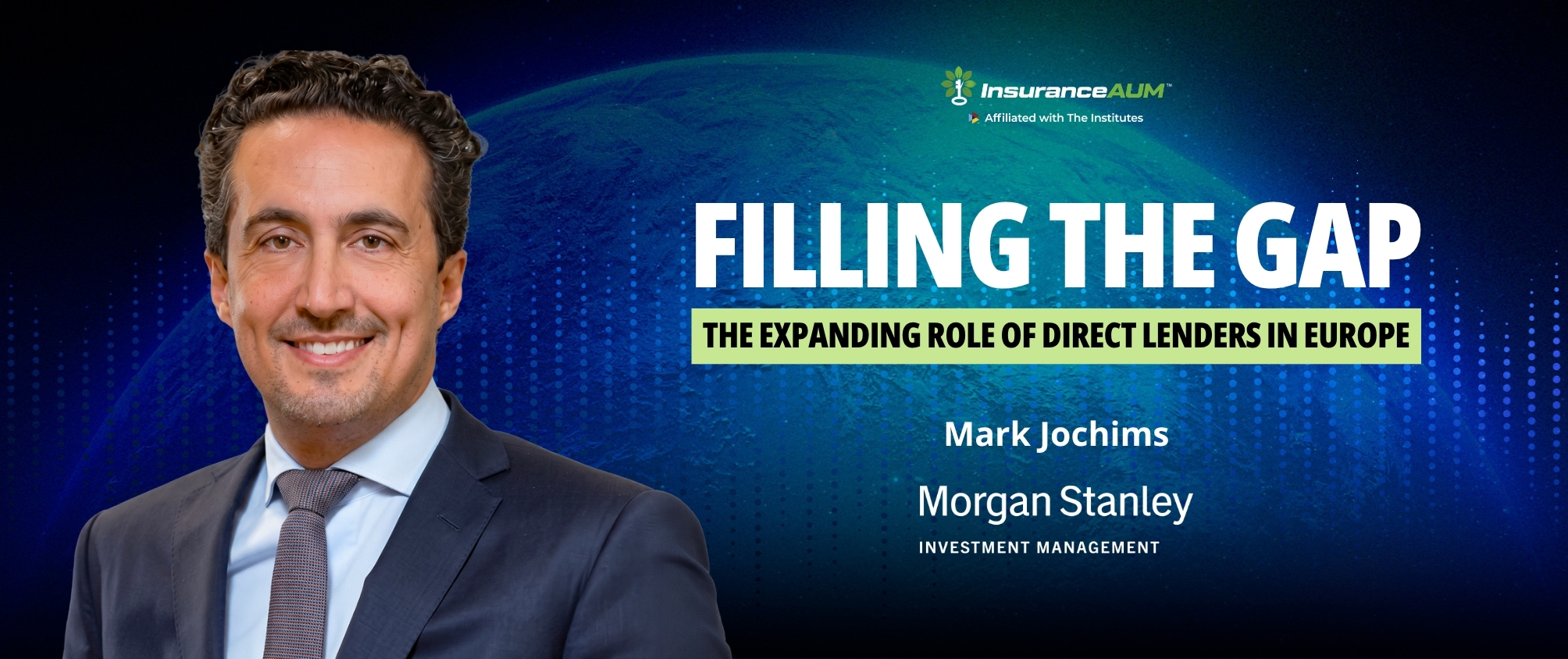
Filling the Gap: The Expanding Role of Direct Lenders in Europe

Image
IAUM_Podcast_MorganStanley-10.26_Web_2026


Stewart: Hey, welcome back to the InsuranceAUM.com podcast. This is The Home of the World's Smartest Money, and I'm Stewart Foley, your host, and I'm really glad that you're here with us today. No news to you, private credit has become a core part of many insurance portfolios, but here in the U.S., most of the conversation still tends to center in the U.S. market. Today, we are going across the pond, as they say. European private credit has developed alongside a very different banking system, different borrowers and sponsors, different jurisdictions, and different supply and demand dynamics. For insurance investors, though, growth of the market isn't enough reason to allocate. The real question is whether European private credit can earn a place on the insurer balance sheet. Does it provide real diversification? What's the relative value look like? And so forth.

And really, there's a lot to discuss here. The title is Filling the Gap: The Expanding Role of Direct Lenders in Europe. Today, I'm joined by Mark Jochims, Head of European Private Credit at Morgan Stanley Asset Management. Mark, welcome to the program. We're thrilled to have you.

Mark: Thanks, Stewart. Great to be here.

Stewart: For those of you who might not know Mark, he has spent more than two decades across M&A, leveraged finance, and private credit. He was a founding member, and I want to talk to you about this because you don't have nearly as much gray hair as I do. You were a founder and partner at Arcmont Asset Management, where you built out a European direct lending platform at more than €15 billion. In 2022, you joined Morgan Stanley, essentially dedicated to do it again, and it gives you an unusual perspective on today's market. You haven't simply invested through the evolution of private credit. You've also helped build two businesses.

I'm super excited to talk with you today because I think this is differentiated. I think that's important to insurance investors to have diversified sources of income. But before we go there, where did you grow up and what's a fun fact about yourself that your colleagues would be surprised to learn?

Mark: Well, I grew up mostly in Germany. My father's German, my mother is Egyptian. So I grew up most of my time in Germany, spent some time in education in England, but I would say I'm mostly German and such.

Stewart: And what's your fun fact? There's got to be one.

Mark: With a fun fact, everyone, and that's probably more professional-related than personal, but although I work in private credit, I was probably more of an entrepreneur and an equity person all my life as I grew up, and I ended up in this role pretty much how life happens at times. You just end up sometimes in places that you didn't plan at.

Stewart: Yeah, that's interesting because that takes me right into my first question, which is something in your background that really caught my attention. You started at M&A, you moved through the financial crisis into credit, and you've said that you still approach businesses as an equity investor, but with the credit investor's focus on downside. I think that's an interesting combination. How has that shaped the way you think about lending?

Mark: I think it gives me quite a unique perspective because a lot of people at a very early age know they want to do in their professional careers either equity or credit if they go down the financial route. I started in M&A at Lehman Brothers in the early 2000s, and it was a little bit by coincidence through friends and relationships and some of the internships I've done. But also, if you wind the clock back, that was probably the place to be during that time. There was a lot of excitement for graduates to go into that industry. But I think I've realized fairly quickly that I was more interested in the business and the human element, the entrepreneurs, than advising just a transaction. So I knew that fairly early, probably more subconsciously than consciously, but I realized that. And then I stayed probably a few years a bit too long.

We had a very good team there. I had a very good learning experience. And over the years, I knew I wanted to go more into the private equity world because I thought that's a good way to express the entrepreneurial and the equity element of it. And then how things happened, the GFC happened, and then I think the opportunity set changed quite significantly. And that's when this opportunity on the private credit side came up, which at that point was two, three of my former colleagues and myself sitting in a little office and thinking about building a private credit platform. And you have to think back to 2010, that asset class didn't really exist. So we were pretty much at the early stages of that asset class, sitting in an office and taking advantage of being one of the first movers.

Stewart: What's interesting is, and as an entrepreneur, I think I've got a little bit of PTSD from founding something from scratch. I don't know if you do, but I do for sure. You build a business at Arcmont into a major European direct lending business, and then you decided to start over and do it again at Morgan Stanley. I know that you learn things by doing things a second time. I mean, I think it's without question, if you have a chance to do something a second time, there's some knowledge you learn from the first time. So can you talk a little bit about what made this opportunity at Morgan Stanley compelling and anything that you might've learned that you thought maybe you could do differently getting a second bite at the apple?

Mark: I think the first time we kind of stumbled into it, and it was a little bit of makeshift and learning it along the way because we were one of the first who were doing this in this asset class. So the second time around, if you're doing pretty much a rinse and repeat of the first exercise, obviously with different nuances, you can take all of the learning experience from the first time into consideration and build it from scratch the way you didn't know when you started it the first time. And that's a huge advantage. So it becomes more of an execution play rather than a fact-finding exercise, but there are obviously nuances, et cetera. I think the main skill set that you learn the first time that you then can deploy the second time is problem solving. I think that's probably a very common theme across entrepreneurs and how they think about businesses, is many founders in certain businesses can probably build businesses in other sectors as well because they have that problem-solving skill set.

Stewart: That's interesting. I see entrepreneur programs at universities, and it's funny because I think it's difficult to teach how to be an entrepreneur. A lot of times you're diving off of a really good platform into a world of unknowns and you don't know how it's going to work out. A lot of times you make less money for extended periods of time. It's really interesting. I think that's a great point that entrepreneurs, you have to be problem solvers because obviously there's no playbook, right? It's not like I could go back and look at the other 25 guys that did exactly the same thing, because if you're an entrepreneur like I am, if somebody's already done it, I could care less. I want to do something different.

And so along those lines, and to be fair, I mean, I think that our insurance CIO audience is on the two-standard-deviation right tail of sophistication. I was just privileged enough to be on a call with about 20 CIOs this week, and the things that they were talking about is the reason that I came up with the tagline, "Home of the World's Smartest Money," because these are very sophisticated investors. I mean, very sophisticated, and they already have excellent access to U.S. direct lenders, and they probably already have a meaningful private credit allocation. And so what I guess I'm asking is, when you look at Europe, and I know enough about this to be dangerous, but I know that Europe offers a differentiated opportunity. Can you talk to me a little bit about what makes this different?

Mark: Sure. Very happy to. I mean, there are different angles on how to look at this. And before I explain that, many of the U.S. investors that invested in private credit had diversification early onwards, but it was probably limited to a certain set. I think over the last few years, more and more people, as they saturate their U.S. allocation, are looking at more diversification in Europe. A lot of your listeners will probably be quite familiar with this, but for the ones that this is new and they see it in the press and the headline that Europe's getting some relative attention, the way I would articulate it is that Europe is not inherently better than the U.S. on the private credit side. That's not the way how to look at it. The U.S. is the largest market, and after the financial crisis, the disintermediation of the banks advanced much quicker in the U.S. than in Europe.

Europe is a fragmented market, and from a cultural perspective, many Europeans are fairly attached to their banking system. So the disintermediation is slower. So U.S. is probably twice the size, Europe probably growing at twice the pace because there's still quite a bit of headroom. So the U.S. is, I would say, maybe four or five years ahead of Europe, but I don't think Europe will end up in the identical spot to the U.S. There will always be some differences between the U.S. and Europe, if that makes sense. So from a U.S. investor perspective, the way I would probably see it is that Europe adds potentially different borrowers, different sectors, different jurisdictions, different source of deal flow, different supply-demand dynamics, and some form of diversification. It's probably still correlated to global economic output, so it's not completely uncorrelated, but it offers a level of diversification from a risk perspective. From a currency perspective, you can invest into European private credit in U.S. dollars. That has been always possible, so it's mostly underlying portfolio diversification.

Stewart: It's interesting, and you mentioned headlines. Private credit is certainly having its moment in the sun in the headlines. We've talked about this a number of times on this podcast, about that those headlines are a very small sample of the private credit market. And the other thing that's happened, I think, and I hope you'll agree with me here, is that "private credit" has become such a broad label that it's hard. There's a lot of nuance. That can be very high grade, that can be a speculative-grade investment. You can be all over the capital stack. The structure of what you own really matters. I mean, there's a zillion things that go into, “What really is my exposure?” So when you look beneath the headlines, what should investors actually be worried about?

Mark: I mean, that's a very good point. Putting all private credit into one is just like putting all stocks into one. I think there's a lot more differentiation from a geographical perspective, from a size perspective, from a risk perspective within the private credit universe. But I'm also not overly surprised that private credit is getting so much scrutiny. I think it's natural as every asset class grows, evolves, and matures, it gets increasing scrutiny, and I think scrutiny is always healthy in that sense. And we've seen similar, I think, after the emergence of the high-yield bond market, the leveraged loan market, and some of the other asset classes. And obviously private credit has become this catchphrase that is creating probably some clicks for some media outlets. So having said that, if we talk about private credit and set the scene, the vast majority of private credit is what we call direct lending.

And direct lending is basically one asset manager providing a loan to a company. Historically, that was conducted by banks. At the end of the day, it's credit. You can say public credit, bank credit, private credit. At the end of the day, the underlying credit is fairly simple. Then there are other elements in the private credit universe that could be more junior capital or it could be a form of opportunistic capital or hybrid capital, et cetera. But the vast majority, I would say two-thirds of the private credit market, is direct lending, and it's been the narrative of the private credit growth story. And if you take a step back, we're talking about senior loans, right? We are not talking about managers who are inventing the next AI model, who are developing the next electric car, or these kind of things. These are typically loans to companies that sit behind very significant equity buffers.

So the asset class in itself provides you quite a bit of downside protection and the way how many investors see it, especially on the insurance side, it gives a good capital charge, but mostly people see it as a diversifier for downside protection and generating income. And the intention is that this asset class, because it's a diversifier, has less volatility than an equity strategy, for example. So inherently, because you are at the senior end of the capital structure, it's a little bit surprising how people worry about private credit. And one example of that is when this entire private credit narrative in the press started was around at the same time as the SaaS apocalypse, when people thought, okay, AI spend has grown so much and people needed to justify all the AI spend that basically it needed to disintermediate pretty much a lot of industries.

The interesting fact here is that people started to worry about the senior debt before people worried about the equity. So that is a warning sign when you read the press. It's just like they get some of the principles up and down and then they go down a rabbit hole. And as you rightly pointed out, in this modern day, it is very difficult for a reader or a listener to differentiate if the quotes or the anecdotes being made here are representative of the entire asset class, the majority of the asset class, or they're minority. And that's, I think, in the modern days where it becomes increasingly difficult to differentiate.

Stewart: Yeah, it's interesting. I've made this point before. You talk about BDC redemptions and all this stuff, and a lot of that is the wealth channel. When you buy in an illiquid asset class and you want an illiquidity premium, it doesn't make sense to me how you're going to come back and expect liquidity. It just makes no sense to me. I mean, one of the things that came up on this call the other day, and I don't even know where to begin to answer this, and I'd be keen. There's no right answer, I don't think, but if I'm a CIO sitting around and I want to know what is my exposure to AI in my portfolio, that is a tough one to get your arms around.

Have you guys thought about anything like that? The concern is, what if the AI forecasted growth of infinitely upward is not met? And what does that mean for me in places that I didn't think were labeled AI, as an example? Does that make sense?

Mark: Yeah, it makes a lot of sense. I mean, we started investing in 2023, so in a post-ChatGPT world, so our underwriting approach had AI implemented from day one here at Morgan Stanley, and we've fine-tuned this over the last few years well before it was in the press. So we had a very good understanding from our perspective on how AI may impact certain businesses in certain sectors, which is not limited to software by any means.

Stewart: No, right.

Mark: Where it becomes a little bit more, and again, we are talking about the credit side, and if we take maybe the SaaS apocalypse this year into consideration, the question is there's obviously a lot being spent and there's a question mark on how far it goes. The most extreme scenario is, and that's the fear that a lot of people like to build on, it's going to disintermediate a lot of businesses, a lot of people are going to lose their jobs, and we all have to move to universal income. I think there's a correlation between how much is being spent and how much the fear is because there's some form of correlation between the two. But if you ask me from a practical perspective, the way I would see the impact from AI on portfolios and companies is quite easy to calculate, but you need to do it from a bottom-up perspective and you need to look at it on an asset-by-asset basis and then do it on an aggregated level for each asset class and then exercise it up to look how big the impact is.

Most managers that insurers have in their portfolio should be able to do that. It doesn't matter if it's on the infrastructure side, on the private credit side, the private equity, public, et cetera, probably real estate less so, and some of the commodities. I think people can do that exercise. The problem is you need to have a very consistent approach on how you measure the impact of AI, the potential risks of AI, the potential benefits of AI that needs to be across. And that's the difficulty, I would say, from when the data comes out at the top for a CIO to look at his portfolio and say, "Okay, I have this aggregated data, but what does that mean?" I think that is the critical part for the next few years where we are starting to move away from this blank fear and have a more categorized and substantiated view on how to measure the impact of AI. I think we are still there at the earlier innings.

Stewart: That's super helpful, man. I mean, I really appreciate it. I think it's a head scratcher in a lot of ways, and I'm encouraged to hear you say that most managers ought to be able to get that pulled together for a client. And one of the things, and this is a little bit of, I don't know. We have private. I ask this because you've got a pretty deep background in this space at a couple of different places at very senior levels. And so private credit managers come on and they say, "We have differentiated sourcing, we have disciplined underwriters, we're highly selective, we focus on downside protection." They can't all equally be good at it. And if I'm a CIO or I'm an investment committee member, which overwhelmingly those folks are not neck deep in these markets, so they're at a much higher level and much broader and less in-the-weeds look, how do I tell the difference when I'm making those evaluations?

Mark: Yeah, I think you're pretty spot on because it's a general marketing spiel for a lot of people on the private side to articulate how selective they are and how they source opportunities. And it's very difficult for someone who doesn't sit in the trenches, see transactions being done on a day-to-day basis, to understand who does it better than the others. Maybe the way I would try to articulate this is in the early innings of this asset class, the competitive dynamics was what can private lenders do better than banks? There was a very clear narrative. They can provide acquisition facilities, they can move quicker, they can adapt. There were all these kind of narratives. Over the last 15, 20 years, the narrative evolved.

Then it became the narrative, oh, people have done this before, others not. People can write bigger tickets and are larger than others, and that would determine their selectivity because they would say, "I have this competitive advantage, and as a result, I see more investment opportunities than the others." Fast-forward to today, most of these historic competitive narratives don't hold true anymore.

Some of them do, but in today's world, most of the companies are fairly good in evaluating the different opportunities that different lenders bring. There are a lot of debt advisors out there. A lot of private equity firms have capital markets functions that do nothing else than just prioritize that selectivity. So what I'm saying with that is a loan is fairly commoditized because the majority of loan offers are written on a piece of paper. It's the quantum, it's the pricing, it's the terms, the covenants, et cetera. There's some soft factors around it in terms of deliverability, understanding sectors, decision-making process, et cetera. But at the end of the day, the point that I mentioned earlier is we're not equity, we're not inventing the next AI model, et cetera. So it's much easier to compare a loan than an equity. So it is becoming increasingly commoditized, and that's, I think, one of the main reasons why I joined Morgan Stanley, is because we can offer more than a loan.

We're part of this large organization that has multiple businesses, fixed income, equities, M&A, so many different parts, and they have a network of existing companies that they work with. So many of the investment opportunities come through that funnel that is generated through some of these top-tier investment banks. So we sit at the source, and that allows us to see things a lot earlier. It allows us to position ourselves better without having to use these loan documents as the main differentiator. It allows us to analyze businesses more because there's so much intellectual know-how in this organization that we can tap in the equity research, the credit research, but also just speaking to the industry bankers. And that's really the quintessential learning of private credit. You win by not losing, and your selectivity determines the quality of your portfolio.

If you lose money, you cannot compensate that. It's not like I make my next IPO, I make 5X, and suddenly I've recouped the money. It doesn't work like that. So as a result, that funnel has so much importance, and I think that's why so many managers articulate it, but it's very difficult to really differentiate yourself.

Stewart: I'm a proud bond geek, and they always say you make it in basis points and you lose it in percentage points, and it's been great. Real quick on the way out, dust off your crystal ball. You mentioned you think European direct lending and European private credit is a little behind the U.S. With the way that today works, two years is what used to be five years or 10 years. Can you tell us, look out a couple of years, and what do you think this landscape looks like in the European private credit market in particular?

Mark: Sure. I think credit people always worry about the next credit cycle, as you can imagine, and we've been all waiting for a cycle for an extended period of time. I think the central banks and governments have changed the rules of economics and extended cycles for quite a bit. So people have become a little bit more appreciative of the probability of a cycle increasing the longer it lasts. I think private credit should perform extremely well through an economic cycle compared to other asset classes, as I mentioned earlier, because it inherently should have a lower volatility because you're higher up in the capital structure. So from an economic perspective, it doesn't matter too much in what environment you are. And private credit or direct lending is often labeled as the all-weather asset class, no matter if your economy is growing or shrinking. So in that sense, it should be relatively stable.

The overall market opportunity from a GP perspective is increasing because the share of bank lending is still relatively high in Europe compared to the U.S. So in Europe, I mean, there are different data sources, people always cite numbers of 50%-plus of the market still being represented by banks, so there's still room to grow. Where I would say you would see quite a bit of noise and differences on the GP side. So if I'm a CIO at an insurance company, I don't want any noise in the portfolio, and private credit ticks the box quite well, but I also don't want any noise on the GP level. And I think that's becoming increasingly a topic of attention for a lot of investors, is what is the governance structure? What is the ownership? Is there going to be some M&A involved? Is there risk? Is there someone standing behind the team and the funds that can step in and manage things if things don't go well?

But otherwise, I think fairly attractive, stable market yields in Europe typically are at a spread to syndicated, but also at a premium to the U.S.

Stewart: Very interesting. What a great conversation today. I really appreciate you being on. I got a fun one for you on the way out the door, if you're willing. Describe your best real or fantasy dinner. This is a relatively new question, Mark, so don't feel bad. I'll give you a moment to think.

Mark: I mean, the real one, I can tell you, it's my family, my kids, my parents. There's nothing more important and more that I enjoy than that. So that's an easy one to accept.

Stewart: That's awesome.

Mark: And then on the fantasy side, there's probably quite a few disciplines and fields that I like. I mean, Warren Buffett, how can you not have him at a dinner? Over such a long period of time, the wisdom that he accumulated, but most importantly, the persistence of not changing his views while everyone else does, I think that is so remarkable. There are probably some people on the political side that would be very interesting to listen to. I mean, Churchill, I live in the UK, had such a very profound impact on the history of Europe and how that was managed. And then I also have quite a scientific side to it. I mean, my majors in school were math and physics and I'm German speaking, so Albert Einstein was always very, very interesting. And my personal hobby is also some of the physics and astrophysics.

Stewart: That's super cool. I think Buffett's the leader in the clubhouse. I do. I've had the opportunity to speak with him in a reasonably small group, not speak with him like that, but hear him speak in a reasonably small group a couple of times. And I've always said that when you listen to him, it is very common sense. And I've always joked that there's 10 or 15 guys sitting around every coffee shop in Omaha that think the same way. You know what I mean? I mean, it is a very practical, you don't understand it, don't buy it. The guy buys cash flow, buys value. He's a Graham and Dodd disciple. Super interesting. So Mark, thanks so much for being on. I really appreciate it. It's been a great podcast and look forward to, hopefully we can have you back on again soon.

Mark: No, really appreciate it, Stewart, and thank you very much.

Stewart: We've been joined today by Mark Jochims, Head of European Private Credit at Morgan Stanley Investment Management. Thanks for listening. If you like what we do, please rate us and like us wherever you listen to your favorite podcast. You can watch this podcast on our YouTube channel at InsuranceAUM Community. My name's Stewart Foley. This is The Home of the World's Smartest Money on the InsuranceAUM.com podcast.

Share this post

Sign Up Now for Full Access to Articles and Podcasts!

Unlock full access to our vast content library by registering as an institutional investor

Register

Contacts


Image
msim_logo_rgb_blk_pos_220927_sidebar

Morgan Stanley Investment Management’s Insurance Solutions team proudly supports our insurance clients with bespoke investment solutions and a comprehensive range of strategies that align well with insurers’ investment objectives and risk tolerances. We provide risk-based capital efficient solutions across public and private market strategies, and add value through thought leadership across insurance research, portfolio management, strategic asset allocation, reporting, risk management, and rating agency/regulatory considerations.

Joel Cramer, CFA
Managing Director, Head of North American Insurance Solutions
joel.cramer@morganstanley.com
Office: 312 706 4216
Mobile: 630 222 6765
 
1585 Broadway,
New York, NY 10036


View the contributor page

Sign Up Now for Full Access to Articles and Podcasts!

Unlock full access to our vast content library by registering as an institutional investor .

Create an account

Already have an account ? Sign in

Ѐ Ё Ђ Ѓ Є Ѕ І Ї Ј Љ Њ Ћ Ќ Ѝ Ў Џ А Б В Г Д Е Ж З И Й К Л М Н О П Р С ΄ ΅ Ά · Έ Ή Ί Ό Ύ Ώ ΐ Α Β Γ Δ Ε Ζ Η Θ Ι Κ Λ Μ Ν Ξ Ο Π Ρ Ё Ђ Ѓ Є Ѕ І Ї Ј Љ Њ Ћ Ќ Ў Џ А Б В Г Д Е Ж З И Й К Л М Н О П Р С Т У Ф Х Ц Ч Ш Ā ā Ă ă Ą ą Ć ć Ĉ ĉ Ċ ċ Č č Ď ď Đ đ Ē ē Ĕ ĕ Ė fi fl œ æ ß