

We're currently experiencing email delivery delays. For urgent matters, please contact us directly at lindsay@insuranceaum.com.

Adams Street Partners -

Where Does the AI Revolution Take Venture Next?

AdamsStreetFeatured

Brijesh Jeevarathnam - Partner & Global Head of Fund Investments


A Conversation with Benchmark’s Chetan Puttagunta – Part Two

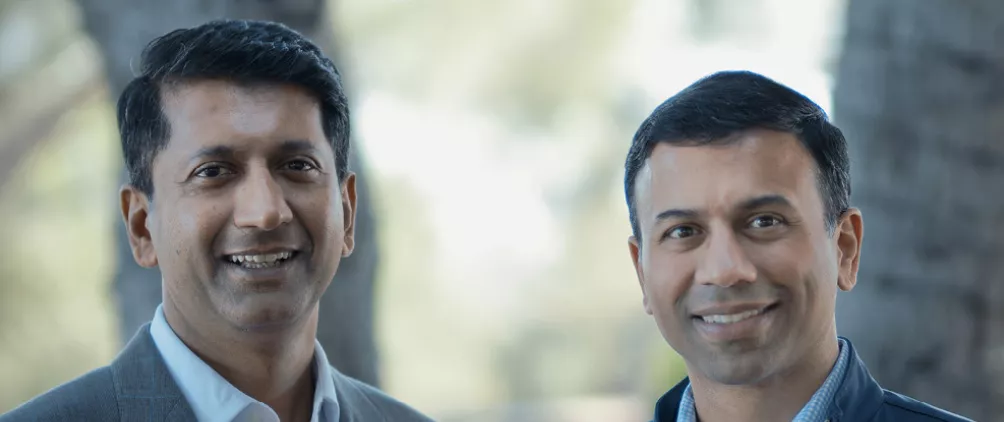
In the second part of their conversation on the AI opportunity for venture capital, Benchmark General Partner Chetan Puttagunta and Adams Street Partner & Global Head of Fund Investments Brijesh Jeevarathnam explore the technology powering a potential $1 trillion-plus transformation, from foundational models to the next wave of AI applications, and where Benchmark is placing its bets.

Chapters

00:00: Will foundational models continue rapid innovation, or will they hit a plateau? Proprietary versus open source models, and improvements in coding capabilities.

03:00: Accelerated Horizons: The two to four week product roadmaps of leading AI applications.

5:28: In a rapidly evolving AI ecosystem, how do application layer companies build defensible moats?

08:45: Youth versus experience – the characteristics and expertise of AI founders and teams.

11:08: Benchmark’s approach to investing in AI — backing transformational founders mainly at seed and Series A.

13:21: Achieving portfolio and vintage diversification.

15:55: How Benchmark stays competitive and finds the best entrepreneurs.

17:24: Lightning round.
 

Transcript

Brijesh Jeevarathnam: Let’s go to the technology side for a second, and let’s start with the foundational models. Every couple of months, sometimes a couple of weeks, there’s a new version of foundation model X coming out, and it’s a leapfrog over the prior version, and this has happened now for a little while.

My question is, do you see this happening for the foreseeable future, two, three, four years? Or do we hit some kind of local maxima, local plateau, where the innovation in AI is around building on top of this, whatever is the latest plateaued, quote unquote, version of the model?

Chetan Puttagunta: I think it’s very hard to know how the model layer will play out.  I think it’s clear right now, as the world has evolved, is there are three large model companies in the United States that are building proprietary models. So it’s Google, Anthropic, and OpenAI. And then you have a fourth player in Grok, part of xAI, that has done a remarkable job of building capability very, quickly, with an amazing amount of capital investment, and they just released an encoding model with free APIs. So they’re very disruptive. And then you have Meta, who with Llama models, I think define the open source part of AI. And then they’ve had their own challenges, as has been very publicly documented.

If you expand that lens globally, what’s really interesting is open source models, and open source models are happening all over the world. So, obviously, there are a lot of open source models in China, open source models in Europe.

And the thing about the open source world and the open source models is that, as you release an open source model, and if it has an innovation in it, or a trick, or something, the other open models can borrow — I won’t say copy, because it’s open source, so you’re not copying anything, you’re just being inspired by it. So open source ends up creating this interesting dynamic where if one of the players comes up with something interesting, the other six or seven can catch up instantly.

I would say we continue to see dramatic improvements in coding capabilities. These models continue to get better and better at coding.

We may have, at this point, exhausted all humanly generated data on the internet, and therefore creating really good predictive text for analytics, memo writing, and all that stuff, maybe we’ve done a lot there, and we now have to digest all this capability before we can jump even further. But on the coding side, it continues to get better with each version, and it’s pretty remarkable.

I would say on the application layer, where, as you know we’ve invested heavily, the really interesting things we’ve noticed is the application companies that are doing remarkably well, their view of product is totally inverted from how traditional software used to think about it. They don’t think about product roadmap in these long, expansive feature roadmaps.

It would be pretty normal in a sort of like a growth-round diligence question to ask a software company, “Tell me your six-month, 12-month, 18-month, 36-month product roadmap.” The interesting thing about AI applications is the best ones kind of have a four-week roadmap, maybe two-week roadmap.

Brijesh Jeevarathnam: Four weeks.

Chetan Puttagunta: And it’s because the model layer is changing so much, they don’t think about product features as like, features, and let’s go figure out if the model can do it. They actually invert it. They study the model and try to understand capabilities and emerging capabilities of the model and try to understand them before anybody else, and then turn that into a feature for their specific customer.

Brijesh Jeevarathnam: It’s the inverse almost of the SaaS model. Can you just touch on that?

Chetan Puttagunta: Yeah, in SaaS, there was no cloud capability that you were studying. And so it wasn’t like, “I’m going to study AWS’s compute capacity and therefore build you interesting workflow.” It’s like, “No, I’m going to build you a workflow and then figure out the infrastructure on the cloud, and I’ll take care of that.”

This is exactly the opposite, which is that you’re bridging model capability and AI capability to your customer. And it’s really interesting, which is that these models are so powerful and so capable, are enterprises going to be the ones that discover those capabilities themselves, and build in-house tools to expose that to their employees? Or is there going to be a software layer and a vendor that does it for you? And I strongly believe that there’s going to be a deep, rich ecosystem of application vendors across verticals, across persona types, for consumers and enterprises, whose job it is going to be to deliver tremendous amount of value from these models to the specific customer use case.

Brijesh Jeevarathnam: As you talk about these companies, I want to ask you about moats, and let me ask a specific question first. There are a number of coding AI companies, Cursor, and they’ve obviously had tremendous success in terms of customer penetration, customer success, revenue growth, and so on. And then you get the foundational companies that produce some version of that product. They’re moving up the stack, if you will — Claude as an example. How do these application layer companies build some defensibility into their business models against the foundation models?

Chetan Puttagunta: My personal view on the AI application world is I split it into the coding world and the non-coding world. It’s just a way for me to make sense of the world. I think the non-coding world, you’re targeting a very specific persona, and you’re automating tasks for that persona and making them more productive, making them more efficient, whatever.

And those workflows, and data gravity, and all of that, feels very defensible because it has direct analogies to software, enterprise software, classic enterprise software. It’s like you’re becoming a system of record. You are establishing data gravity. You are putting workflows into your software. Previously, workflows used to be a human clicking buttons. Now it’s just agentic. It’s the thing just doing it.

And those are all proprietary. And it’s taking in data. It’s generating new data. It’s all being stored in one schema. There’s a lot of data gravity being built in these systems. And so you can draw a very clear line from these two systems of records. And you can say, OK, like the data modes, the network effects, all that kind of stuff, it’s starting to show up a little bit. Like, this feels familiar.

In the coding world, I think it’s very different because I think LLMs, their best use case is coding. They’re extraordinary at generating code and very quickly, generate code quickly. If you look at the three large models I talked about, they’re all releasing coding products. You have incredibly brilliant teams building coding applications. So obviously, we’re investors in Cursor. We’re investors in a company called Greptile. There are other companies here that are filled with just brilliant, remarkable people delivering amazing products.

It is one of those interesting paradoxes where it’s by far the best use case. It’s a gigantic and valuable market, and it’s now turned into perhaps the most competitive application market in AI. Today, the developer — or the user that’s generating code from these tools — is capturing a tremendous amount of value. Because it’s so competitive and market share in such a market is so important, it’s like food delivery in San Francisco in 2012. If you were in San Francisco in that timeframe, you knew it was amazing.

Brijesh Jeevarathnam: Yes. Subsidized.

Chetan Puttagunta: Yes. You get a burrito delivered from across town for no delivery charge, because it was just market share battle. And what ended up happening is in that world, network effects showed up, and then that created its own sort of lock-in and moat and stuff like that.

And I think the theory on coding, you can very obviously articulate a network effect story, which is like, as you get a lot of coders, capture a lot of proprietary data, therefore you can train more proprietary models, and therefore your coding model gets better than everybody else’s. And you’re able to outpace. And so you can certainly articulate that story. But we’re still early. And so it hasn’t shown up yet, and the people that are winning in coding — all these companies have tremendous revenue scale, but the people that are really winning as developers, they’re getting magical tools at unbelievable prices.

Brijesh Jeevarathnam: Can you talk about — I want to come back to the stack in a minute — but can you talk about the phenotype of some of these companies, by which I mean the youth of the founders, the size of the team, the scaling, et cetera, please?

Chetan Puttagunta: Yes, it changes based on where in the stack you are. I think we’re investors from the very beginning in Fireworks, which is an inference company, and that is a deep infrastructure company, where they are extremely good at understanding GPUs. That doesn’t show up with just intuition. That shows up with deep expertise at the hardware level, at systems engineering, and stuff like that. And we have another company, Cerebras, which is making an AI-specific chip. Again, that team, if you’re going to do that, you have to have lots of experience making a chip, and this company and its founders have lots of experience making chips and taping out semiconductors, all that kind of stuff.

So there are certain layers where it requires a deep amount of expertise and experience to do it. And those people tend to do it really well.

And then there’s another side of the coin, where completely being devoid of any bias is a huge asset. And that’s starting to show up a lot in the application layer. A founder said this the other day, which I thought was really interesting. He said, as a SaaS founder — he’s had 10, 15 years of experience — he was saying, look, I’m starting to think that all my mental models are just wrong and I should just trust the models at the end of the day.

I thought that was a really well put way to say it, by being completely naive or unaware or just not being biased by how traditional software was built and delivered and all that kind of stuff, you just go about doing this very differently. And therefore, you start to extract way more capability out of the model and build way more powerful software.

And so that, I think, to date has favored those that are youthful either in age or just approach, which is like they just come with a blank sheet of paper and say, like, I’m building this thing, and how do we do it?

Brijesh Jeevarathnam: Let me switch to the Benchmark approach. Where are you most excited to invest right now? Where in the stack, and what are you looking for in these founding teams?

Chetan Puttagunta: You have this data already, which is in 2022, we started aggressively investing in AI applications and technologies that enabled AI applications. And we backed these companies either at the seed or Series A. So companies like Sierra, Langchain, Legora, Fireworks, Mercor, Levelpath, many others.

And as a result, these companies were early in their sectors thinking about the application layer, thinking about what works, what could be potentially transformational, and started to define early patterns of how to really build successful businesses within the application layer, that sort of informed a whole new set of application investments we made after that. So companies like Numeral, Reducto, New Lantern, Manus, et cetera, were all, sort of like, follow-ups to all of these.

And so we’ve invested very heavily in AI applications, and we think there continues to be tremendous opportunity there.

Now, if you were to tell me, well, do you look at it from a sector point of view? Do you look at it from a persona point of view? How are we, sort of like, drawing up a market map of application opportunity? And I would tell you we’re not. What we’re trying to do is be super receptive to entrepreneurs who have unique ideas. And when we hear something that we haven’t heard before, like, you just have to be completely open to new ideas.

I think it helps a lot to be deep in the application layer already, and watching these businesses grow, deliver value, scale, and all that kind of stuff. And so, we continue to be really excited about applications and application enablement.

Brijesh Jeevarathnam: With the AI world changing so rapidly and valuations are frothy, how do you balance that desire to work with the best entrepreneurs with a desire for vintage diversification, maybe portfolio diversification, et cetera? The bird in hand versus what might be just down the corner.

Chetan Puttagunta: This is the part where our fund structure helps. We’re $425 million from LPs, and a little bit more from current and former GPs. And as a result, we only do one thing, which is, we want to back transformational companies primarily at seed and Series A, and sometimes we can do a little bit later.

But sort of the core around that founding principle is that we want to be on the board, and we want to be a business partner to the entrepreneur, and we want to help them build a really big and important business.

And so if you have sort of that constraint or that view of the world, it sort of helps you release a lot of FOMO, and it helps you do kind of the deals that you want to do where you can do them.

And I would say that, what’s come along with remarkable valuations and remarkable pace of fundraising, is the remarkable revenue growth, the remarkable value these companies are delivering to companies. In Manus, which is headquartered in Singapore, there are about 60 people in Singapore, they launched their product, call it end of March, and they recently disclosed that they’ve hit a $90 million run rate. I mean, just those are, you know, and it’s a product-led growth motion. The team is maybe 65 people of which the vast, vast majority are product and engineering.

Brijesh Jeevarathnam: Unbelievable.

Chetan Puttagunta: And it’s consumers going to the website and swiping credit cards. And I think that, ultimately, is a huge test of value. Like, you’re not getting consumers spending, you know, either 20 bucks a month, or 40 bucks a month, or 200 bucks a month, on a product unless they’re getting 10x ROI, and maybe 100x ROI in the consumer world. And so it’s clearly delivering a lot of value. And I think that’s different, i’s completely different. And so you have to sort of respect what these entrepreneurs are doing, and the scale they’re achieving is amazing.

Brijesh Jeevarathnam: Remarkable. It’s a very competitive market today, and Benchmark has a 30-year history and a rich tradition. How are you staying at the forefront of seeing the best entrepreneurs and winning those deals? Has your approach changed? Can you talk about that?

Chetan Puttagunta: Each of us thinks about sourcing investments differently. I would say that my reliable and richest source of new investments has been entrepreneurs that I know really well. The people that are referring entrepreneurs over to me are doing it in a sense where they can also, at the same time, serve as a reference on me, and what it’s like to work with me, because some of these entrepreneurs I’ve worked with for a long time. So, for example, the founders of Levelpath, this is my second company with them. I backed them, I was the first investor in their previous company, which had a very successful exit to Workday and started this company.

So I’ve now been working with them, I think I first met them in 2013. So, when they refer other entrepreneurs to me, it carries a lot of weight, too, because they themselves oftentimes will invest personally in these companies, and so it’s a great source. I think part of that is like continuing to pay and invest into the entrepreneurial ecosystem in Silicon Valley.

Brijesh Jeevarathnam: You’re practicing the true craft of venture, and some of those aspects haven’t changed really in decades, right? The courtship, the partnership, the trust, and putting entrepreneurs first. That’s very clear to us. Before we wrap, can we do a quick lightning round?

Chetan Puttagunta: Yes, please.

Brijesh Jeevarathnam: Hobbies, besides investing, of course.

Chetan Puttagunta: I really like being outside. I think we’re in Northern California.

Brijesh Jeevarathnam: Blessed to live here.

Chetan Puttagunta: Yes. The hiking trails around here are amazing. The outdoor facilities that we have available to us here are just amazing.

Brijesh Jeevarathnam: You’re an outdoorsy guy.

Chetan Puttagunta: Yes. So I think you have to be in Northern California.

Brijesh Jeevarathnam: You have to be here, yes. Favorite podcast, either episode or series?

Chetan Puttagunta: I’m a huge fan of Patrick O’Shaughnessy, and so Invest Like the Best is constant. So every time there’s a new episode, it auto plays for me.

Brijesh Jeevarathnam: A big fan as well. AI tool that you use the most, either for personal or work use?

Chetan Puttagunta: Manus.

Brijesh Jeevarathnam: Manus.

Chetan Puttagunta: Yes, multiple times a day. Multiple times an hour, maybe.

Brijesh Jeevarathnam: Last one. What advice would you give yourself in 2011 when you first started in this business?

Chetan Puttagunta: I very rarely look backwards because I think, in this job, it’s like you just have to keep looking forward. I don’t know that I’d have any advice for 2011.

Brijesh Jeevarathnam: Very pragmatic.

Chetan Puttagunta: I mean, it’s like the paths are wild and non-deterministic, and so it’s hard to imagine a different path, and so you just kind of, like, just keep looking forward. I mean, that’s what we have to do in this business, and I think part of it is, like, you have to react in the moment, and you have to react with very little information. And there’s a lot of, like, instinct that goes into this. And ultimately, this becomes an instinct based on people, backing the people and allowing them to reach their full potential.

Brijesh Jeevarathnam: Well, Chetan, it’s been wonderful chatting with you. This time has just flown by, and we’re lucky to have your time and have you share your thoughts with us today. Thank you so much, and thank you for being a part of the conversation.

Read More From Adams Street Partners


Important Considerations: This information (the “Recording”) is provided for educational purposes only and is not investment advice or an offer or sale of any security or investment product or investment advice. Offerings are made only pursuant to a private offering memorandum containing important information. Statements in this Recording are made as of the date of this Recording unless stated otherwise, and there is no implication that the information contained herein is correct as of any time subsequent to such date. All information has been obtained from sources believed to be reliable and current, but accuracy cannot be guaranteed. References herein to specific sectors, general partners, companies, or investments are not to be considered a recommendation or solicitation for any such sector, general partner, company, or investment. This Recording is not intended to be relied upon as investment advice as the investment situation of individuals is highly dependent on circumstances, which necessarily differ and are subject to change. The contents herein are not to be construed as legal, business, or tax advice, and individuals should consult their own attorney, business advisor, and tax advisor as to legal, business, and tax advice. Past performance is not a guarantee of future results and there can be no guarantee against a loss, including a complete loss, of capital. Certain information contained herein constitutes “forward-looking statements” that may be identified by the use of forward-looking terminology such as “may,” “will,” “should,” “expect,” “anticipate,” “estimate,” “intend,” “continue,” or “believe” or the negatives thereof or other variations thereon or comparable terminology. Any forward-looking statements included herein are based on Adams Street’s current opinions, assumptions, expectations, beliefs, intentions, estimates or strategies regarding future events, are subject to risks and uncertainties, and are provided for informational purposes only. Actual and future results and trends could differ materially, positively or negatively, from those described or contemplated in such forward-looking statements. Moreover, actual events are difficult to project and often depend upon factors that are beyond the control of Adams Street. No forward-looking statements contained herein constitute a guarantee, promise, projection, forecast or prediction of, or representation as to, the future and actual events may differ materially. Adams Street neither (i) assumes responsibility for the accuracy or completeness of any forward-looking statements, nor (ii) undertakes any obligation to update or revise any forward-looking statements for any reason after the date hereof. Also, general economic factors, which are not predictable, can have a material impact on the reliability of projections or forward-looking statements. Adams Street Partners, LLC is a US investment adviser governed by applicable US laws, which differ from laws in other jurisdictions.

This Recording includes extemporaneous remarks delivered in an informal, conversational format. Statements herein regarding characteristics of Adams Street Partners, its investment process, past, current and potential investments, and market conditions or forecasts, as well as other statements are necessarily high-level in nature and should not be relied upon as a basis for any decision, including an investment decision. Many such statements are forward-looking statements and are associated with numerous known and unknown risks, uncertainties, assumptions and limitations. Before relying on this recording as part of any decision, including an investment decision, a listener must contact Adams Street Partners to determine whether there are additional relevant material facts and/or contextual information that are necessary to understand the statements herein, as well as whether there are any risks or limitations associated with the information described herein. All such information will be provided upon request. All characterizations or comparisons are the subjective impression of the speaker and need additional context in order to be reasonably understood (which could not be provided contemporaneously due to the informal nature of the conversation). In particular, statements of differentiation, such as describing advantages, favorable comparisons, quartiles, deal quality and other statements should not be relied upon unless the same statement appears in written format in a document prepared by Adams Street Partners for its investors.

Share this post

Sign Up Now for Full Access to Articles and Podcasts!

Unlock full access to our vast content library by registering as an institutional investor

Register

Contacts


Adams Street Partners

Adams Street Partners is a global private markets investment manager with investments in more than 30 countries across five continents. The firm is 100% employee-owned and manages $65 billion in assets across primary, secondary, growth equity, private credit, and co-investment strategies. Adams Street draws on over 50 years of private markets experience, proprietary intelligence, and trusted relationships to generate actionable investment insights across market cycles. We have a long history of managing complex insurance assets to deliver tailored alternative solutions to insurance company clients. Flexible portfolio construction helps to meet the evolving needs of insurance companies globally with the goal of achieving attractive risk adjusted returns. Adams Street has offices in Abu Dhabi, Austin, Beijing, Boston, Chicago, London, Menlo Park, Munich, New York, Seoul, Singapore, Sydney, Tokyo, and Toronto.

Neelm Hameer
Vice President, Investor Relations
nhameer@adamsstreetpartners.com
+1 773 720 9748

Adams Street Partners, LLC
One North Wacker Drive, Suite 2700
Chicago IL 60606-2823


View the contributor page

Image
Adams Street Partners logo

Sign Up Now for Full Access to Articles and Podcasts!

Unlock full access to our vast content library by registering as an institutional investor .

Create an account

Already have an account ? Sign in

Ѐ Ё Ђ Ѓ Є Ѕ І Ї Ј Љ Њ Ћ Ќ Ѝ Ў Џ А Б В Г Д Е Ж З И Й К Л М Н О П Р С ΄ ΅ Ά · Έ Ή Ί Ό Ύ Ώ ΐ Α Β Γ Δ Ε Ζ Η Θ Ι Κ Λ Μ Ν Ξ Ο Π Ρ Ё Ђ Ѓ Є Ѕ І Ї Ј Љ Њ Ћ Ќ Ў Џ А Б В Г Д Е Ж З И Й К Л М Н О П Р С Т У Ф Х Ц Ч Ш Ā ā Ă ă Ą ą Ć ć Ĉ ĉ Ċ ċ Č č Ď ď Đ đ Ē ē Ĕ ĕ Ė fi fl œ æ ß