
Trade Winds: October 2026
Economic and capital market overview as of month-end September 2026.
Read More






Economic and capital market overview as of month-end September 2026.
Learn More Economic and capital market overview as of month-end September 2026.
Read More
Private placements continue to play an important role in insurer portfolios with distinct allocation, credit quality, and performance characteristics across different insurance sectors.
Read More Economic and capital market overview as of month-end August 2026.
Read More In a brief statement designed to avoid signaling its rate outlook, the Fed again highlighted the economy’s “solid” growth and elevated inflation.
Read More
In 2025, the U.S. health insurance industry’s net investment income declined, as lower income contributions from cash and short-term investments as well as Schedule BA assets more than offset the benefits of higher fixed income bond yields and equity dividend yields, both of which reached decade highs in 2025.
Read More
The property and casualty (P&C) insurance industry’s book yield rose to a decade high of 4.39% in 2025, while net investment income as a percentage of invested assets declined modestly from its 2024 peak.
Read More
The life insurance industry’s net investment income continued to rise in 2025, though growth moderated, while book yield reached a decade high.
Read More NEAM reviews May economic and capital market activity, including the Fed’s more balanced policy outlook, resilient labor data, persistent inflation and stronger industrial production. The update also highlights how Treasury yields, credit spreads and equity markets responded to inflation uncertainty and geopolitical risk.
Read More
NEAM compares private credit’s rapid growth with the subprime lending boom, noting similarities in weaker borrower quality, leverage and limited transparency. While private credit may face losses and repricing, NEAM argues it is less likely to trigger a broad financial shock because it has less short-term funding dependence and fewer systemic transmission channels.
Read More
A disciplined, yield-driven, relative-value approach can turn a core fixed income strategy into a compounding engine of income, stability, and durable alpha across market cycles.
Read More 
Products of property-focused insurers tend to have attritional and catastrophic loss claims that materialize and settle over a relatively short time-period once a loss-event occurs. In contrast, incurred losses related to casualty-focused insurance products may take several years to fully materialize and settle. We focus on commercial property insurers and commercial casualty insurers to see if their respective underwriting focus corresponds to any differences in their respective investment strategies.
Read More Economic and capital market overview as of month-end February 2026.
Read More
We evaluate how insurance product correlations have evolved over the past 20 years and estimate the potential impact from this evolution on holistic strategic asset allocation outcomes and decisions.
Read More
As the labor market stabilizes even while inflation remains above target, the Fed’s decision to keep the benchmark rate at 3.5%-3.75% reflects the Committee’s preference to wait for additional economic data before taking further action.
Read More
A pronounced downward shift in interest rates contributed to strong Investment Grade fixed income returns in 2025. What does it imply for portfolio positioning in 2026?
Read More
Since our last update, the investment landscape has shifted dramatically. From 2022 to 2024, the industry’s NIS rebounded by 44 basis points (bps), reaching 105 bps in 2024, the highest level since 2015.
Read More At its most recent meeting in December, the Fed reduced its benchmark rate by 25 basis points, bringing the range to 3.50-3.75%. With the cut, the Fed has now acted at its last three meetings. With the committee having moved the rate 175 basis points since September 2024, the decision to lower the rate did not appear to be a straightforward one. A total of nine committee members voted in favor of the cut.
Read More With the Fed facing a combination of a slowing labor market, above target inflation and reduced available data from the government shutdown, it was no surprise to see that the October meeting’s minutes highlighted a growing disparity of views with respect to near-term policy.
Read More
Higher education is undergoing rapid transformation, driven by a range of pressures that are reshaping the marketplace. U.S. insurer portfolios are potentially exposed to these shifts.
Read More The Fed once again reduced its benchmark rate at its October meeting, setting the range at 3.75-4.00%. In doing so, the Fed reduced the level to its lowest point since November 2022, bringing the cumulative rate down by 150 basis points since its most recent peak.
Read More
In 2025, the U.S. unleashed the most sweeping tariff regime since Smoot-Hawley: minimum 10% reciprocal duties on nearly all imports, layered on metals tariffs, and revived Section 301 penalties on targeted goods under national security authority. China faced combined rates as high as 145% before a fragile truce reduced many categories down toward 30%, but new moves (such as threats of 100% tariffs to Chinese port fees and stricter rare-earth export controls) show that volatility is returning. Removal of the $800 de minimis threshold for low-value imports has dragged e-commerce and everyday goods into the tariff net, extending the policy’s reach to every U.S. household. With average U.S. rates near 18% (see Exhibit 1), tariffs have become a structural feature of U.S. economic policy.
Read More
Fannie Mae (Federal National Mortgage Association) and Freddie Mac (Federal Home Loan Mortgage Corporation) are the cornerstones of the U.S. housing finance system. As Government-Sponsored Enterprises (GSEs), their primary function is to ensure liquidity, stability, and affordability in the secondary mortgage market by purchasing mortgages from lenders, pooling them, and issuing mortgage-backed securities (MBS) with a repayment guarantee.
Read More
Workers’ compensation insurers have adopted more conservative asset investment strategies compared to the broader property and casualty industry,1 a trend that continued into 2024.
Read More At its September meeting, the Fed lowered its benchmark rate range by 25 basis points to 4.00-4.25%. It marked the first move since December 2024. With the employment outlook weakening, Powell stated “the balance of risks has shifted.” Although inflation remains a concern and leaves their dual mandate “in tension,” the Fed, which has no “risk-free path,” believes that “downside risks to employment have risen,” lending support to the committee’s ultimate decision to reduce their benchmark rate range.
Read More
In this article, we delve into the enterprise profile of U.S. medical professional liability (MPL) insurers and assess their investment performance relative to the broader U.S. property and casualty (P&C) industry.
Read More
In 2024, the U.S. health insurance industry’s net investment income (%) reached a decade-high of 4.16%, supported by a prolonged high-interest rate environment and increased contributions from cash and short-term investments. The fixed income book yield also continued its upward trajectory, reaching a decade-high following notable improvements during 2022 - 2023.
Read More With downside risks to employment and upside risks to inflation continuing to present themselves, the minutes from the July FOMC meeting showed that more participants saw tariff induced risks to inflation as a more pressing issue than those impacting the labor market at that time, stating, “a majority of participants judged the upside risk to inflation as the greater of these two risks.” Uncertainty remains regarding the impact of higher tariffs.
Read More Steep unrealized investment losses during the COVID-19 pandemic and the rapid rate increase in 2022 have led insurers and some regulators to refocus on stress and scenario testing. This article explores metrics for quantifying losses during periods of stress, suggesting that incorporating them into portfolio construction and rebalancing can lead to more informed investment recommendations that better align with insurers’ risk-adjusted return preferences.
Read More At the end of the month, the Fed held its benchmark rate range steady at 4.25% - 4.50%. Nine Fed Governors voted in favor of staying put, while two dissented in favor of a quarter point cut. Despite touting a low unemployment rate and “solid labor market conditions,” the Committee altered its view of the economy from “solid” to “moderating,” and reiterated that “uncertainty remains elevated.”
Read More
Following notable increases of 45 basis points (bps) in 2022 and 38 bps in 2023, the life insurance industry’s book yield rose by a further 15 bps in 2024, reaching a decade-high of 4.76%.
Read More In 2024, the U.S. Property and Casualty (P&C) insurance industry’s net investment income reached a decade high of 3.63%, supported by elevated interest rates and increased equity dividend income. Over the past three years, one large insurer has notably influenced industry asset allocations by reducing its exposure to Schedule BA assets and equities, while increasing holdings in cash and short-term investments.
Read More The Fed stayed the course in June, keeping the benchmark policy rate range at 4.25 - 4.50% while advocating a cautious approach as recent trade policy measures have yet to show their impact on economic activity and inflation. Per its statement, the Fed believes that uncertainty has “diminished but remains elevated,” the labor market is in “solid” shape, while inflation remains “somewhat elevated.”
Read More
With “heightened uncertainty” still dominating consumer and business sentiment, the Fed unanimously voted to maintain its benchmark rate range at 4.25-4.50%. Arguing that the economy is “still in a solid position,” with unemployment at 4.2%, and inflation lower but still above its target, the Fed remains tethered to the position that upholding the status quo is the best position at this time until hard data encourages them to act otherwise.
Read More Fed minutes highlighted that the US labor market remains stable and that inflation, although lower, remains above the desired level. New policies, particularly regarding trade, are presenting a challenge, however, and the Fed remains tethered to its data dependency position, waiting for hard data to confirm weakening survey responses on the consumer and business fronts. The Fed sees pressure on inflation favoring the upside, and concurrently growth pressuring to the downside.
Read More Against the backdrop of “unusually elevated” uncertainty, the Fed held its benchmark rate steady at its most recent meeting, stating that the economy remains “strong overall” while they continue to work towards achieving their dual goals. Aware that offsetting upward pressures on inflation, and downward pressures on growth are increasing, the committee opted to hold steady.
Read More
An asset-centric optimization focuses solely on the investment portfolio, aiming to maximize the investment return based on the risk tolerance towards the assets, without directly considering liabilities.
Read More
One of the defining issues of our time is the debt sustainability of sovereign nations. For much of this century, governments around the developed world have lacked the political will or leadership to pursue fiscal austerity measures that would address large fiscal deficits and would put sovereign debt levels on a sustainable path. Politicians have made the determination that it is better to defer addressing the issue, get elected or re-elected, and leave the difficult decisions that may involve sacrifice for a later date or for someone else. The result of this procrastination approach has been ever rising levels of debt on both an absolute basis and relative to the size of the economy.
Read More
The minutes from the most recent January FOMC meeting, in which rates were left on hold after having been reduced by 100 bps from their recent peak, confirmed that the Fed believes rates are “still restrictive,” just less so than before. Although still focusing on both objectives, the focus has shifted to bringing inflation further down as the labor market holds up. Indeed, the minutes shared that participants believe the labor market to be “roughly in balance” and “unlikely to be a source of inflationary pressure in the near future.”
Read More
Asset Liability Management (ALM) is essential for life insurers to mitigate long-term risks. This paper examines the application of ALM strategies in Property and Casualty (P&C) insurers, who contend with shorter-term liabilities and possess distinctly different enterprise profiles.
Read More With three consecutive rate reductions in the rearview mirror, the Fed held its benchmark rate steady at its most recent meeting. Believing that the economy is holding up, it sees no need to “be in a hurry to adjust” its current stance, biding its time instead to watch developments on the labor and inflation front. Indeed, minutes from the December FOMC meeting showed that participants believed that the risks of achieving their dual mandate were “roughly in balance,” albeit with more upside risks to inflation.
Read More
Risk appetite across the U.S. capital markets was strong in 2024. The U.S. economy was supported by low unemployment, resilient consumer spending, and optimism over the promise of large language models and AI. The Federal Reserve moved to a monetary easing stance, reducing both its policy rate and balance sheet. The final kick came from the sweeping election result, setting off expectations for a growth tailwind from easing regulations and tax cuts.
Read More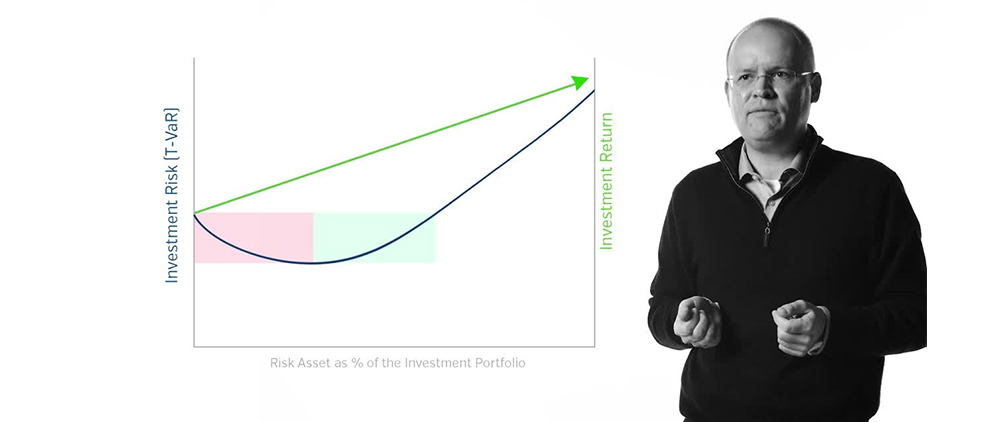
Finding the “ideal” amount of risk assets can be challenging, and changing existing allocations may lead to unexpected outcomes.
Read More The Fed cut its benchmark rate by 25 basis points as expected, bringing its benchmark range to 4.25%-4.50%. The decision was not unanimous, with the Cleveland Fed’s president voting to stay put at the previous level, and Powell commenting that it was a “closer call.” Commenting again that “labor market conditions have generally eased,” and despite being closer to their goal, inflation remains “somewhat elevated,” the committee will, as has been the case, remain “cautious,” and rely on incoming data to determine the degree and timing of future “adjustments” to its range.
Read More
In this issue, we examine the enterprise profile and investment characteristics of U.S. fraternal insurers, drawing comparisons with the broader U.S. life insurance industry. Despite being generally smaller in size, fraternal insurers have recorded comparable investment income (expressed as a percentage of invested assets) with the broader industry over the past four years.
Read More The Fed’s 25 basis point November rate cut, which took the benchmark range to 4.50%-4.75%, did not come as a surprise. The market had begun to embrace a slower pace of rate reductions of late, with stronger data on balance presenting itself since the last Fed meeting. In the post-meeting press conference, in which Powell took time to assert the Fed’s independence post-election and stated the Fed would not “guess, speculate or assume” with respect to potential policies of the new administration, the Fed referred to easing labor market conditions and progress on the inflation front, and its intention to fine tune its policy to keep on target with its dual mandate.
Read More
This issue of Perspectives explores the evolution of the risk and return profile of the U.S. property and casualty (P&C) industry over the past 20 years ending in 2023. It is an update to a previous Perspectives, “Enterprise Risk Capacity: Shifts in Risk” published in January 2022, that focused on data as of year-end 2020. Our motivation for this update was to evaluate if or how the industry’s risk profile evolved given the impact of the Covid-19 pandemic and subsequent dramatic changes in interest rates and inflation since 2020. Our financial performance and analysis consider statutory accounting and related filings.
Read More The Fed lowered its benchmark rate by 50 basis points in September, citing a more balanced labor market and declining rate of inflation as grounds to support its decision. Minutes from the meeting however showed that the decision to move by the above-mentioned amount was not entirely without hesitation, with some participants open to more gradual moves.
Read More
Property and Casualty (P&C) insurers primarily invest in high-quality fixed income securities. Risk assets such as below investment grade bonds, equities, and alternatives complement these portfolios, but guidance on optimal proportions is often unclear. The risk asset “smile” analysis is an economic, mark-to-market framework that shows that preferable ranges exist, and warns that too little exposure or risk-asset reductions can increase investment risk and lower return. Interestingly, the P&C industry appears well positioned in the aggregate.
Read More
The topic of deficit spending has long been debated. Rooted in Keynesian economics, the theory holds that governments should stimulate the economy by borrowing and spending during an economic downturn, and then reverse once the crisis has passed. But contrary to Keynes' theory, deficits in the U.S. have persisted even during thriving economies.
Read More The much-awaited, anticipated, and debated Fed decision took place over the month. After years of tightening the reigns, the Fed reduced its benchmark rate by 50 basis points as it began to “recalibrate” its policy positioning. With stubbornly high inflation subsiding and the labor market softening, the Fed leaned on the more aggressive side of the market’s expectations to preserve labor market resilience while continuing to bring inflation down to its target range.
Read More
The 2023 analysis cycle was different than years past. We witnessed changes to the insurance and investment landscapes year over year that were notably significant. Shifts in US Treasury rates and a hard reinsurance market are just a few examples.
Read More

The National Association of Insurance Commissioners (NAIC), AM Best and Standard & Poor’s use proprietary risk-based capital models as part of their evaluation of the solvency and financial strength of U.S. Property and Casualty (P&C) insurers. In recent years, these models underwent significant updates, and we assess the implications to P&C insurers’ investment choices and opportunities.
Read More
In this issue, we examine the enterprise profile and investment characteristics of U.S. workers’ compensation (WC) insurers, drawing comparisons with the broader U.S. property and casualty (P&C) industry. Our analysis reveals that over the past decade, WC insurers have recorded lower investment income (expressed as a percentage of invested assets) compared to the broader industry.
Read More
NEAM examines investment trends and highlights for US P&C, Life and Health insurers including book yield, net investment income and more in our latest industry reports.
Read More
A disciplined, yield-driven, relative-value approach can turn a core fixed income strategy into a compounding engine of income, stability, and durable alpha across market cycles.
Read More
Tobias Gummersbach of New England Asset Management joins the InsuranceAUM Podcast to discuss how stress and scenario testing can strengthen insurance portfolio strategy.
Read More
Each year NEAM delves into statutory filing data to analyze trends and insights from the insurance industry’s prior year of investment data. Watch our video to learn more about what is covered for P&C insurers and Life insurers in our articles on the 2024 filings.
Read More
Explore how private placements offer insurers higher yields, robust covenants, and long-term investment advantages in today’s market.
Read More*As of December 2025
Figures represent aggregated assets, clients and personnel of both NEAM, Inc. and its affiliate, the majority of which are dedicated to NEAM, Inc. Represents unaffiliated insurance company asset management clients, $82.7 billion of which are managed by NEAM, Inc. and the remaining $6.2 billion of which are managed by NEAM, Inc.’s affiliate. Thirteen of the noted clients operate as insurance entities controlled or managed by State or Governmental entities.